

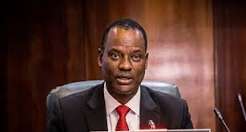
The Federal Government has dismissed public reports alleging that President Bola Tinubu’s administration incurred ₦80 trillion in new debt, clarifying that the surge in the national debt stock is driven by technical accounting adjustments rather than a spending spree.
Testifying before the Senate Committee on Finance in Abuja, the Minister of Finance and Coordinating Minister for the Economy, Taiwo Oyedele, stated that comparing the inherited debt profile directly with today’s totals creates a fundamentally flawed picture.
Deconstructing the ₦159 Trillion Debt Stock
According to Oyedele, two major non-borrowing factors account for the vast majority of the expanded debt figure:
| Driver | Financial Impact | Key Explanation |
| Naira Depreciation (FX Revaluation) | +₦40+ Trillion | Because Nigeria reports public debt in Naira, unbundling the exchange rate automatically inflated the local currency value of existing external (USD) obligations without adding a single dollar of fresh loans. |
| Ways & Means Securitisation | +₦33 Trillion | Central Bank overdrafts accumulated under the previous administration were converted into long-term formal debt following National Assembly approval. This brought old, off-books liabilities onto official debt registries. |
| Refinancing Operations | Variable | Domestic bond issuances largely went toward rolling over maturing debts rather than generating new net liabilities. |
“The actual amount this administration has borrowed is nowhere near what many people believe,” Oyedele emphasized, adding that the administration has utilized less than half of the external borrowing limits previously authorized by Parliament.
Senate Pushes Back over Capital Budget Delays
Despite the Finance Minister’s technical explanation of the balance sheet, lawmakers expressed strong dissatisfaction with the government’s economic execution on the ground:
-
Non-Implementation Concerns: Senators Adamu Aliero and Tahir Monguno questioned why capital project execution remains sluggish despite record revenue collection by the Nigeria Revenue Service (NRS) and Customs.
-
Constitutional Warning: Senate Whip Tahir Monguno warned that failing to execute the capital components of the national Appropriation Act amounts to a breach of constitutional law, reminding the executive that unexecuted budgets constitute an impeachable offense.
-
Expenditure Pressures: Oyedele countered that increased revenue generation is currently being absorbed by rising debt servicing costs, the new national minimum wage implementation, and mandatory funding for social programs like the Nigerian Education Loan Fund (NELFUND).
