

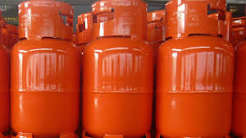
Nigeria’s domestic gas market experienced a sharp structural divergence in June 2026. Official regulatory figures show that Liquefied Petroleum Gas (LPG) imports jumped by 1,400% in a single month to cover a severe dip in local production, even as the country flared $888.2 million worth of natural gas over an 18-month period.
Data from the NMDPRA reveals that daily cooking gas imports leaped from 0.1 kilotonnes per day (KT/D) in May to 1.5 KT/D in June. The import surge occurred directly alongside a 10% decline in domestic LPG output, which fell from 4.0 KT/D to 3.6 KT/D.
June 2026 LPG Daily Supply Breakdown
Imported cargoes supplied nearly 30% of Nigeria’s total daily LPG receipts (5.164 KT/D) during the month:
| Supply Channel | Source / Carrier | Daily Volume (KT/D) | Market Share (%) |
| Major Marine Deliveries | NLNG & SEPNU (Vessels) | 2.335 | 45.2% |
| Foreign Imports | International Cargoes | 1.539 | 29.8% |
| Inland Gas Plants | Local Trucking Networks | 0.805 | 15.6% |
| Domestic Refineries | Local Refining Units | 0.485 | 9.4% |
| Total Daily Supply | — | 5.164 | 100.0% |
The Flaring & Export Imbalance: $888M Burned Away
While downstream marketers turned to foreign markets to bridge the cooking gas deficit, upstream data from the NUPRC highlights a ongoing structural bottleneck in gas monetization:
-
301.6 Billion SCF Flared: Between January 2025 and June 2026, oil and gas operators burned off 301.60 billion standard cubic feet (BSCF) of natural gas—representing an average flaring rate of 7.3% across the country’s 4.132 trillion SCF total output.
-
$888.2 Million Economic Loss: At an average valuation of $2.84 per MMBtu, the flared gas represents a direct economic loss of roughly $888.24 million—gas that could have been captured for domestic power generation, industrial feedstock, or local LPG fractionation.
-
Exports Outpace Local Market: Of the 3.823 trillion SCF of gas utilized during the 18-month window, 56.5% (1.506 TSCF) was funneled into international export markets, while only 43.5% (1.162 TSCF) was delivered to domestic power grids, factories, and gas distributors.
Strategic Implications for the “Decade of Gas”
The latest figures highlight the gap between the Federal Government’s Decade of Gas objectives and current market reality. Although overall domestic natural gas production rose slightly by 3% to 5.116 Bscf/d in June, local gas processing, gathering infrastructure, and dry gas fractionation facilities remain insufficient to channel raw gas into domestic cooking gas cylinders.
To break the reliance on foreign LPG imports, regulatory authorities are advancing key infrastructure projects—including the Ajaokuta-Kaduna-Kano (AKK) and OB3 pipelines—while auditing domestic off-takers to ensure locally produced gas is prioritized for the domestic market before export.
