

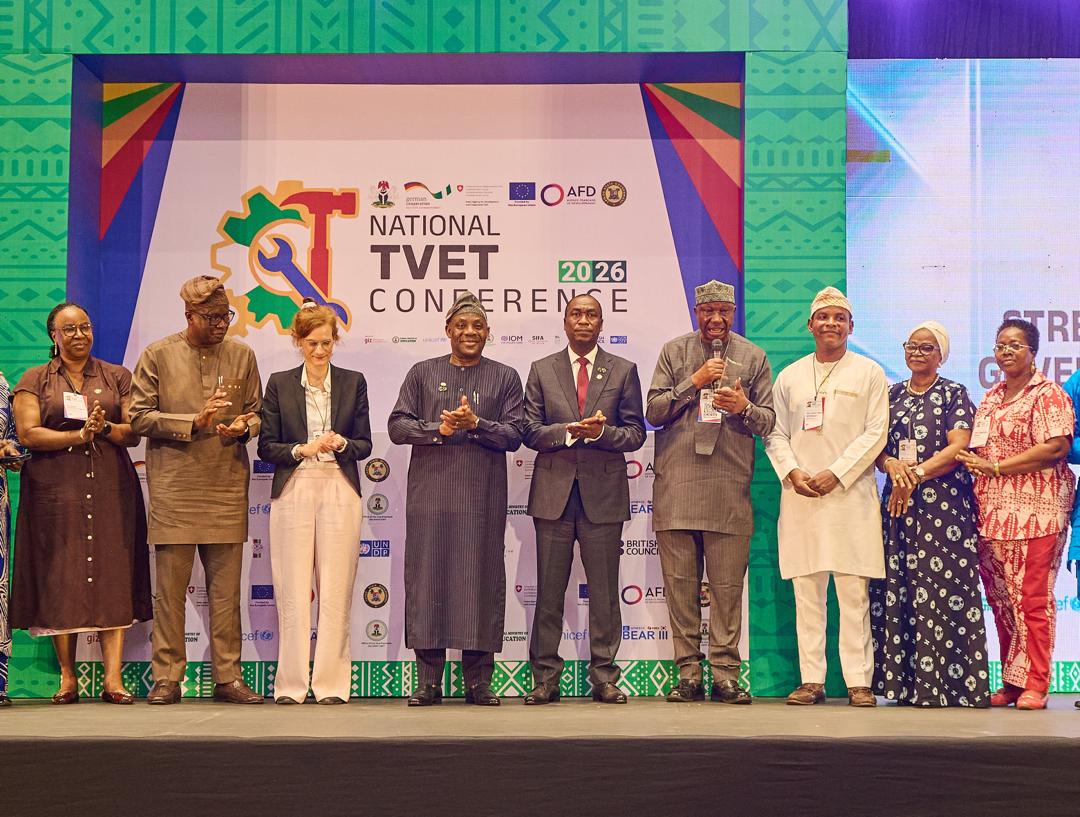
Building a highly skilled, adaptable workforce is a critical prerequisite for industrialization across emerging markets. With traditional academic routes facing intense scrutiny due to widening graduate skill gaps, public and private sector leaders are looking to Technical and Vocational Education and Training (TVET) as a vital pathway to accelerate real-sector economic growth.
To turn fragmented educational reforms into a unified, market-driven workforce framework, the Federal Ministry of Education has partnered with the Lagos State Technical and Vocational Education Board (LASTVEB) to host the 2026 National TVET Conference.
Operating under the theme, “Harnessing TVET as a Pathway to Employment: Building a System for Employability, Inclusion, and Green Growth in Nigeria,” the high-level summit will align technical training centers directly with modern industrial demands.
Dismantling the Labor Market Mismatch
The core structural challenge facing the Nigerian economy is not a lack of labor, but an acute shortage of specialized technical skills. While industries across manufacturing, construction, renewable energy, and digital fabrication face a shortage of competent technicians, millions of young people remain unemployed due to non-aligned educational backgrounds.
The 2026 conference is structured to address this mismatch by creating an agile framework that responds directly to changing market signals. By bringing together factory operators, economic planners, and curriculum designers, the initiative aims to replace outdated training manuals with dynamic, practical skills programs that give youth immediate paths to self-employment and corporate placement.
The Multilateral Capital Coalition
A key feature of this workforce expansion is the substantial diplomatic and development finance backing it has secured. Recognizing that sub-Saharan Africa’s demographic boom can drive global economic productivity if properly trained, a coalition of international partners is actively supporting the project:
-
Sovereign Backing: Supported by the governments of Germany, Switzerland, South Korea, and France.
-
Development Finance Institutions: Organized in direct cooperation with the Agence Française de Développement (AFD).
-
Multilateral Oversight: Backed by the Delegation of the European Union (EU) to Nigeria and ECOWAS, alongside specialized agencies from the United Nations.
This international alignment ensures that Nigerian vocational certifications are continuously upgraded to match global standards. This approach makes it easier for local technicians to participate in cross-border supply chains, attract foreign direct investment ($\text{FDI}$), and secure remote service contracts under modern trade agreements.
The Transition to Sustainable Green Growth
A key differentiator of the 2026 TVET framework is its strong focus on green growth and sustainability. As global markets move toward low-carbon operations, the technical workforce must adapt to manage eco-friendly infrastructure.
The updated LASTVEB and federal TVET models are integrating circular economy principles, clean energy installation, and sustainable construction practices into their standard training tracks.
By prioritizing inclusion—ensuring marginalized communities and young women gain equal access to technical training—and driving green innovation, Nigeria is laying the groundwork for a highly capable, self-reliant technical class equipped to power the country’s long-term industrial expansion.
