

Nigeria’s state-backed energy corporations and ministry regulators have advanced three major gas commercialization and infrastructure pipelines valued at a combined $30.5 billion. Addressing delegates at the 25th annual NOG Energy Week in Abuja, energy stakeholders stated that the country’s midstream strategy is shifting from basic output metrics toward establishing structural cross-border trade networks. The push leverages global market demand, particularly from European nations seeking to diversify their natural gas import channels.
The multi-billion-dollar energy pipeline rollout covers three primary structural initiatives:
-
The 12 Bcf/d Presidential Production Mandate: Olalekan Ogunleye, Executive Vice President for Gas, Power, and New Energy at the Nigerian National Petroleum Company Limited (NNPCL), outlined a presidential mandate targeting a daily output of 12 billion cubic feet (bcf/d) by 2030. Management notes that the target relies heavily on coordinated infrastructure deployments via the NNPC Gas Consortium. This blueprint focuses on increasing regional utilization across industrial networks, expanding gas-based manufacturing, and boosting power generation capacity rather than just increasing raw wellhead production.
-
The $25 Billion Africa-Atlantic Trans-Continental Link: Minister of State for Petroleum (Gas), Ekperikpe Ekpo, announced that key milestones have been achieved on the $25 billion Nigeria-Morocco Gas Pipeline. Stretching between 5,600 and 6,900 kilometers along the West African coastline, the pipeline will connect Nigeria’s deepwater reserves to Morocco and link directly with European networks. Concurrently, Nigeria’s Minister of Foreign Affairs, Ambassador Bianca Odumegwu-Ojukwu, has advanced talks with her Moroccan counterpart, Nasser Bourita. An official intergovernmental agreement is scheduled to be signed by President Bola Tinubu and King Mohammed VI during the fourth quarter of 2026.
-
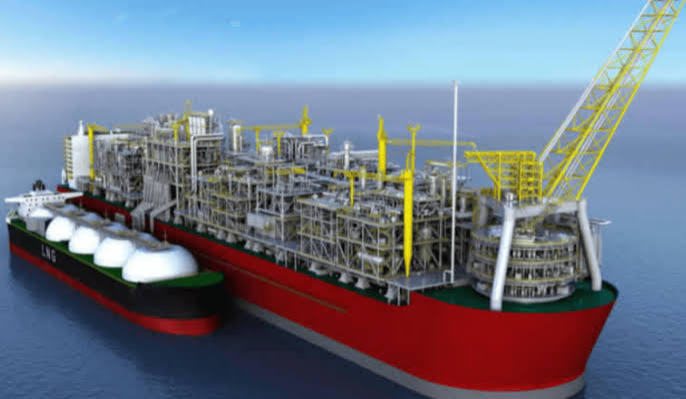
Expanding Sub-Regional Midstream Offtakes: The midstream roadmap includes a newly finalized 15-year gas supply agreement for UTM Offshore’s $3 billion Floating Liquid Natural Gas (FLNG) venture, paving the way for a Final Investment Decision (FID). Additionally, details were concluded for the $2.5 billion Nigeria-Equatorial Guinea Gas Pipeline, which will evacuate stranded offshore volumes. On the domestic front, the West African Gas Pipeline Company Limited (WAGPCo), led by Managing Director Abbey Bodunrin, is optimizing its 690-kilometer pipeline connecting Nigeria, Benin, Togo, and Ghana to increase volume flows throughout the West African energy network.
To support these export assets, the federal government is prioritizing the completion of major domestic logistics loops. These include the Obiafu-Obrikom-Oben (OB3) pipeline interconnection and the long-haul Ajaokuta–Kaduna–Kano (AKK) network. Resolving these bottlenecks will allow the country to meet its international export commitments while fully powering local electricity grids, reducing gas flaring, and ending the need to import liquefied petroleum gas (LPG/cooking gas).
