

A series of newly unsealed internal corporate documents, including emails and executive presentations obtained by the BBC, reveal that senior management at Shell was explicitly warned about severe systemic risks on one of its core African pipelines nearly two decades ago.
The files show that as early as 2008, a high-ranking executive cautioned against continuing to pump hundreds of thousands of barrels of unrefined crude through the line while it was actively experiencing massive, uncontrolled oil theft and structural infrastructure failures.
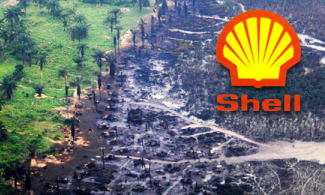
Today, across the oil-rich wetlands of Nigeria’s southern Niger Delta, decades of unchecked oil spills have left the local ecosystem heavily degraded, with critical mangrove creeks and agricultural soils coated in thick crude.
The Legal Standoff in London Courts
The internal memos were disclosed as part of a high-stakes, ongoing lawsuit in the United Kingdom. The legal action is being led by riverine communities from the Niger Delta, including the island communities of Bille.
The plaintiffs are seeking to hold Shell’s parent company legally and financially liable for the severe environmental and health damages caused by more than 100 pipeline leaks. The communities argue that the company’s failure to secure its infrastructure has systematically ruined their local fishing economies, contaminated their drinking water, and destroyed their livelihoods.
The Anatomy of a Problem Asset
The focus of the litigation is the 60-mile (96.5km) Nembe Creek Trunk Line. This critical conduit runs through difficult riverine terrain to connect inland oilfields directly to a coastal export terminal.
-
The Asset Capacity: The pipeline was designed to transport up to 150,000 barrels of oil per day, making it a vital asset for generating hard-currency export revenues.
-
The Structural Failure: Because of its vast geographic reach, the line became a primary target for organized oil theft syndicates, illegal artisan refining camps, and frequent equipment failures.
Faced with mounting security costs and reputational damage, Shell finalized the divestment and sale of the problematic pipeline to a local consortium. This move forms part of a broader business strategy by international oil companies (IOCs) to sell off their complicated onshore assets in Nigeria and move their capital into deepwater offshore blocks.
The Corporate Defense Matrix
In its formal court filings, the energy multinational has mounted a vigorous defense. Shell argues that the vast majority of the environmental pollution was not caused by operational negligence or poor maintenance, but rather by large-scale third-party sabotage, illegal bunkering, and the proliferation of thousands of modular refining camps.
The company maintains that its local subsidiary invested heavily over decades in advanced pipeline surveillance, automated leak detection systems, and rapid spill-response teams. Shell asserts that holding the parent entity liable for criminal acts of theft creates an unsustainable legal precedent for global energy infrastructure operators.
