

In high-stakes corporate finance, how a tycoon chooses to deploy, risk, and rotate capital defines the structural design of their empire. While some industrial magnates favor building interconnected, multi-decade conglomerates that lock in value across symbiotic industries, others operate as agile portfolio managers—entering sectors to restructure assets, unlock valuation premiums, and exit cleanly when a more lucrative opportunity emerges.
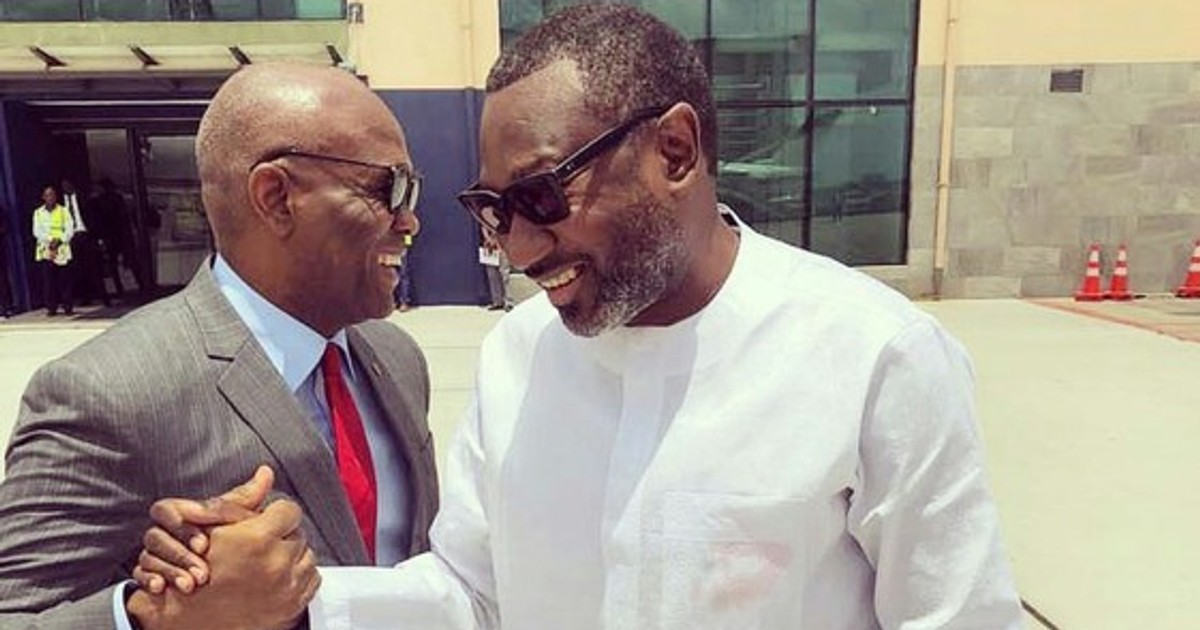
Nigeria’s investment landscape is heavily shaped by these two distinct philosophies, represented by two of the country’s most influential business figures: Tony Elumelu (Founder of Heirs Holdings) and Femi Otedola (Chairman of First HoldCo).
Despite their different starting points, both figures use large-scale private equity to drive national industrialization, but their methods for managing risk, board control, and liquidity events follow completely different financial models.
The Banking Power Bases: Operations vs. Boardroom Control
The financial services sector serves as the primary capital engine for both billionaires, yet their paths to acquiring equity and control follow completely different patterns.
Tony Elumelu (UBA): Operational Integration
Elumelu built his reputation by turning around distressed financial institutions. In 1997, he led an investor group to acquire the struggling Crystal Bank, renaming it Standard Trust Bank ($\text{STB}$). In 2005, he orchestrated a historic merger between $\text{STB}$ and the United Bank for Africa (UBA).
By June 2026, UBA’s financial footprint expanded into 20 African nations, reporting total assets of ₦33.2 trillion ($24.3 billion) in 2025 and a market capitalization of ₦1.49 trillion ($1.1 billion). Elumelu’s approach is operational; he rose through the ranks as a banking executive before converting his operational influence into a 14.28% controlling equity stake (6.31 billion shares) held directly and indirectly by the end of 2025.
Femi Otedola (First HoldCo): Financial Position Takeover
Otedola approaches banking strictly as an activist investor. Rather than rising through the internal operational ranks, he used open-market block trades to rapidly accumulate shares in FBN Holdings (First HoldCo) beginning in 2021, eventually taking over as Chairman in January 2024.
By the close of 2025, Otedola consolidated an 18.12% controlling stake, which he defended in May 2026 with a further ₦43.4 billion ($31.7 million) share purchase. His strategy relies on market timing and boardroom influence, using concentrated equity to steer corporate governance from the top down.
The Industrial Playbooks: Interconnected Ecosystems vs. Capital Rotation
The difference between their strategies becomes even clearer when looking at how they manage non-banking assets across energy, power, and infrastructure.
| Strategy Metric | Tony Elumelu (Heirs Holdings) | Femi Otedola (First HoldCo) |
| Core Philosophy | Africapitalism: Patient capital focused on building long-term institutional value. | Capital Velocity: Portfolio optimization driven by asset timing and liquidity generation. |
| Energy/Power Track | Transcorp Power $\rightarrow$ Heirs Energies $\rightarrow$ Seplat Energy Stake ($496M). | Zenon $\rightarrow$ Forte Oil Exit ($215M) $\rightarrow$ Geregu Power Exit ($750M). |
| Asset Retention | Permanent vertical integration; retaining core businesses indefinitely. | Restructure underperforming assets and exit at a valuation peak. |
| Next Target Node | Expanding domestic oilfield production and regional banking access. | Reallocating capital into the upcoming Dangote Refinery IPO. |
The Heirs Holdings Flywheel (Ecosystem Synergy)
Elumelu’s strategy focuses on building a self-reinforcing corporate ecosystem. When a Central Bank of Nigeria tenure policy required him to step down as UBA Chief Executive in 2010, he created Heirs Holdings to link various sectors together
This model relies on keeping assets long-term. Even when facing disruptions—such as crude theft challenges at Heirs Energies—Elumelu doubles down on the sector. This was highlighted in late 2025 when Heirs Holdings and Heirs Energies spent $496 million to acquire Maurel & Prom’s 20.07% stake in Seplat Energy, making the group its largest shareholder.
The Otedola Capital Swaps (Asset Liquidations)
Otedola operates with a flexible approach to capital velocity. He enters a sector, upgrades the company’s financial profile, and exits when he identifies a stronger opportunity:
-
The Forte Oil Exit (2019): After transforming African Petroleum into Forte Oil and expanding its power footprint, he sold his 75% stake for ₦66.25 billion (approx. $215 million).
-
The Geregu Power Monetization (2025): He pivoted into electricity generation through Geregu Power, listed the company on the exchange, and subsequently sold control in a transaction valued at $750 million.
-
The Refining Pivot (2026): Otedola quickly redeployed this capital, confirming that the Geregu exit proceeds are earmarked for a cornerstone investment in the upcoming Dangote Refinery Initial Public Offering (IPO).
Where Their Paths Crossed: The Transcorp Stand-Off
This difference in strategy led to a brief corporate standoff in 2023 when Otedola quietly acquired a 6.3% equity stake (2.6 billion shares) in Transcorp, the conglomerate chaired by Elumelu.
The move tested their corporate boundaries. Rather than allowing a dual-control setup, Elumelu reacted quickly: Heirs Holdings’ HH Capital increased its holding to 25.58% (9.99 billion shares), securing defensive control of the company.
Recognizing that Elumelu had blocked the path to corporate restructuring, Otedola sold his entire 6.3% stake back to the market, dryly noting that “two captains cannot man a ship.” The episode showed how quickly their interests can overlap—and how fast both men will move to protect or pursue corporate control.
