

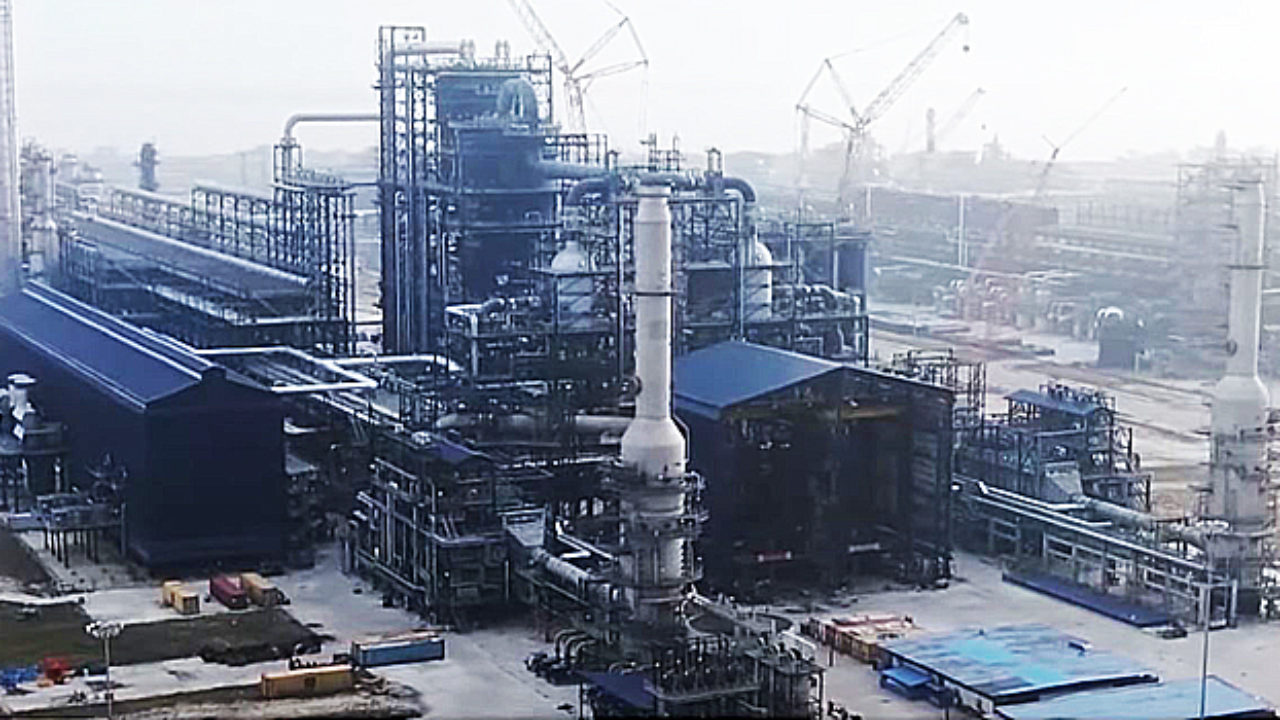
Nigeria’s industrial landscape is on the verge of reshaping the global energy trade. Following engineering optimizations that quietly boosted its current Crude Distillation Unit (CDU) capacity from 650,000 barrels per day ($\text{b/d}$) to 700,000 $\text{b/d}$, the Dangote Refinery has triggered a massive expansion program.
Devakumar Edwin, a senior executive at Dangote Industries, confirmed that equipment orders for the expansion have already been placed, carrying a 20-month manufacturing and supply lead time.
Upon mechanical completion, this expansion will elevate the Lekki-based facility’s total capacity to an unprecedented 1.45 million b/d. This milestone will officially slip past Reliance Industries’ 1.4 million $\text{b/d}$ Jamnagar complex in India, crowning the Nigerian facility as the largest single-train oil refinery on earth.
Operational Efficiency and Global Supply Realities
The refinery’s capacity expansion is backed by strong operational momentum. According to commodity intelligence tracking by Argus, crude oil receipts at Lekki hit a record 635,000 b/d in April 2026, with May figures closely following as the second-highest processing month since commercial operations began.
This aggressive scaling has quickly solidified the refinery’s position as a structural anchor for the Atlantic Basin energy markets. Locally, it has become the primary supplier of refined petroleum products across Nigeria and the wider West African sub-region, systematically reducing the subcontinent’s historical reliance on European fuel imports.
Cushioning the Impact of Geopolitical Chokepoints
The geopolitical value of the Lekki refinery has become highly visible on the global stage. As the intense US-Iran war continues to cause severe freight and logistics disruptions across the Middle East Gulf, standard export corridors out of the region have been heavily compromised.
In response, Dangote’s steady shipments of aviation turbine fuel (jet fuel) into Europe have played a critical role in preventing Western supply shortages. By acting as an alternative, highly secure supply hub outside the immediate zone of geopolitical conflict, the refinery is proving that African downstream assets can stabilize international energy security during global crises.
The East African Frontier
While competing mega-refinery projects across West Africa struggle with financing bottlenecks and execution delays, Dangote is aggressively expanding its continental footprint.
The group has launched a comprehensive feasibility study to build a secondary African refinery, evaluating two strategic deepwater coastal locations:
-
Option A: The Port of Mombasa, Kenya.
-
Option B: The Port of Tanga, Tanzania.
Establishing an operational foothold in East Africa will allow the conglomerate to build an integrated supply network across both coastlines of the continent. By combining its massive, expanded base in Nigeria with a strategic East African hub, the company is positioning itself to control the downstream refined product markets across Sub-Saharan Africa.
