

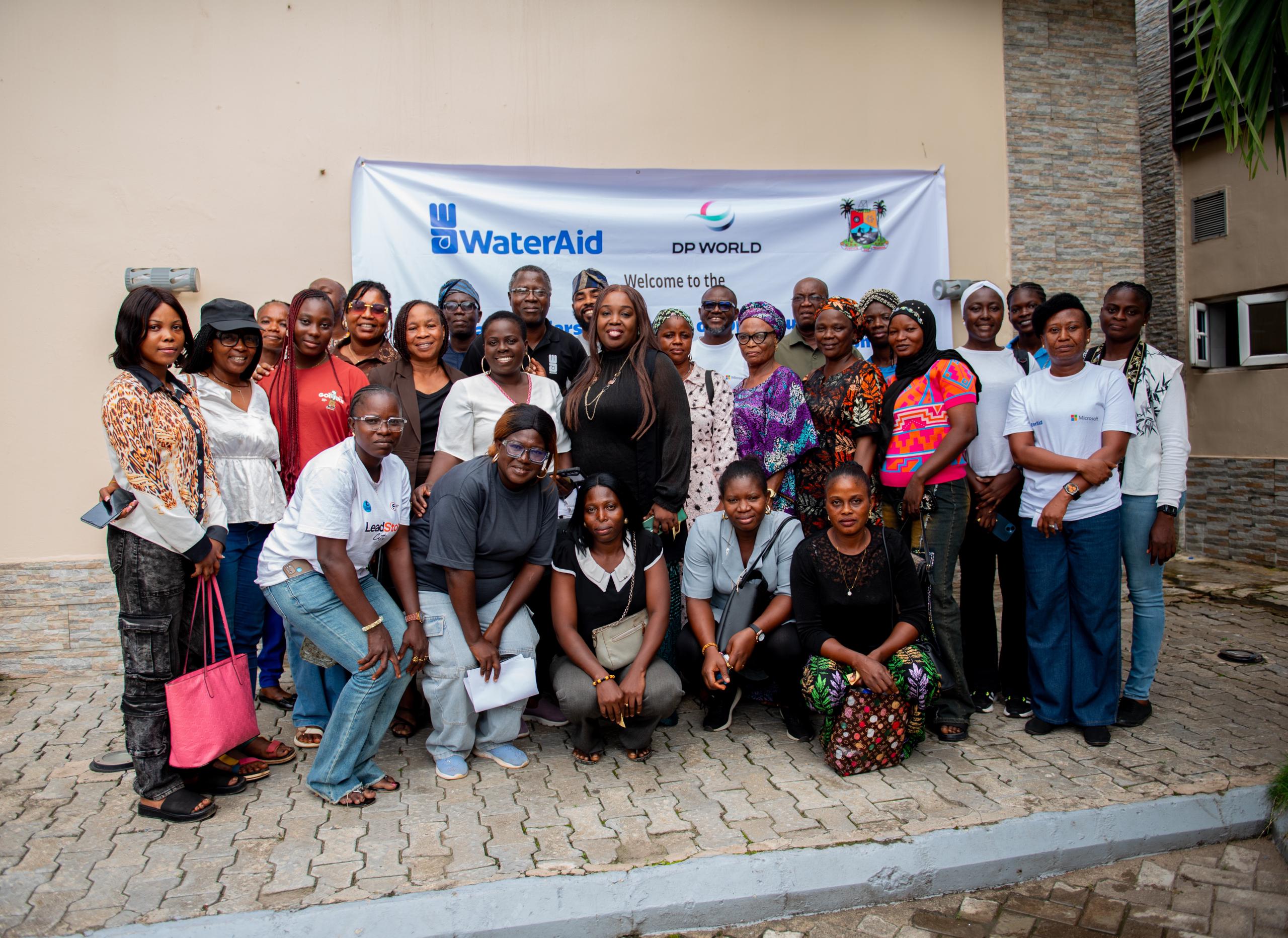
To break structural gender barriers and reduce long-term maintenance costs for public utility systems, WaterAid Nigeria has partnered with the Small and Medium Enterprises Development Agency of Nigeria (SMEDAN) to formalize an all-female technical network in Lagos State.
The initiative focuses on reviewing the impact of the Advancing Inclusive Water, Sanitation, and Hygiene (AI-WASH) project, which equips local women with the engineering skills needed to run, service, and repair vital community water facilities.
The collaborative review meeting brought together high-level administrators from the Lagos State Ministry of the Environment and Water Resources, local council representatives, and community leaders from Ikorodu North, Ojodu, and Igando Local Council Development Areas (LCDAs).
The forum marked the conclusion of an intensive technical program funded with support from DP World, transforming how community-managed utilities are preserved.
Building a Technical and Inclusive Maintenance Network
Historically, public Water, Sanitation, and Hygiene () facilities across rural and peri-urban Lagos have suffered from long operational shutdowns due to a reliance on male technicians traveling from distant urban centers for simple repairs.
By training localized cohorts of Female Local Area Mechanics (Female LAMs), the AI-WASH framework shifts the responsibility of maintenance directly to the primary users of these water systems.
Head of the WaterAid Nigeria Lagos Office, Dr. Adebayo Alao—represented by Mr. Godfrey Iloha—explained that the female LAMs program explicitly targets the gender imbalance in local governance.
By training women to maintain solar-powered pumps, clear drainage blockages, and handle complex plumbing repairs, the project gives women a strong voice in community decisions. This shift ensures that local water issues are clearly identified and resolved using fast, context-appropriate methods.
SMEDAN Links Vocational Engineering with Enterprise Financing
To help these newly trained mechanics transition into profitable business owners, the Head of the Lagos Office for SMEDAN, Mrs. Oluwatosin Abajo, joined the review session to map out clear growth strategies.
Abajo, who also leads SMEDAN’s Gender Desk, urged housewives and young women to view their new technical skills as a springboard for financial independence, reducing their reliance on domestic partners to support their households.
Abajo advised the mechanics to share their technical knowledge with other women to build long-term economic resilience. She commended the Lagos State Government’s collaborative efforts, scoring their joint empowerment initiatives at 99.9%, specifically highlighting the newly launched Lagos State Industrial Policy (LSIP) for creating a well-regulated, supportive environment for small scale enterprises.
To strengthen this commercial foundation, representatives from the WASH lending department of a major financial institution hosted a financial literacy session during the review. They taught the mechanics how to access micro-loans in the aqua and environmental sectors, enabling them to buy professional toolkits, stock replacement parts, and build a stable business framework around their technical skills.
