

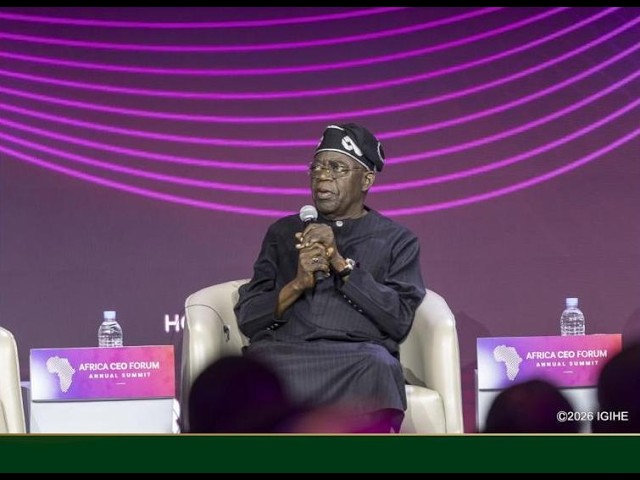
Nigeria is on track to secure approximately $20 billion in Foreign Direct Investment (FDI) in 2026. Speaking at a high-level panel session at the Africa CEO Forum in Kigali, Rwanda, President Bola Ahmed Tinubu attributed this influx to his administration’s targeted removal of regulatory bottlenecks, macroeconomic stabilization, and institutional transparency.
The President urged African leaders to leverage continental frameworks like the African Continental Free Trade Area (AfCFTA), declaring that the era of treating Africa as a passive source for raw material extraction is over.
The Strategy: Mandating Local Value Addition President Tinubu announced strict regulatory stances regarding resource management, warning that raw minerals will no longer be exported from Nigeria without domestic processing. He highlighted specific industrial transitions:
-
The Lithium & Metal Pivot: Leveraging local mineral deposits to manufacture automotive batteries domestically rather than shipping raw ores overseas.
-
Energy Sovereignty: Pointing to the Dangote Petroleum Refinery as proof that large-scale infrastructure can succeed when governments offer policy alignment, licensing speed, and credit guarantees. The refinery has successfully positioned Nigeria as a net exporter of petroleum products, supplying aviation fuel to both African nations and European airlines.
Financial Autonomy and Local Currency Trade A major highlight of the address was a call to de-dollarize regional commerce. Tinubu proposed the creation of a unified continental commodity exchange platform where 54 nations can trade directly using local currencies like the naira. This shift is intended to cut transaction friction and insulate African economies from external currency shocks.
Additionally, he advocated for the establishment of an African credit rating agency, arguing that dominant international firms miscalculate the continent’s risk profiles, which artificially inflates borrowing costs for African sovereigns.
Deploying the Digital Backbone To anchor this economic transition, the President disclosed that Nigeria is currently laying 19,000 kilometers of fiber optic cable nationwide. The infrastructure project is designed to bridge the digital divide by bringing remote educational portals to children, optimizing trade analytics for market vendors, and facilitating the broader shift from basic telecommunications into artificial intelligence and e-commerce.
