

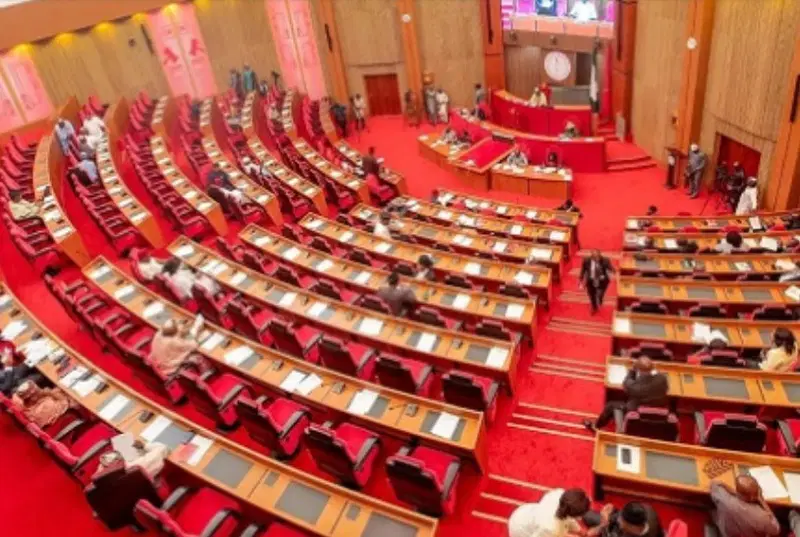
Moving to bridge the chronic credit gap plaguing small scale commerce, the Senate of the Federal Republic of Nigeria has officially passed the Factoring, Assignments and Receivables Financing Bill, 2026. The legislative milestone follows more than a decade of policy advocacy and technical guidance led by the African Export-Import Bank (Afreximbank), the Nigerian Export-Import Bank (NEXIM), the Nigerian Factoring Working Group, and global industry body FCI. Modeled after Afreximbank’s Factoring Model Law, the bill provides a strict, standardized legal blueprint to govern trade transactions, placing Nigeria alongside other forward-thinking African economies like Egypt, Mali, and Côte d’Ivoire. Having cleared concurrent passage in both chambers of the National Assembly, the document has been transmitted to President Bola Ahmed Tinubu for executive assent. How Factoring Unlocks Corporate Liquidity
Micro, Small, and Medium Enterprises (MSMEs) form the operational backbone of Nigeria’s domestic trade ecosystem, yet they are frequently cut off from legacy financial support due to unrealistic demands for physical collateral like land and buildings. This bill introduces debt factoring as a non-debt alternative framework.
The primary strength of this mechanism is that financing approvals rest entirely on the creditworthiness of the corporate buyer rather than the small supplier. By legally validating the sale of invoices—even when original supply contracts attempt to block third-party assignments—the law removes the long-standing legal grey areas that historically kept conservative financiers from deploying capital. Capturing a Share of the $50 Billion Continental Market
Despite holding the status of a premier regional economy, Nigeria currently captures less than one percent of Africa’s booming $50 billion debt factoring market, which is heavily dominated by South Africa, Egypt, and Morocco.
The Senate Committee on Banking, Insurance, and Other Financial Institutions, chaired by Senator Tokunbo Abiru, estimates that a fully transparent and regulated market could unlock over $1 billion annually in immediate working capital for Nigerian businesses. Under the new 2026 guidelines, day-to-day operations will be split cleanly across dual regulatory pillars: The Central Bank of Nigeria (CBN): Tasked with direct financial monitoring, checking the cash reserves and licensing of factoring companies. The Securities and Exchange Commission (SEC): Tasked with investor protection, market disclosure rules, and corporate governance compliance. Strengthening Regional Logistics Under AfCFTA
Afreximbank Executive Vice President Kanayo Awani emphasized that the passage of the Factoring Bill creates the precise enabling environment required for supply chain finance to survive. By letting small firms easily flip trade receivables into fast liquidity, the law directly strengthens their capacity to take on high-volume manufacturing agreements. Furthermore, FCI Deputy Secretary General Betul highlighted that while the legislation acts as an essential structural foundation, its long-term success will require steady investments in digital infrastructure, secure e-invoicing registries to prevent fraud, and market education. As Nigeria finalizes the adoption of this legal framework, the formalized trade corridors will give domestic suppliers a major edge, allowing them to safely execute cross-border transactions and actively expand intra-African trade under the African Continental Free Trade Area (AfCFTA).
