

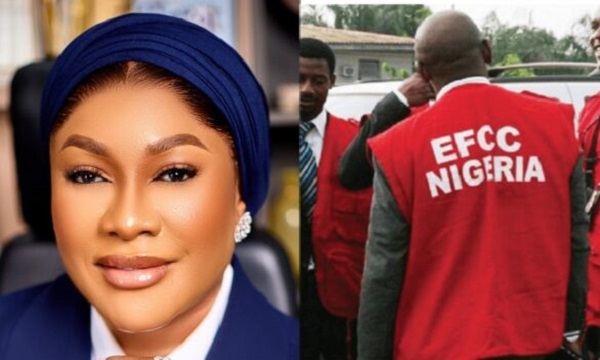
In January 2024, Aisha Achimugu hosted a seven-day 50th birthday celebration on the Caribbean island of Grenada. The guest list included prominent figures from Nigeria’s entertainment industry and political class. Governor Babajide Sanwo-Olu of Lagos State was among those present. The event was lavish, visible, and — as it turned out — consequential.
The public attention it generated set in motion a chain of scrutiny that has since produced an EFCC arrest, a federal court forfeiture order, and a national debate about how Nigeria’s wealthiest businesswomen are perceived, investigated, and judged.
Achimugu, founder of Oceangate Engineering Oil & Gas Ltd, has spent the months since navigating one of the most high-profile financial crime cases currently before Nigeria’s courts — and pushing back, publicly and firmly, against the narrative that her wealth was built on political proximity rather than commercial enterprise.
“I started my business in 2001,” she told Channels Television in a recent interview. “My background is a decent family. I met my late husband in the course of work. I actually met him doing business in NNPC.”
The timeline she offers matters to her case. If her entrepreneurial career predates her associations with the political figures now linked to her name in public discourse, the suggestion that those associations are the source of her wealth becomes harder to sustain. It is a distinction she is clearly determined to make.
The legal facts, as they currently stand, are significant. In March 2026, a federal high court in Abuja granted a final forfeiture order of $13 million allegedly linked to her firm, with presiding judge Emeka Nwite ruling that the EFCC had proven the funds were proceeds of fraud. Oceangate Engineering has since filed an appeal against the order. On the specifics of the forfeited funds, Achimugu declined to elaborate, citing the pending litigation — but rejected the characterisation that the money was found in her home.
“I don’t know where Nigeria got the impression that I have $13 million in my house. I’m not a bank,” she said. “My house was raided. Only $50,000 and N13 million belonging to my mom was found in my house and my personal belongings.”
On the oil block held by Oceangate Engineering, she described the award process as competitive and transparent — a claim that will likely face scrutiny as the legal proceedings continue.
The most revealing part of the interview was her response to questions about her access to political power. Rather than distancing herself from those connections, she reframed them as a function of business success rather than its precondition.
“I have always had access to power and governance. I’m a known Nigerian. I have friends, and I have done well,” she said. “Having to know those who will increase my portfolio is very important to me. It is not about Governor Sanwo-Olu at all.”
It is a position that is both commercially rational and politically difficult to defend in a Nigerian environment where the line between legitimate network-building and rent-seeking influence is frequently and legitimately questioned. For many Nigerians watching the case, the Grenada birthday — with its political guest list and its very public display of wealth — made that line harder to see, not easier.
The broader question the Achimugu case raises is one that extends well beyond her individual circumstances. Nigeria has a complicated relationship with visible female wealth in business. Women who build significant enterprises through legitimate means face a scrutiny that their male counterparts frequently avoid. At the same time, the documented cases of politically connected individuals — male and female — using proximity to power to access contracts, licences, and resources that should be competitively awarded are real and numerous enough to make public scepticism entirely understandable.
Achimugu’s legal battle is ongoing. The appeal against the forfeiture order will eventually produce a ruling. Until it does, the case sits in the uncomfortable space between allegation and verdict — a space that is doing significant damage to a business reputation that, whatever its origins, took decades to build.
