

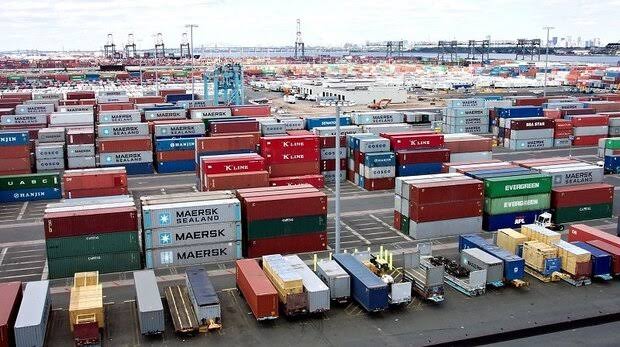
In 2025, Nigeria recorded $6.1 billion in non-oil exports — the highest value in the country’s history and the highest since the Nigerian Export Promotion Council was established. The export volume hit 8.02 million metric tonnes, also a record. These are not modest improvements on previous years. They are the best numbers this country has ever produced on non-oil trade.
That context matters because Nigeria’s non-oil export story is one that has been told as a future ambition for so long that its emergence as a present reality risks being undercelebrated.
NEPC Executive Director Nonye Ayeni made the disclosure at a conference for women exporters in Abuja, and the setting was deliberate. Because behind the record numbers is a workforce composition that the headline figures don’t immediately reveal: women make up approximately 40% of Nigeria’s SME base, SMEs account for roughly 96% of Nigerian businesses, and SMEs are driving the export growth that produced those record figures. The arithmetic connects directly — women-led businesses are a structural pillar of Nigeria’s best-ever export performance.
The infrastructure behind the numbers is worth understanding. In 2025 alone, NEPC conducted 728 capacity-building programmes across all Nigerian states, reaching over 97,000 people across the export value chain. The training covered good agricultural practices, packaging, labelling, export documentation, quality standards, and more. The Council also funded 210 international certifications — FDA, HACCP, Halal, ISO 22000 — with approximately 50% going to women. In a global trading environment where standards compliance is the entry ticket to market access, that investment in certification is not administrative box-ticking. It is the difference between a product that can legally enter a market and one that cannot.
Ayeni was direct about the global context that makes these numbers both impressive and insufficient. Global merchandise exports stood at approximately $24.5 trillion in 2024. Africa’s share was 3.5% — roughly $840 billion. Nigeria’s share of that global total was 0.26%. For an economy with a GDP of approximately $290 billion and a population of over 220 million people, that share represents one of the most significant gaps between economic size and trade participation anywhere in the world.
“If Nigeria moves even modestly within global trade, the impact on businesses and on the economy will be significant,” Ayeni said — and the mathematics support the understatement. A country that exported 281 distinct products to 210 countries across five continents in 2025, reaching 36 African nations including all 11 ECOWAS members, is not starting from zero. It is starting from a foundation that, with the right policy and private sector support, has genuine scale potential.
The women’s dimension of the conference went beyond recognition. Attendees — drawn from across the export value chain — received training, personalised coaching, mentorship, and grant support ranging from $5,000 to $30,000. The grants are not symbolic gestures. At that quantum, for a small exporter working to meet international certification requirements, establish market connections, or bridge the financing gap between production and shipment, they are operationally meaningful.
The SheTrades Nigeria Hub, operated through NEPC’s partnership with the International Trade Centre, has now supported over 5,000 women with market access, capacity building, and trade opportunities. Nigerian women exporters have participated in major trade events in the UK, Spain, Egypt, Kenya, the Netherlands, and beyond — platforms that, as Ayeni noted, exist not for visibility but for real commercial connections.
The record non-oil export figures are a proof point that the strategy is working. The question now is whether the infrastructure, the certification support, the trade financing, and the market access programmes can be scaled fast enough to convert a record year into a sustained trajectory — and whether Nigeria’s 0.26% share of global trade can begin, incrementally, to reflect the size of the economy producing it.
The numbers from 2025 suggest the foundation is there. What comes next depends on whether it gets built upon.
