

Nigeria’s industrial sweetener demand is projected to scale to approximately 2.15 million metric tonnes, exposing a severe structural imbalance in the country’s manufacturing supply chain. A market insights report titled “NCIA Insights: Unlocking Cassava’s Industrial Value through Sorbitol Production,” published by the Nigeria Cassava Investment Accelerator (NCIA)—an initiative of the Lagos Business School (LBS)—reveals that local production capacity stands at a low 53,000 metric tonnes.
Consequently, domestic agro-processors currently meet only 2.5 per cent of national demand, forcing the manufacturing sector to rely heavily on imports. Trade data shows that in 2023 alone, Nigeria imported over 7,700 metric tonnes of sorbitol valued at $6.1 million (approx. ₦8 billion), draining foreign reserves to support sectors that could be supplied by local agriculture.
1. Re-Engineering the Feedstock Core: Cassava vs. Corn Starch
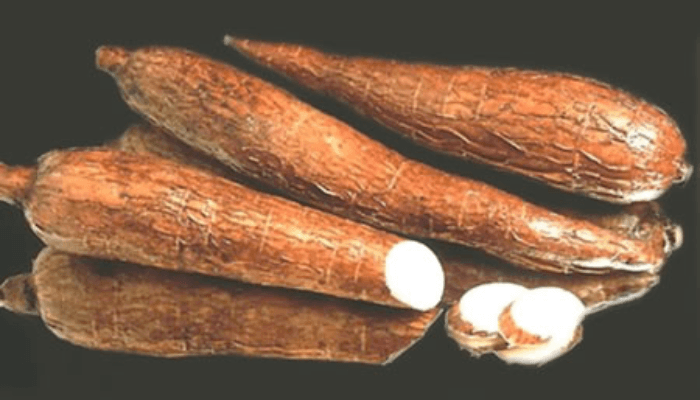
Sorbitol—a primary sugar alcohol (polyol) used extensively as a sweetener, texturizer, and moisture-retaining humectant—is traditionally manufactured globally via the enzymatic hydrolysis of corn starch. However, the NCIA report emphasizes that Nigeria, as the world’s largest producer of cassava, can capture a competitive advantage by pivoting to cassava roots as an alternative, starch-rich feedstock.
This chemical conversion process bypasses the food-security tensions associated with grain crops like corn. It also protects local manufacturers from the foreign exchange volatility and international shipping disruptions that come with importing raw raw materials.
2. The Six-Stage Bio-Refining Operation
To demonstrate commercial viability, the NCIA audited the production line at Psaltry International Company Limited in Iseyin, Oyo State. Psaltry commissioned Africa’s first fully automated cassava-based sorbitol refinery, which operates at a baseline capacity of 25 tonnes per day.
The end-to-end industrial transformation follows a strict six-stage engineering sequence:
| Processing Phase | Operational Engineering Component | Technical Objective & Quality Control |
| 1. Intake & Screening | Digital farm logging and raw root batch sampling. | Starch meters measure density; sub-standard, low-starch or rotted roots are systematically rejected at the gate. |
| 2. Washing & Chopping | High-pressure rotary drum washing and mechanical slicing. | Complete removal of soil, stones, and outer peel; roots are reduced in size to maximize downstream milling efficiency. |
| 3. Wet Milling Extraction | High-speed rasper integration to produce fine slurry. | Cellular walls are ruptured to release bound starch granules from the fibrous pulp. |
| 4. Purification & Drying | Multi-stage hydrocyclone processing and steam flash drying. | Thickens and purifies the starch intermediate by separating out residual proteins and fine fibers. |
| 5. Enzymatic Conversion | Liquefaction, saccharification, and high-pressure catalytic hydrogenation. | Starch is broken down into high-glucose syrup, which is then chemically reacted with hydrogen to produce liquid sorbitol. |
| 6. Refining & Packaging | Ion-exchange purification and closed-loop drum filling. | Removes residual chemicals and off-colors to ensure compliance with international pharmaceutical and food-grade standards. |
3. Unlocking Last-Mile B2B Market Consolidation
The successful scaling of cassava-based polyols offers a direct growth pathway for several domestic downstream industries. In oral care, major consumer brands rely on high-grade sorbitol to maintain the texture and moisture of toothpaste and mouthwash. Similarly, the pharmaceutical and confectionery sectors consume large volumes of the sweetener for syrup bases, tablet coatings, and sugar-free chewing gums.
By moving past traditional food processing and investing in advanced biochemical refining, Nigeria can better integrate its agricultural output with industrial manufacturing. This shift helps secure local supply chains, cuts down on expensive imports, and ensures more predictable, stable incomes for smallholder farming communities across the country.
