

In an economy increasingly reliant on digital commerce, mobile data has transitioned from an administrative utility into the fundamental lifeblood of corporate operations. For Nigeria’s micro, small, and medium enterprises ($\text{MSMEs}$)—ranging from social media merchants to high-growth tech startups—consistent internet connectivity drives customer acquisition, payment processing, and daily supply chain tracking.
However, as businesses rely more on digital networks, a persistent operational friction point has emerged: the rapid depletion of mobile data bundles. This issue often strains consumer trust and leads to allegations of hidden billing practices.
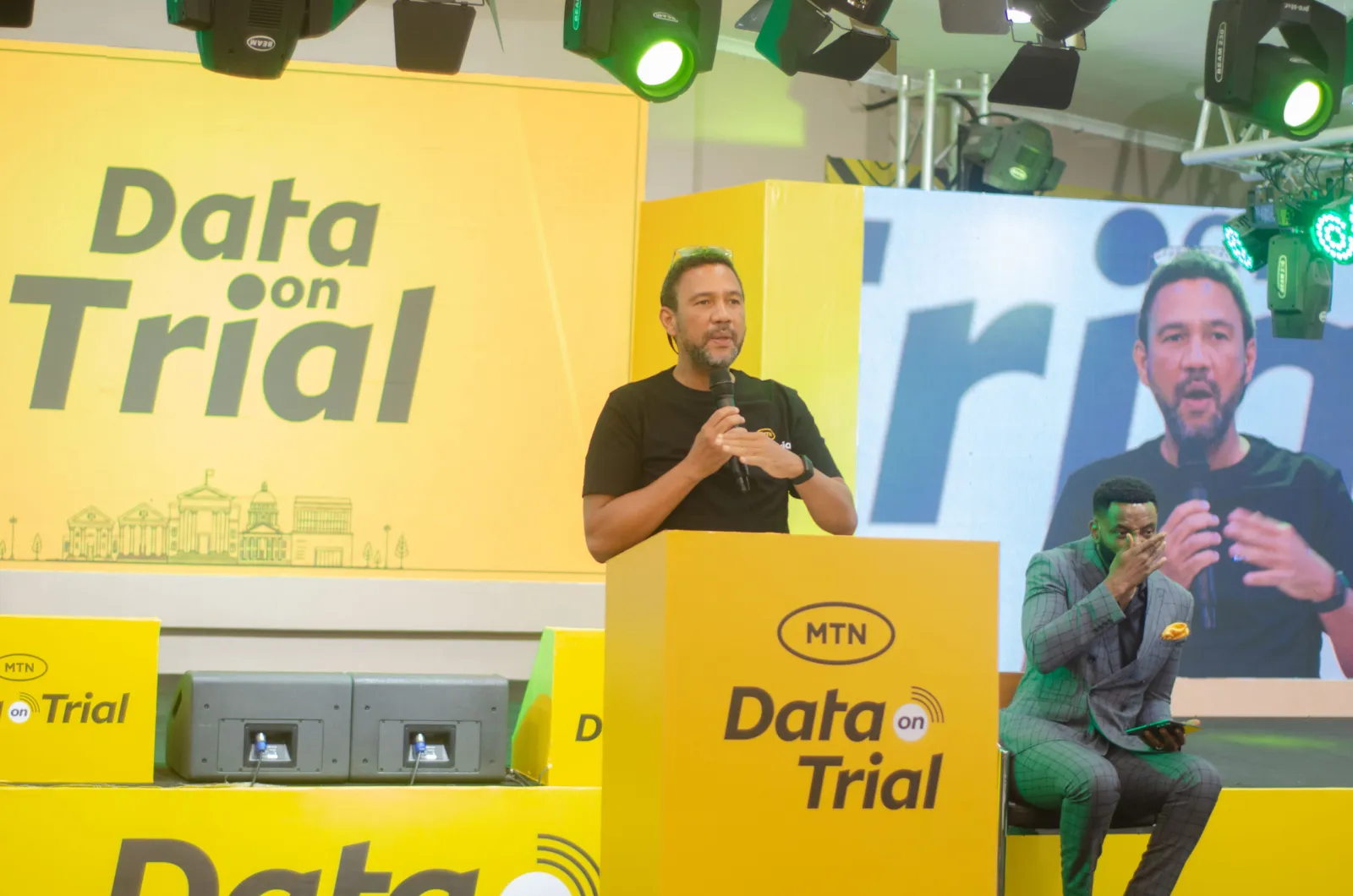
To address these data depletion concerns directly, MTN Nigeria hosted a unique ‘Data on Trial’ public inquest in Lagos. The courtroom-style event opened the company’s internal billing architectures and network quality operations to direct public cross-examination, moving away from standard corporate public relations in favor of radical operational transparency.
The Independent Audit: Validating the Charging Engine
To ensure the inquest carried strict institutional credibility, MTN brought in global professional services firm KPMG to conduct an independent, third-party audit of its backend billing architecture.
For years, a major source of consumer frustration has been the perception that data balances drop arbitrarily without user action. The independent audit focused specifically on tracking the alignment between live data consumption and billing triggers.
The review delivered a definitive operational verdict:
-
The Architecture Audit: KPMG’s technical analysis confirmed a perfect alignment between actual data packet transmission and the records displayed on the customer-facing Data Usage Portal.
-
The Billing Verdict: The firm verified that MTN’s charging engines accurately reflect customer data consumption, showing that billing is entirely consistent with actual data usage records and that no automated, unmapped deductions are taking place within the system.
The 5G Acceleration and Automated App Demands
With arbitrary deductions ruled out by the audit, technical experts at the inquest focused on explaining how modern mobile hardware, high-speed networks, and current application designs interact to accelerate data use.
MTN’s General Manager for Network Quality, Mike Ndukwe, explained that the transition from legacy 3G networks to high-bandwidth 4G and 5G infrastructure naturally changes how data is consumed. Because these advanced networks offer significantly lower latency and faster speeds, modern applications are programmed to automatically scale up to the highest possible video and audio resolutions.
The inquest identified several key drivers behind unexpected data loss:
-
High Bit-Rate Streaming: Continuous scrolling on video-centric platforms like TikTok and Instagram consumes significant data because these applications automatically pre-cache high-definition ($\text{HD}$) video feeds to ensure smooth playback.
-
Automated Cloud Syncs & Background Refreshing: Operating systems regularly download large software updates, refresh application data, and sync photo galleries to cloud storage in the background without sending direct notifications to the user.
-
The Hotspot Multiplier: Sharing data connections via mobile hotspots often leads to rapid depletion, as secondary connected devices (like laptops or tablets) treat the connection as an unmetered Wi-Fi network and initiate large, automated background downloads.
Granular Oversight: The Upcoming Data Tracking Platform
Recognizing that transparency must be backed by actionable user tools, MTN Nigeria CEO Dr. Karl Toriola announced that the telecommunications provider will launch a dedicated data usage tracking platform by the end of June 2026.
This portal will provide subscribers with real-time visibility into their accounts. Users will be able to track consumption metrics down to the megabyte, isolate exactly which applications are driving usage, and monitor data consumed through hotspots and tethered connections.
The Macro Outlook for MSMEs
For contemporary entrepreneurs navigating high inflation and rising operational costs, managing data expenses is an operational necessity. Treating mobile data as an unmonitored utility can quietly reduce small business profit margins.
By adopting disciplined data habits—such as limiting background network access, manually lowering video resolutions during market research, and managing hotspot access—business owners can maximize the value of their data bundles. Ultimately, MTN’s initiative shows that while network transparency is a regulatory requirement, the final power over data consumption rests with the user. In an era where digital agility determines corporate survival, effective data management allows small businesses to lower operating costs and preserve capital for core growth.
