

Diplomatic ties are shifting toward targeted co-investment models that match regional resource strengths with global technical expertise. For Nigeria, a country aiming to build a $1 trillion economy by 2030, finding ways to turn its massive youth population into highly skilled professionals is essential to expanding its non-oil revenue sectors.
During the celebration of the 78th Independence Anniversary of the State of Israel in Abuja, Israeli Ambassador Michael Freeman and Nigerian officials outlined plans to expand bilateral trade.
Rather than relying on traditional humanitarian aid frameworks, the updated strategy focuses on commercial integration—using institutional venture incubators, high-tech agricultural transfers, and shared knowledge systems to drive sustainable economic growth.
The i-FAIR Framework: Scaling AI and IP Creation
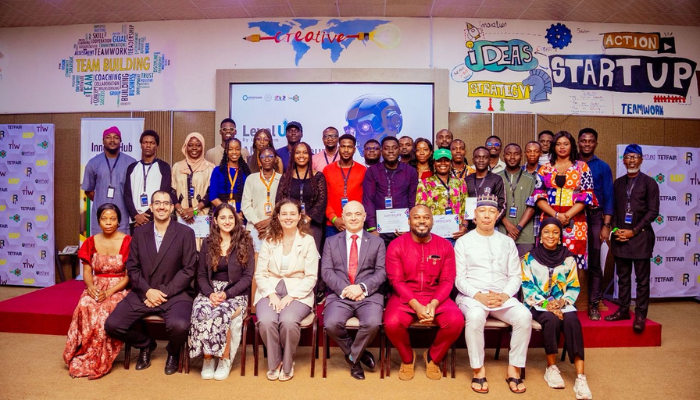
The central engine for this bilateral technology transfer is the Innovation Fellowship for Aspiring Inventors and Researchers (i-FAIR) programme, managed alongside implementation partner Innov8 Hub.
While many development programs focus purely on basic digital literacy, the i-FAIR framework acts as a deep-tech incubator. It provides young Nigerian engineers, researchers, and tech founders with the advanced manufacturing tools, technical mentorship, and intellectual property ($\text{IP}$) guidance needed to turn raw ideas into viable, venture-backed companies.
The bilateral roadmap introduces several key milestones for the initiative:
-
The Artificial Intelligence Expansion: At the recent i-FAIR Innovation Week, the partnership committed to building localized AI frameworks, ensuring that young African engineers are actively creating tailored, domestic AI business applications rather than simply consuming western technology.
-
The Fifth Cohort Rollout: Ambassador Freeman confirmed the formal launch of the fifth consecutive i-FAIR cohort, scheduled for 2027, to scale the developer talent pool.
-
Venture Tracking Outcomes: To date, the program has delivered over 1,300 hours of direct corporate mentorship, helping local startups develop functional prototypes and secure follow-on seed investments.
Agritech Transfers and Cross-Sector Economic Security
Beyond software development, the bilateral cooperation is addressing food security challenges by integrating advanced Israeli farming tech directly into Nigeria’s agricultural belts. Given ongoing supply-chain issues and food inflation, transitioning from traditional farming to modern, data-driven agriculture is a key economic priority.
Israeli firms are actively deploying advanced drip-irrigation networks, greenhouse systems, and climate-resilient seedlings across Nigeria. This hands-on technology transfer enables local agribusinesses to maintain year-round harvest cycles, reduce water overheads, and improve total crop yields.
Additionally, the Secretary to the Government of the Federation (SGF), Senator George Akume, recently met with Israeli delegates to explore using advanced drone surveillance, counterterrorism technology, and border-security systems to protect farming communities from security disruptions.
The Creative Economy Pipeline and Strategic Outlook
The trade alliance is also expanding to include intellectual property and the creative industries. Nigeria’s Minister of Art, Culture, Tourism, and Creative Economy, Hannatu Musawa, explained that President Bola Ahmed Tinubu’s Renewed Hope Agenda provides a clear opportunity to link Nigeria’s creative output with Israel’s tech expertise.
By connecting Nigeria’s booming entertainment and digital arts sectors with international distribution networks and digital rights management platforms, the partnership helps local creators monetize their work globally.
As Israel and Nigeria strengthen these commercial ties, the relationship is evolving from simple diplomatic engagement into a deep, strategic business partnership. Merging Israeli technology with Nigeria’s entrepreneurial energy creates a powerful framework capable of driving innovation, boosting agricultural output, and accelerating economic development across sub-Saharan Africa.
