

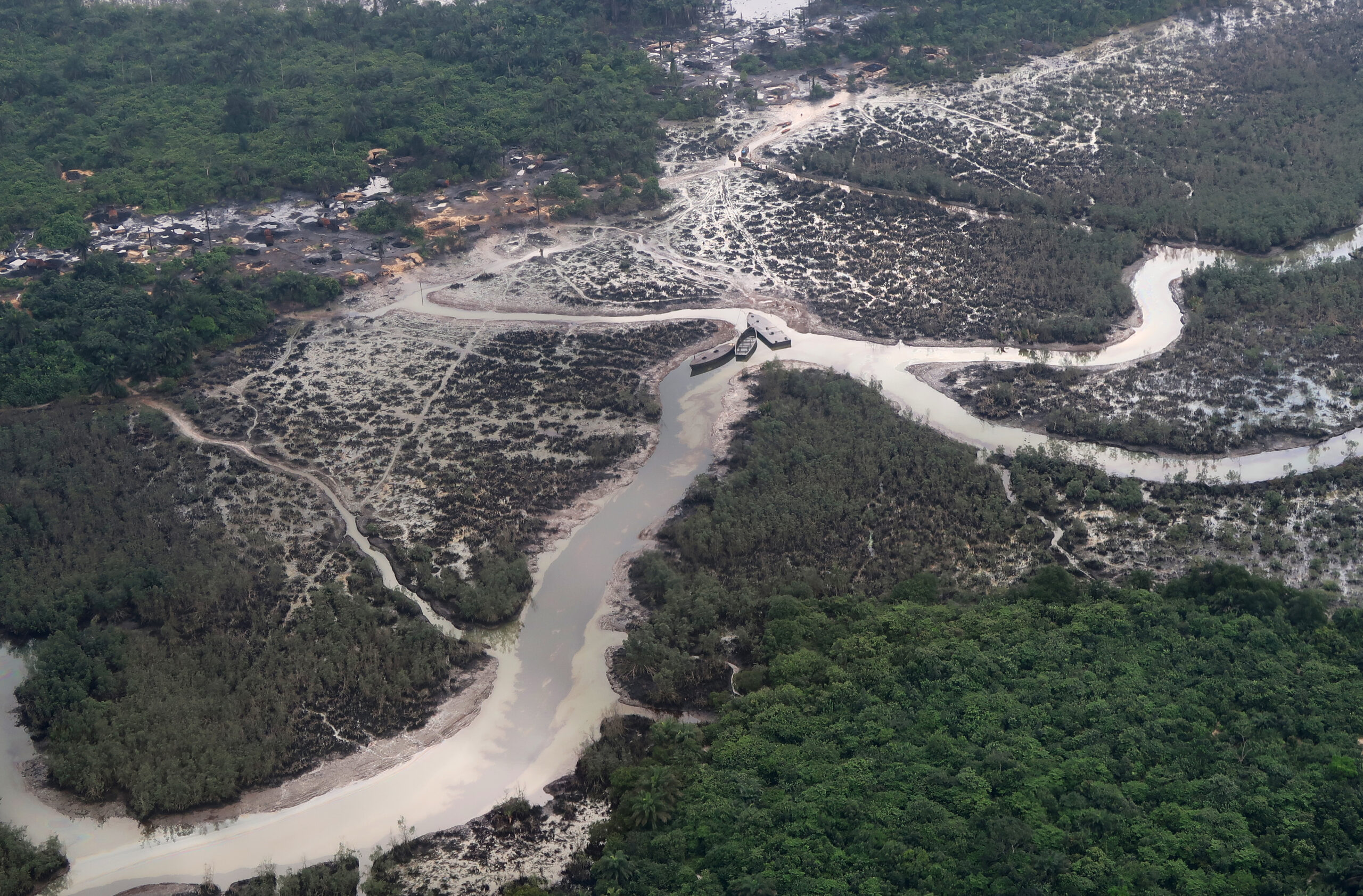
A major legal dispute in the United Kingdom is casting a spotlight on the long-term liabilities of international oil companies (IOCs) operating onshore in West Africa. Newly unsealed corporate internal documents, including internal emails and presentations obtained by the BBC, reveal that a senior Shell executive explicitly warned management as early as 2008 about the risks of running millions of barrels of crude through the company’s core infrastructure while it faced massive, unchecked theft and persistent equipment failures.
The litigation centers on the Nembe Creek Trunk Line (NCTL), a 60-mile (96.5km) pipeline capable of moving up to 150,000 barrels of oil per day from inland fields to coastal export terminals. The pipeline, which ran through the 45 islands making up the riverine community of Bille, became one of Shell’s most problematic assets due to repeated punctures by oil thieves before its eventual sale.
The Human Cost of the Spills
The legal action has been brought by local communities who want Shell held liable for more than 100 pipeline leaks that occurred between 2011 and 2013. Local fishermen, such as 64-year-old claimant Balafama Augustus Bruce, state that the leaks have systematically poisoned their historic fishing grounds.
Once-abundant populations of sardines, catfish, tilapia, and oysters have largely vanished from the mangroves, leaving local families facing severe economic hardship. This ecological damage aligns with United Nations data showing that at least 13 million barrels (1.5 million tonnes) of crude have been spilled across the Niger Delta over thousands of separate incidents since commercial extraction began in 1958.
Corporate Defense: The Economics of ‘Bunkering’
In its defense filings, Shell maintains a firm stance on the structural causes of the pollution. The energy multinational argues that the vast majority of the environmental damage stems from “bunkering”—large-scale, organized oil theft where criminal syndicates tap directly into pressurized high-volume pipelines to siphon crude onto barges.
[The Informal Refining Loop]
Pipeline Tapping (Bunkering) ──► Illegal Creek Refineries ──► Heavy Ambient Pollution & Soot
This stolen crude is either smuggled onto the international black market or processed in highly toxic, makeshift artisanal refineries hidden deep within the mangrove creeks. Shell argues that its Nigerian subsidiary spent years investing heavily in automated leak detection, pipeline surveillance, and rapid-response clean-up teams, asserting that operators should not bear full liability for third-party criminal sabotage.
The IOC Divestment Trend
The high-stakes London lawsuit highlights a broader structural shift in Nigeria’s oil and gas sector. Decades of legal friction, costly security requirements, and reputational challenges—stretching back to the historic protests led by writer Ken Saro-Wiwa in Ogoniland during the 1990s—have driven major international oil firms to rethink their onshore footprints.
By selling off onshore assets like the Nembe Creek Trunk Line to local consortia, international companies are systematically reallocating their capital away from vulnerable land pipelines and moving toward deepwater offshore blocks, where operations are largely insulated from onshore theft and local community litigation.
