

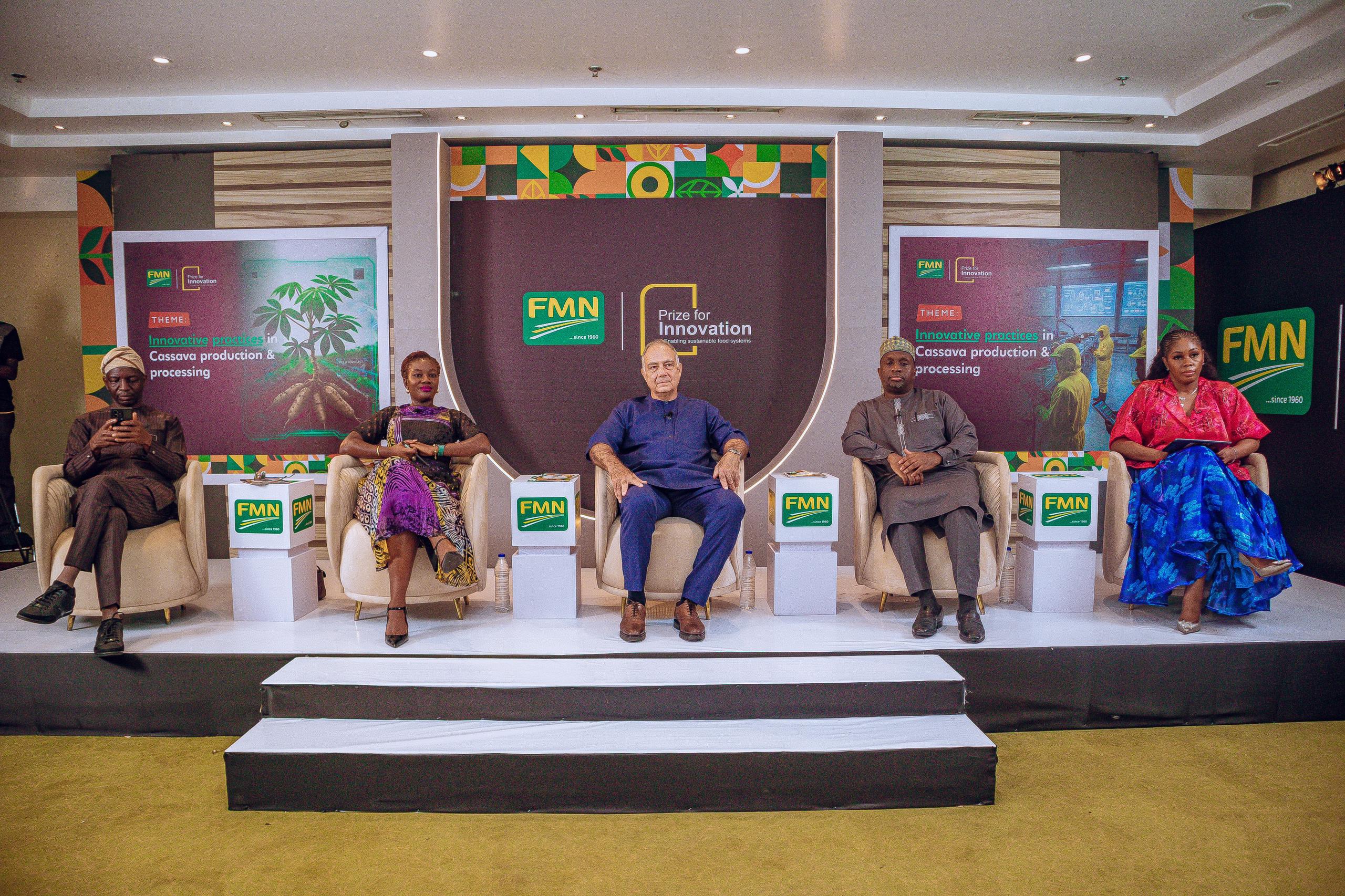
Flour Mills of Nigeria Plc (FMN) has wrapped up the grand finale of its fifth annual FMN Prize for Innovation (PFI 5.0), introducing a dramatic shift in its funding structure. While the initial call for entries slated the SME grand prize at ₦5 million, FMN Chairman John G. Coumantaros doubled the allocation at the live pitch ceremony, awarding a massive ₦10 million in equity-free capital to the first-place winner. The strategic policy adjustment responds directly to the macro-inflationary realities facing agro-processing businesses within the domestic ecosystem.
The 2026 edition, themed “Innovative Practices in Cassava Production and Processing,” explicitly tackles the country’s stark agricultural paradox: despite ranking as the world’s largest producer of raw cassava, Nigeria continues to spend scarce foreign exchange importing refined cassava derivatives like industrial starch, ethanol, and high-quality flour.
1. The Cohort Analysis: Capitalizing Industrial and Commercial Solutions
Out of more than 2,700 nationwide entries evaluated by a panel of agro-allied experts—including marketing strategist Yewande Kazeem and agronomist Kolawole Adeniji—five distinct corporate finalists secured direct cash grants to scale their downstream solutions:
-
Kiyoko Foods Ltd (Grand Prize Winner – ₦10,000,000): Founded by Victoria Ogwanighie—the first female grand prize winner in the program’s history—the company processes fresh cassava roots into a nutrient-rich snack branded as Sorghud Cheese Balls. The innovation provides an affordable alternative for child nutrition while establishing an immediate commercial sink for excess smallholder tuber harvests.
-
Pneedles Limited (First Runner-Up – ₦6,000,000): Led by Joshua Attat, the firm applies industrial upcycling principles to transform cassava peels—traditionally discarded as environmental pollutants—into sustainable, plant-based leather for the manufacturing sector.
-
Bach and Moen Ltd (Second Runner-Up – ₦4,000,000): Managed by Valentine Okoli, the business constructs decentralized processing hubs that enable rural farmers to process fresh cassava roots into shelf-stable convenience foods, like instant Abacha, within hours of harvest to minimize post-harvest rot.
-
Consolation Finalists (₦1,000,000 Each): Sadiq Muhammad of Amsadaf Ventures (mechanized smallholder harvester design) and Rashidat Ayoola Oluwafemi of Farmavi Agro (liquid bio-fertilizers formulated from toxic cassava effluents) each captured development funding to mature their prototypes.
2. Re-Engineering the Agricultural Sub-Structure
According to FMN Group Managing Director Boye Olusanya, the PFI 5.0 program has transitioned from a corporate social responsibility project into an industrial priority. Because raw cassava roots spoil within 48 hours of being pulled from the ground, building decentralized processing infrastructure is the single most important step toward achieving food security.
3. Integrating Local Innovations Into the Corporate Supply Chain
Adding an operational perspective, Group Director of Strategic Stakeholder Relations Sadiq Usman stated that the core goal of the 2026 program is to integrate these independent innovators directly into FMN’s broader industrial network. By backing early-stage agritech with structured mentorship, brand promotion, and corporate advisory services, the initiative prepares small businesses to absorb larger institutional contracts.
This private-sector-led investment framework serves as a model for sustainable rural economic development. Moving student innovators and small enterprise founders past simple research concepts and into capitalized production lines allows the country to fully monetize its massive agricultural output. This transition reduces import dependencies, creates manufacturing jobs, and strengthens the entire West African food system.
