

The National Youth Entrepreneurship and Empowerment Programme ($\text{YEEP 2026}$) summit concluded its primary deployment cycle in the Federal Capital Territory, resulting in a direct multi-million Naira liquidity injection into Nigeria’s early-stage creative and artisanal retail ecosystems.
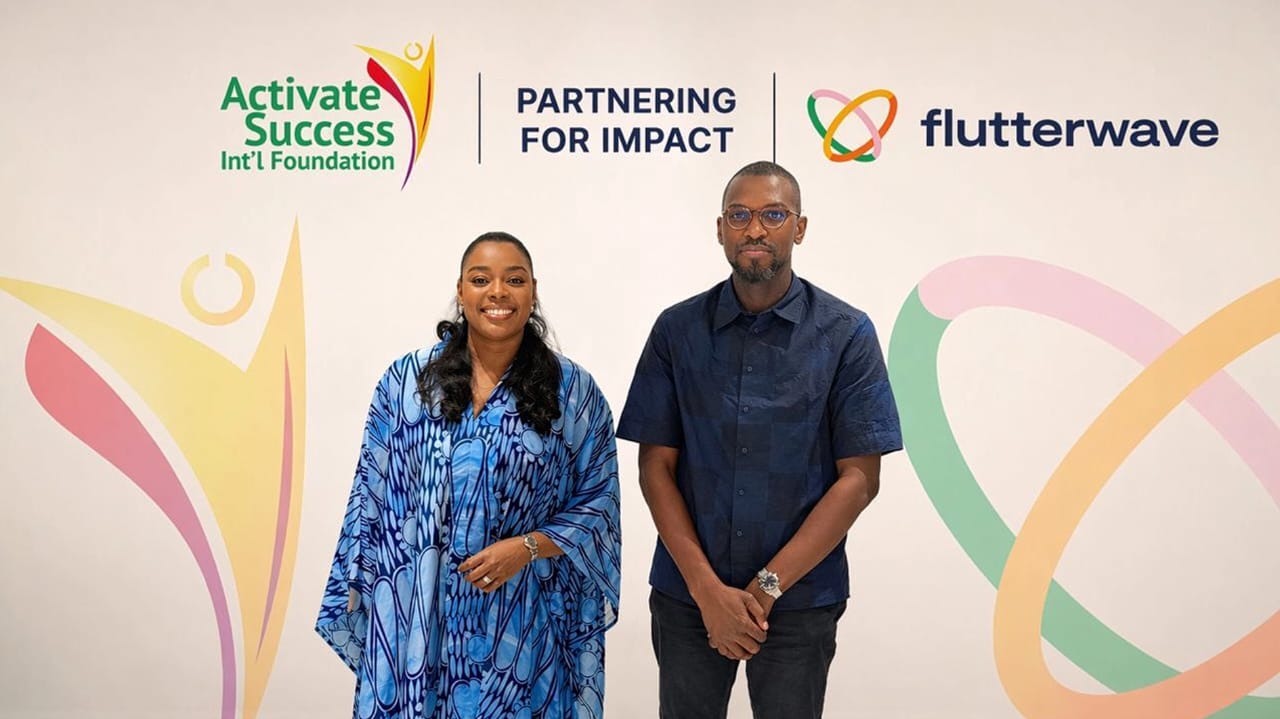
The initiative, co-organized by the non-profit Activate Success International Foundation (ASIF) and Africa’s payments technology company Flutterwave, targeted a major structural problem: the lack of formal seed capital and machinery that routinely stalls promising young businesses before they can scale up.
The high-profile event saw top public officials and private sector leaders work together to disburse over ₦72 million in direct cash grants and specialized vocational gear to 149 vetted young business owners. The financial support was carefully distributed across several key funding tranches:
-
Legislative Tranche: The Deputy Speaker of the House of Representatives, Benjamin Kalu, delivered the event’s largest single contribution, providing ₦37 million in equity-free capital divided among 74 selected business owners (₦500,000 each).
-
Political Directorate Allocation: The National Chairman of the All Progressives Congress ($\text{APC}$), Professor Nentawe Yilwatda, backed 40 young entrepreneurs with ₦20 million total, or ₦500,000 per recipient.
-
Federal Executive Support: The Minister of Women Affairs, Hajia Imaan Sulaiman-Ibrahim, provided ₦2.5 million in targeted grants to five independent female-led business owners.
-
Private Sector Consortium: Flutterwave and $\text{ASIF}$ teamed up to support 30 business owners. They distributed ₦500,000 cash grants each to 25 entrepreneurs and supplied five high-grade industrial sewing machines to fashion and textile startups to help boost local manufacturing capacity.
Moving Beyond Handouts to Build Structured Solutions
Speaking at the opening session, the Founder and Chief Executive Officer of $\text{ASIF}$, Love Idoko-Uloko, challenged the traditional view of youth empowerment as basic charity work. She argued that the real problem facing young businesses in Nigeria isn’t a lack of raw talent or good business ideas, but the absence of strong institutional support systems to help them turn that potential into profitable companies.
Addressing participants under the theme “Entrepreneurship, Innovation, Courage and Impact,” Idoko-Uloko described entrepreneurship as the disciplined creation of value where none previously existed. She pointed out that too many young people are held back by an economy where ideas exist but startup financing remains extremely difficult to find.
To break this cycle, she encouraged entrepreneurs to focus on building practical solutions to local problems, noting that sustainable financial rewards naturally follow when a business solves a real market need.
Tracking Long-Term Business Survival Rates
To keep the program highly accountable, $\text{ASIF}$ provided transparent data tracking the long-term success of its training model. Over the past ten years, the foundation has shifted its focus away from simply handing out short-term cash and toward driving long-term corporate formalization.
The numbers reveal that over 90% of businesses backed by ASIF remain fully operational, with 85% successfully achieving formal corporate registration through the Corporate Affairs Commission ($\text{CAC}$).
Furthermore, more than 70% of these tracked businesses have successfully expanded their operations and hired more workers. This high survival rate is supported by active partnerships with corporate anchors like Nestlé Nigeria and the National Youth Service Corps ($\text{NYSC}$), which help embed digital financial literacy directly into early-stage business models.
