

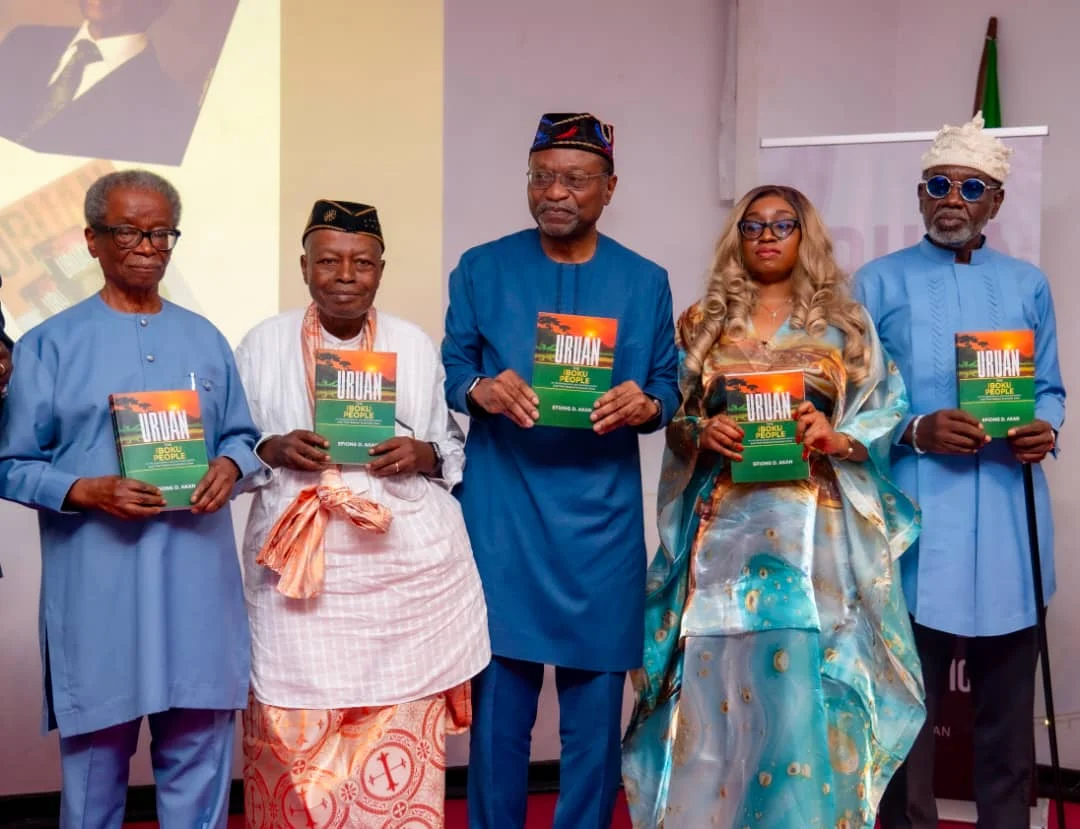
A high-profile gathering of scholars, business leaders, and former public office holders at the Nigerian Institute of International Affairs (NIIA) has reignited the intense national conversation surrounding Nigeria’s sovereignty losses and the ancestral economic rights of the Niger Delta people.
The debate resurfaced during the public presentation of a new book authored by renowned economist and former Group Executive Director of the Nigerian National Petroleum Corporation (NNPC), Mr. Efiong D. Akan. The publication, titled “Uruan: The Iboku People of the Geographical South Eastern Nigeria and Their Bakassi Economic Zone,” challenges long-standing geopolitical narratives and calls for a strategic reassessment of the oil-rich maritime border territory.
The Bakassi Peninsula, a resource-heavy territory extending into the Atlantic Ocean’s Gulf of Guinea, was formally transferred from Nigeria to Cameroon in 2008. This ceding followed the highly controversial 2002 International Court of Justice (ICJ) ruling and the subsequent 2006 Greentree Agreement.
Akan’s work argues that the peninsula remains an inseparable economic and cultural zone of the Iboku-Uruan ancestral heritage, urging Akwa Ibom leaders and legal experts to explore legal channels for redress.
A Convergence of History and Enterprise Capital
The book launch quickly evolved into a larger discussion regarding how historical documentation shapes modern economic and cultural survival.
The chairman of the occasion, Captain Augustine Otuekong, described the Uruan people as a strategic ethnic group whose historical contributions have deeply impacted national development. He noted that while their proximity to the Akwa Ibom State capital, Uyo, often defines their geographical importance, their real power lies in preserving their shared customs and language.
Reviewing the publication, the Chairman of the National Pension Commission (PenCom), Dr. Opeyemi Agbaje, praised the author’s meticulous documentation of indigenous history.
Agbaje, who is also the CEO of RTC Advisory Services, noted that the book traces the original Iboku migration lines, adding an invaluable reference point for future generations. He also paid tribute to former Group Managing Director of UAC Foods, Mr. Larry Ettah, recognizing him as a key ambassador for the Iboku people within Nigeria’s competitive corporate landscape.
Delivering the second review, Rear Admiral Francis Richard (retd.) commended the sheer depth of Akan’s work. Richard pointed out that the loss of Bakassi reflected a broader historical failure by Nigeria to clearly define and defend its long-term strategic and maritime interests, often ignoring the local economic realities of the indigenous fishing communities tied to the territory.
