

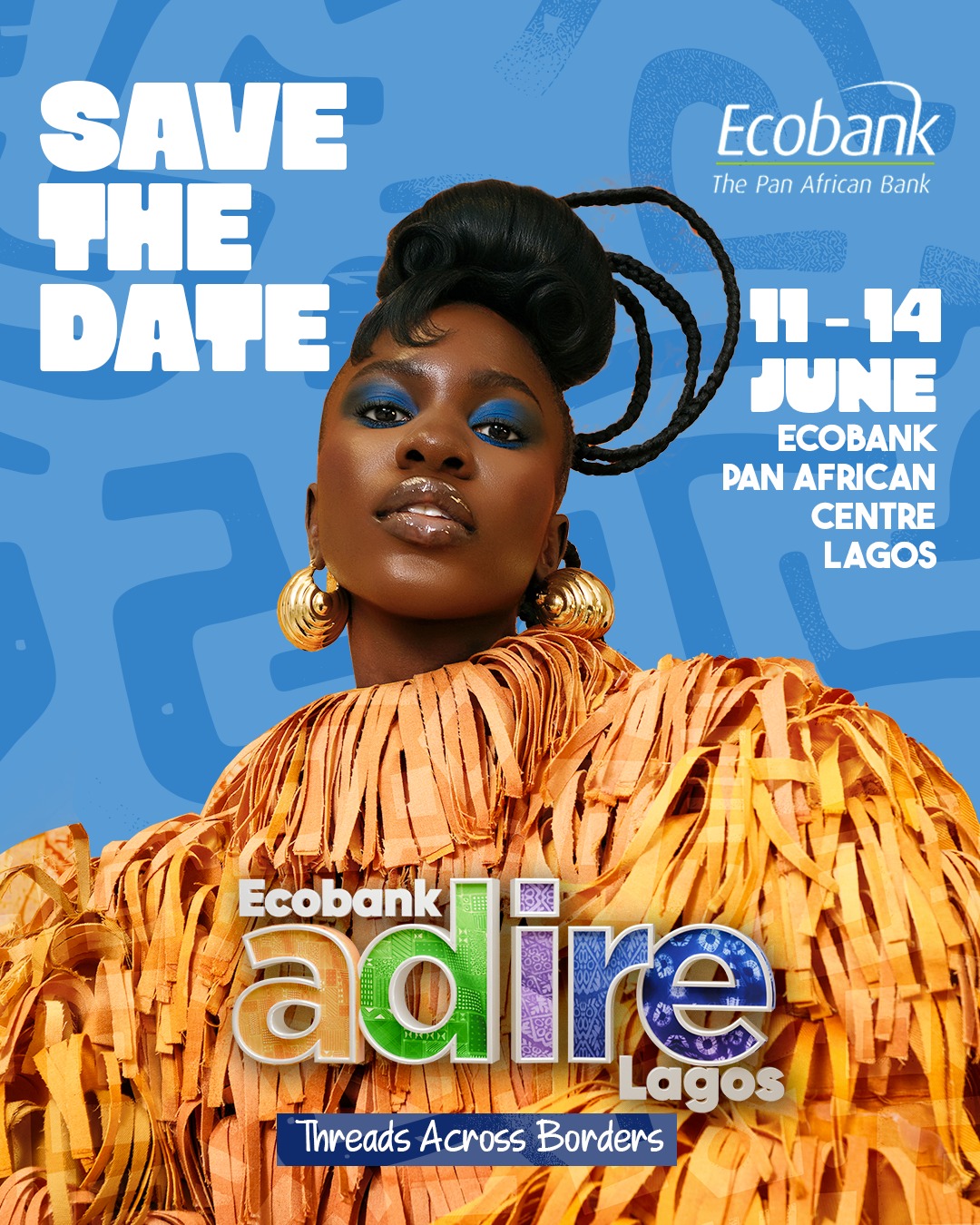
VICTORIA ISLAND, LAGOS — The domestic creative economy received a major structural push as Ecobank Nigeria wrapped up the fifth edition of its flagship cultural and commerce exhibition, the Ecobank Adire Lagos Experience.
Held at the high-capacity Ecobank Pan African Centre ($\text{EPAC}$) on Victoria Island, the four-day international exhibition, themed “Threads Across Borders,” served as a direct commercial pipeline for local artisans, pulling in an aggregate attendance of over 30,000 corporate shoppers, fashion enthusiasts, and international tourists.
The bank used the large-scale trade exhibition to target micro-enterprise development by entirely absorbing the logistical costs of hosting the expansive marketplace. Under this strategy, Ecobank provided complimentary, fully built exhibition booths to more than 100 selected small and medium-scale enterprises ($\text{SMEs}$), allowing local leatherworkers, beauty brands, and artisanal textile weavers to retain 100% of their event profit margins.
Sustaining Creative Sector Capital Injections
The high-profile event drew a notable delegation of national and cultural leaders. Former President Chief Olusegun Obasanjo, Nobel Laureate Prof. Wole Soyinka, and the First Lady of Lagos State, Dr. Ibijoke Sanwo-Olu, conducted direct inspections of the trade stalls alongside senior banking executives and members of the diplomatic corps.
Speaking during his tour of the facility, Chief Obasanjo called for a coordinated national effort to develop and promote the indigenous industry, emphasizing that the traditional textile sector can drive local job creation, protect heritage, and boost regional tourism.
Bolaji Lawal, Managing Director and Regional Executive of Ecobank Nigeria, emphasized that the resilience of local creative brands justifies the financial institution’s continued long-term capital investments in the retail sector.
Lawal noted that the bank’s broader vision involves leveraging its pan-African footprint to convert traditional craftsmanship into formal commercial enterprises, which in turn empowers entrepreneurs, boosts local industries, and supports sub-national retail growth.
Transforming Heritage into Global Enterprise Assets
To drive continental trade integration, the organizers allocated 10% of the complimentary exhibition spaces to creative designers from other West African nations, including Ghana, Sierra Leone, Senegal, and the Republic of Benin. This structural mix allowed local producers to establish cross-border partnerships, share technical knowledge, and prepare to scale into the broader African Continental Free Trade Area ($\text{AfCFTA}$) market.
Exhibitors praised the financial institution’s intervention, noting that the fair successfully closed the gap between traditional village-based fabric dyers and high-end urban consumer segments.
Beyond immediate over-the-counter retail sales, the structured event layout allowed small micro-traders to collect verified customer data, establish long-term corporate supply chains, and secure wholesale contracts with top-tier national fashion labels.
