

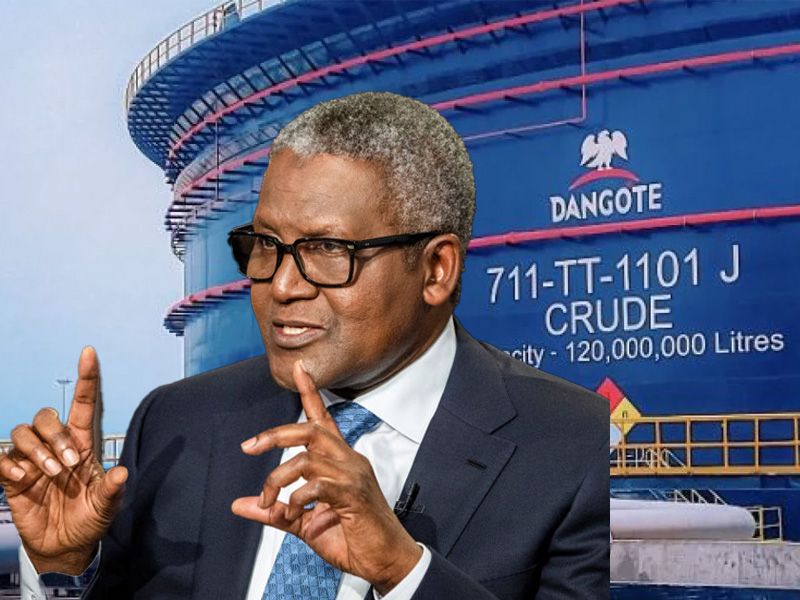
Aliko Dangote has revealed that the Dangote Group is preparing to enter the power sector with plans to generate up to 20,000 megawatts of electricity, marking one of the company’s most ambitious infrastructure moves yet.
Dangote disclosed the plan during a discussion with Makhtar Diop, where he outlined the group’s broader industrial expansion strategy across Africa.
Nigeria currently produces only about 4,000 to 4,500 megawatts of electricity despite having significantly higher installed capacity, leaving millions of households and businesses struggling with unreliable power supply. Dangote’s proposed investment could dramatically reshape the country’s energy landscape if implemented successfully.
Beyond electricity generation, the businessman highlighted several ongoing projects being pursued by the conglomerate, including investments in fertiliser production, liquefied natural gas infrastructure, mining operations, and deep-sea port development.
Reflecting on the early days of the refinery project, Dangote said many critics doubted the feasibility of constructing such a large facility, especially given his lack of prior experience in the oil industry at the time.
Despite the scepticism, the refinery — estimated to be worth around $20 billion — is now operational and producing refined petroleum products with a processing capacity of approximately 650,000 barrels per day.
Dangote explained that the success of the refinery has strengthened his confidence in executing large-scale industrial projects within Africa. According to him, demonstrating belief in the continent through direct investment is the most effective way to attract additional investors.
The industrialist also disclosed plans to significantly expand fertiliser production, with a target of reaching 12 million tonnes annually within the next few years. The expansion strategy includes the development of potash and phosphate mining projects in Congo and Brazil, as well as ongoing work on a major deep-sea port project.
He noted that the company’s improved cash flow and stronger financial position now provide the flexibility needed to fund additional large-scale projects across multiple sectors.
Dangote stressed that Africa’s development depends heavily on investments in key industries such as energy, fertiliser, logistics, and manufacturing, but warned that long-term success will also require the continent to remove trade and structural barriers limiting economic growth.
