

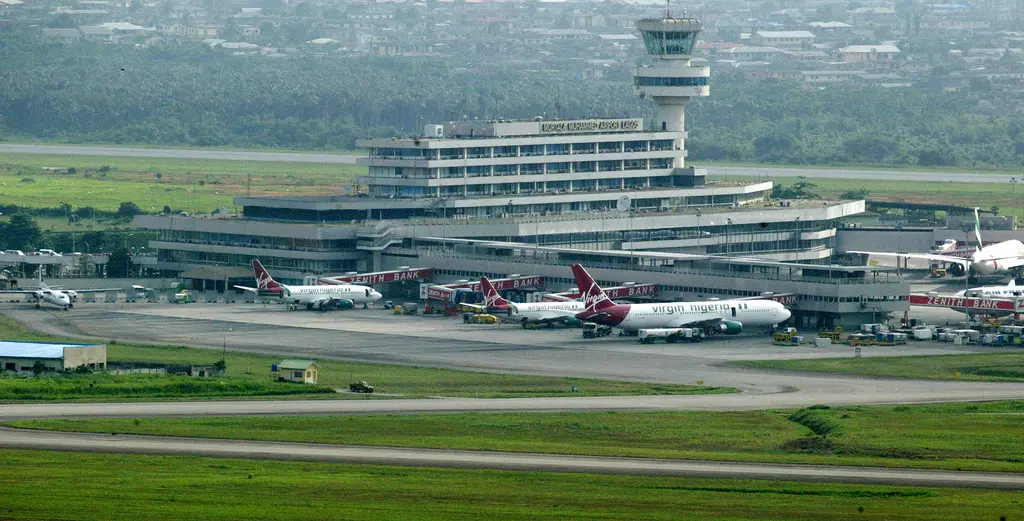
A regulatory gap in Nigeria’s aviation framework has left the Federal Government facing full financial liability for rebuilding the fire-damaged old international terminal (Terminal 1) at the Murtala Muhammed International Airport (MMIA) in Lagos. Following a major inferno at the facility, investigations by Financial Vanguard revealed that several months after the incident, no underwriting firm has recorded any claims exposure or liability.
The National Insurance Commission (NAICOM), led by the Commissioner for Insurance, Mr. Olusegun Omosehin, confirmed that no claims have been filed or processed for the disaster. The development highlights a critical exposure of strategic national infrastructure, revealing that while commercial aircraft are mandated by law to carry full liability cover, there is no corresponding legal requirement for the Federal Airports Authority of Nigeria (FAAN) to purchase comprehensive insurance for the physical terminal buildings.
1. Regulatory Gaps and the Dismantling of Policy Protections
Aviation security analysts and legal experts point out that this vulnerability stems from recent updates to industry guidelines. While legacy frameworks—such as the Nigerian Civil Aviation Authority (NCAA) regulations established in 2012 and updated in 2022—originally included provisions requiring international airports to carry up to $250 million in comprehensive property and liability insurance, these specific mandates were removed in subsequent regulatory updates.
As a result, the government must now find independent funding to cover all recovery expenses, including:
-
Terminal Demolition & Reconstruction: FAAN has adjusted its strategy to completely tear down the old 1979 terminal structure rather than trying to repair it, accelerating a ₦712.26 billion ($475 million) redevelopment plan financed through the infrastructure fund.
-
Third-Party Liability Settlements: The state must directly pay for all medical treatments and emergency rehabilitation for travelers and staff injured during the terminal fire.
-
Operational Revenue Loss: The complete shutdown of the processing halls forces international flight operations to route entirely through the newer, adjacent terminal, straining passenger handling capacity.
2. Underwriting Growth Versus Asset Vulnerabilities
The lack of property insurance on vital airport assets stands in sharp contrast to the strong financial growth recorded across the broader insurance industry. Data shows a significant increase in the combined marine and aviation insurance categories, driven primarily by rising asset values and stricter international enforcement on mobile transportation properties.
| Fiscal Underwriting Metric | 2024 Performance Base | 2025 Performance Baseline |
| Aviation & Marine Premium Volume | ₦128.2 Billion | ₦187.1 Billion (A 45.9% year-on-year expansion). |
| Sector Claims Payout Liability | ₦64.2 Billion | Sustained upward settlement path across regional ports. |
| Primary Premium Source Driver | Commercial aircraft hull protection and marine cargo freight insurance. | Outbound commercial shipping lines and hull renewals. |
| Terminal Asset Coverage Level | 0% Insurance Capture across major state-run terminals. | Uninsured; full risk held by the federal treasury. |
According to insurance practitioners, the steady premium growth is unevenly distributed. The vast majority of these funds come from maritime shipping cargo covers and commercial aircraft hull policies, which are strictly required by international lease agreements and global aviation treaties.
3. Shifting from Budget Funding to Risk Mitigation
Aviation analysts, including Group Captain John Ojikutu (Retd.), argue that relying on the government to bail out damaged facilities is an unsustainable approach to managing national assets. With the national treasury under pressure from inflation and high borrowing costs, experts are urging the Ministry of Aviation to reintroduce mandatory insurance policies for all public transport hubs.
By utilizing international reinsurance pools to share these high-value property risks, Nigeria can protect its transport network from catastrophic unexpected losses, ensuring that future accidents are handled through structured corporate insurance claims rather than unplanned allocations from the public budget.
