

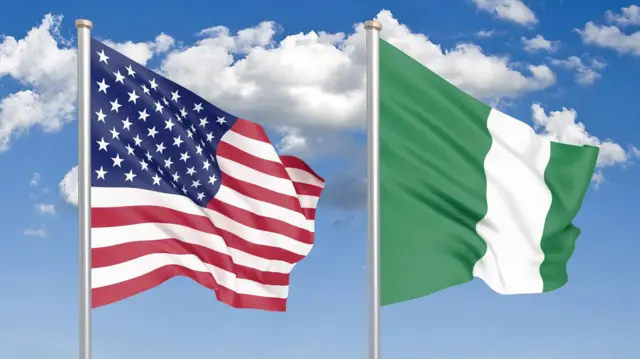
In a move that signals a meaningful shift in how the United States engages economically with Africa’s largest economy, American agricultural financing is flowing back into Nigeria through a revived government-backed credit guarantee programme — and the numbers suggest the timing couldn’t be more deliberate.
The U.S. Department of Agriculture’s GSM-102 programme, which offers federal guarantees that allow Nigerian banks and importers to secure financing for purchasing American farm commodities, has reopened to Nigerian financial institutions following a restoration of eligibility in late 2025. Credit limits have already been extended to select Nigerian banks, meaning the pipeline isn’t theoretical — it’s already moving.
The backdrop makes the revival even more significant. Two-way trade in goods and services between the U.S. and Nigeria hit approximately $15 billion in 2025, a 14% climb from the year before. Agricultural trade alone nearly doubled — surging 84% from $415 million in 2024 to $764 million last year. That’s not a trend. That’s a structural shift in the relationship.
Speaking at a trade event in Lagos organised by the U.S. Foreign Agricultural Service, U.S. Consul General Rick Swart made the strategic intent explicit: “We are making a clear shift — from aid to trade. That means we are looking for real-world solutions that foster the kind of business environment that enables entrepreneurs, innovators, and investors to build the future of U.S.-Nigeria commerce.”
It’s a line that sounds like a policy speech but lands like a business pitch — and that’s precisely the point.
The two-day gathering brought U.S. and Nigerian stakeholders to the same table: government agencies, financial institutions, agribusiness firms, and exporters. The agenda was transactional by design — focused on converting market opportunities into actual deals through direct business-to-business engagement, rather than the roundtable discussions that rarely leave the room.
Demeteris “Dee” Hale, a senior USDA analyst, framed the programme’s core value simply: reducing risk so that lenders and exporters can move with confidence into markets they might otherwise avoid.
For Nigeria, the immediate potential lies in stabilising agricultural supply chains and ensuring consistent access to key farm inputs — a pressure point that has repeatedly disrupted food production in recent years. For U.S. producers, it opens a market of over 200 million consumers that is structurally dependent on food imports.
But the fine print matters. Analysts note that the programme’s real-world impact will hinge on how effectively Nigerian banks and importers actually deploy the facility — and on whether broader currency and macroeconomic conditions cooperate. A credit guarantee only works if the underlying trade environment is functional enough to absorb it.
Still, the direction of travel is clear. The U.S. isn’t approaching Nigeria as a recipient of goodwill anymore. It’s approaching it as a commercial partner worth investing in — and it’s putting government-backed money behind that bet.
