

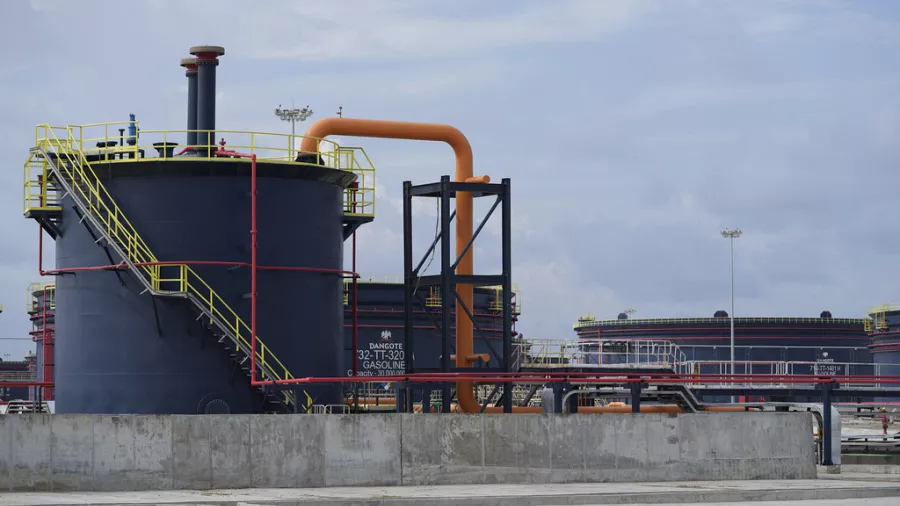
Despite the full operational launch of the 650,000 barrels-per-day Dangote Petroleum Refinery earlier this year, Nigerians are grappling with a record-breaking 65% spike in fuel costs. This surge—the sharpest among Africa’s major economies—highlights a painful irony: being the continent’s top crude producer does not automatically guarantee cheap energy at the pump.
As the Middle East conflict continues to destabilize global markets, the “Dangote Shield” has proven thinner than many hoped, revealing deep-seated structural bottlenecks in Nigeria’s energy financing.
The Removal of the “Buffer”
The current price shock is the direct result of a “perfect storm” of policy and geopolitics:
-
Subsidy Removal: Upon taking office in 2023, President Bola Tinubu scrapped the long-standing fuel subsidy. While international investors applauded the move as a necessary reform, it left Nigerian consumers fully exposed to global market volatility.
-
Global Contagion: With crude prices exceeding $100 per barrel due to maritime disruptions, the cost of the raw material needed for refining has skyrocketed.
The Financing Trap: Why Nigeria Imports Its Own Oil
The most startling revelation in the current crisis is that the Dangote Refinery is forced to import expensive crude from abroad despite sitting in an oil-rich nation. The constraint is tied to the NNPC Limited’s joint-venture model:
-
Oil-Backed Loans: A significant portion of Nigeria’s future crude production is already committed to repaying international debts.
-
Pre-Export Deals: National oil assets are tied up in “forward sale” agreements, leaving insufficient “free” crude to supply local refineries at a discount.
-
The Dollar Factor: Because these committed volumes are priced in Dollars, local refineries must compete with global buyers, effectively importing “expensive crude” to produce “expensive petrol.”
The Shift from Exporter to “Internal Importer”
The Dangote Refinery was engineered to transform Nigeria into a refined-product powerhouse. However, the transition has been blunted by these fiscal obligations. Instead of Nigeria exporting surplus fuel, it is currently struggling to stabilize its own domestic supply without the cushion of a subsidy or a guaranteed, low-cost local crude supply.
Economic Outlook: ESG and Reform
As governments and companies track ESG (Environmental, Social, and Governance) trends, Nigeria’s energy crisis serves as a case study in the “Social” impact of rapid reform. While the removal of subsidies improves fiscal health, the lack of an immediate energy alternative has placed an immense burden on the population.
The path forward, according to industry experts, requires a renegotiation of how local refineries access Nigerian crude. Without a shift toward Naira-denominated sales or a “domestic crude obligation” that takes priority over international debt servicing, the refinery’s massive capacity will continue to be a high-performance engine running on unaffordable fuel.
