

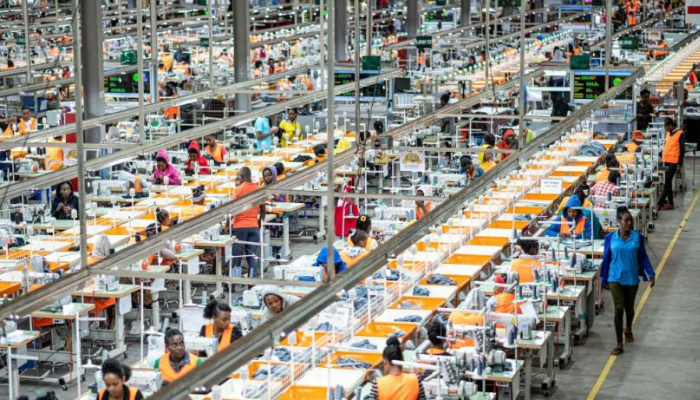
Nigeria has officially declared war on economic stagnation with the launch of the Nigerian Industrialisation Policy (NIP). Unveiled during a high-profile summit in Lagos, this isn’t just another government document—it is a unified “War Room” strategy designed to collapse the silos between trade, investment, and production.
The End of Fragmented Growth For decades, Nigeria’s industrial efforts have been scattered and inconsistent. The new 2026 framework changes the game by moving away from “theory” and toward “deliberate implementation.” Developed hand-in-hand with the private sector, the policy ensures that local manufacturers and small-scale entrepreneurs are the primary drivers of growth, rather than just spectators.
Strategic Pillars of the New Era The roadmap focuses on four critical “shifters” to rebuild the nation’s economic DNA:
-
Mandatory Value Addition: No more exporting “potential.” By restricting the export of raw materials, the government is forcing a shift toward domestic processing.
-
Scalable MSMEs: Instead of keeping small businesses small, the policy provides a ladder for micro-enterprises to transition into industrial-scale players.
-
AfCFTA Readiness: With the African Continental Free Trade Area in full swing, the NIP prepares Nigerian goods to dominate the continental market through superior quality and competitive pricing.
-
Import Substitution: Identifying the goods Nigerians consume most and creating the domestic capacity to build them locally.
The “20-in-30” Vision The stakes are incredibly high. The Federal Government has set a monumental target: raising manufacturing’s contribution to the National GDP to 20–25% by the year 2030. Currently, the economy is hindered by a heavy reliance on foreign goods and weak supply chains. By plugging these holes, the policy aims to create a “virtuous cycle” of factory expansions, mass employment, and increased purchasing power for the average Nigerian.
Moving from Paper to Pavement Recognizing that “policy is only as good as its execution,” implementation structures are already being activated. This framework is designed to be the final nail in the coffin of import dependence, ensuring that the “Made in Nigeria” label becomes a global standard of productivity and excellence rather than a rare exception.
