

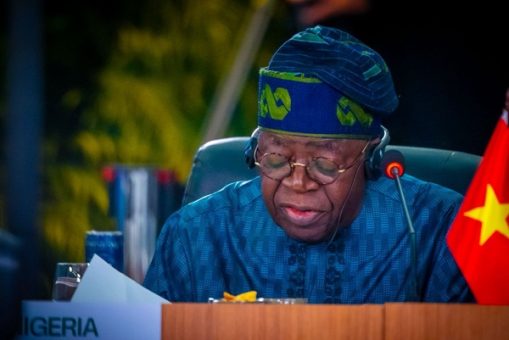
Last week was a carefully orchestrated symphony of reform that signaled a turning point for the presidency of Bola Ahmed Tinubu. For the first time since the “bitter medicine” of 2023 was administered, Nigeria began to take delivery of the fruits of its sacrifices. It was a week where the world stopped looking at Nigeria as a “high-risk” project and began viewing it as a “high-yield” partner.
1. The Brussels Breakthrough: Restoring the Sovereign Seal
The week’s most consequential victory didn’t involve a handshake or a ceremony; it was a quiet update to a European Union database. On Thursday, January 15, 2026, the EU officially removed Nigeria from its list of high-risk third countries for Anti-Money Laundering and Terrorism Financing (AML/CFT).
This is not a cosmetic change. For years, this “invisible tag” acted as a silent tax on every Nigerian business, subjecting transactions to exhausting scrutiny and slowing the pulse of trade. By exiting the FATF grey list in October 2025 and now the EU blacklist, Nigeria has restored its “Trust Premium.” From January 29, 2026, Nigerian commerce moves from suspicion to confidence.
2. The Abu Dhabi Pivot: Trade as a Weapon of Growth
While Brussels provided the validation, Abu Dhabi provided the momentum. President Tinubu’s participation in the Abu Dhabi Sustainability Week was far from ceremonial. It was a transactional mission that culminated in the signing of the Comprehensive Economic Partnership Agreement (CEPA).
The CEPA is a doorway for the “Total Merchant”:
-
Immediate Market Access: The UAE has eliminated tariffs on over 7,000 Nigerian products, from seafood and cereals to pharmaceuticals.
-
Corporate Integration: Nigerian businesses can now open subsidiaries in the UAE, and executives gain three-year renewable residency permits to oversee their global expansions.
-
The $3 Billion Carbon Play: Tinubu approved the full rollout of Nigeria’s carbon market framework, an audacious move to monetize the green economy and yield $3 billion annually by 2030.
3. The Foundation of Security: Honoring the Guardians
Amidst the high-finance of Abu Dhabi, the President maintained his focus on the national anchor: the Armed Forces. On the 2026 Armed Forces Celebration and Remembrance Day, Tinubu (represented by Vice President Kashim Shettima) delivered a message that was both sober and strategic.
He reaffirmed that the administration’s focus on the military is not just about budgets but about dignity. “A nation that forgets its fallen heroes loses its direction,” he noted, bridging the gap between the sacrifices made at home and the successes achieved abroad.
The Bottom Line
The events of the past week—the EU delisting, the UAE trade pact, and the carbon market activation—are not isolated events. They are the measurable rewards of a President who refused to govern by half-measures. Tinubu understands that credibility abroad is inseparable from coherence at home. As Nigeria enters this “consolidation phase,” the message to the world is clear: the rot has been cleared, the firewalls are up, and the gates are open.
