

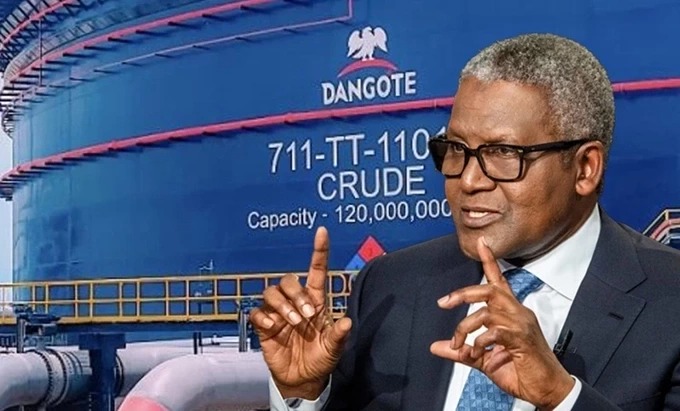
If you noticed a sudden spike at the gas station this week, you aren’t alone. The Dangote Refinery has officially raised its wholesale (ex-depot) price by N100—about a 12% increase—bringing the rate from N774 to N874 per litre.
While the change feels sudden, the cause is thousands of miles away.
The Middle East Connection
The refinery pointed directly to the escalating conflict between the U.S., Israel, and Iran. This isn’t just political noise; it has physically choked the world’s oil supply:
-
The Hormuz Deadlock: The Strait of Hormuz, which carries half of the world’s crude oil, has seen shipments grind to a halt due to the war.
-
Refinery Blackouts: Global instability has forced several international refineries to shut down, creating a worldwide shortage of finished petrol.
-
The “Nigerian Premium”: Surprisingly, Nigerian crude oil is currently trading at $3 to $6 more per barrel than the global Brent benchmark. When you add shipping costs, the refinery is paying up to $91 per barrel just to get the raw material through the door.
The “20% Shield”
Despite the hike, the refinery claims it is actually protecting the Nigerian consumer. According to their management, the actual cost of production rose even higher than N100, but the refinery chose to absorb 20% of that extra cost themselves to prevent an even sharper price shock at the pump.
Why NNPC Isn’t Enough
A major factor in the price volatility is a supply gap. While the refinery has a deal to buy some crude in Naira from the NNPC, it only covers about 5 cargoes a month. To keep Nigeria running, the refinery needs 13 cargoes. To fill that gap, they are forced to buy from international traders who charge much higher “emergency” premiums.
Looking Ahead: The CNG Solution
To fight back against these global shocks, Dangote is pivoting to a new logistics strategy:
-
CNG Trucks: This month, the refinery is rolling out a fleet of trucks powered by Compressed Natural Gas (CNG).
-
Cost Cutting: By moving away from expensive diesel for their own transport, they hope to slash distribution costs and speed up delivery across Nigeria.
The message from the refinery is clear: they are trying to be a “stabilizing force,” but they can’t sell fuel for less than it costs to make without risking a total shutdown.
