

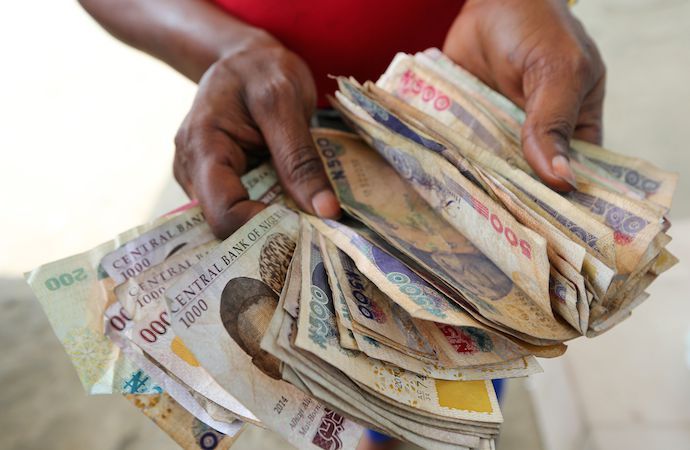
Despite a landmark year for development finance, Nigeria’s small and medium-sized enterprises (SMEs) are facing a deepening credit crunch. While the Bank of Industry (BOI) reported its largest-ever annual disbursement of N636 billion in 2025, industry stakeholders warn that the vast majority of the nation’s 40 million small businesses remain effectively sidelined from the formal financial system.
Record Outlays vs. On-the-Ground Reality
The BOI’s 2025 performance data suggests a massive injection of liquidity into the economy, with funds targeted at manufacturing, ICT, and the creative economy. However, a closer look at the allocation reveals a significant disparity:
-
Large Enterprise Dominance: Of the total disbursement, N375 billion was directed toward large-scale corporations, while only N178 billion reached the SME sector.
-
The “High-Risk” Label: According to Dr. Femi Egbesola, President of the Association of Small Business Owners of Nigeria (ASBON), commercial banks increasingly view SMEs as high-risk exposures.
-
Flight to Safety: Amidst recapitalization pressures and macroeconomic volatility, banks are channeling liquidity into government securities—where returns are predictable and risk is minimal—rather than lending to local businesses.
Barriers to Entry: Cost and Compliance
For the few small businesses that do qualify for formal credit, the “cost of money” has become a primary obstacle to survival. ASBON highlights several factors making credit inaccessible in practical terms:
-
High Interest Rates: Current rates often exceed the profit margins of small businesses, making repayment nearly impossible.
-
Stricter Collateral Requirements: Lending thresholds have tightened, leaving those without significant assets locked out.
-
The “Nano” Business Gap: A high percentage of Nigeria’s 40 million SMEs are “nano-businesses”—kiosks and workshops with zero employees—that lack the formal structures required to access intervention funds.
The Shrinking Safety Net
Beyond bank loans, alternative funding sources are also drying up. Corporate social responsibility (CSR) programs and private-sector grants have contracted as larger companies adjust to their own economic pressures. This has left startups and micro-enterprises without the “soft funding” that typically supports early-stage growth.
The broader implications of this financing gap are severe:
-
Slower Job Creation: Enterprises are scaling down or closing entirely due to a lack of working capital.
-
Under-Capacity Operations: Many businesses are unable to purchase raw materials or upgrade equipment.
-
Structural Shortfall: Stakeholders argue this is not a temporary dip but a structural failure of the current credit delivery model.
Conclusion: Beyond the Numbers
The administration of President Bola Ahmed Tinubu has prioritized enterprise development as a pillar of its reform agenda. However, industry experts warn that announcing high volumes of funding is insufficient. For Nigeria to achieve its industrial goals, the focus must shift toward accessibility, affordability, and the creation of specialized credit-guarantee schemes that address the unique risks of the SME and nano-business segments.
