

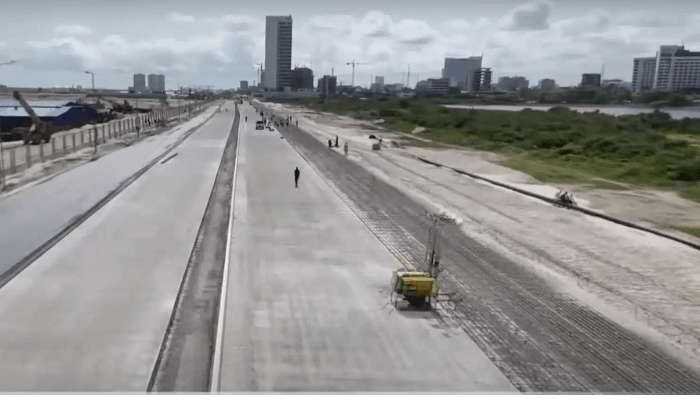
At a landmark summit held at the historic Cocoa House in Ibadan, Nigeria’s economic architects from the South-West and South-South regions converged to redefine the 750-kilometre Lagos-Calabar Coastal Road. The consensus was clear: this is not merely a transportation project; it is a 700-square-kilometre “Enterprise Zone” that could potentially leapfrog Nigeria’s GDP from under $400 billion to an astronomical $1.4 trillion to $14 trillion over the next 50 years.
1. Breaking the “Silo” Syndrome
The core of the meeting, led by experts like Seye Oyeleye, was a warning against “haphazard development.” Historically, Nigerian infrastructure has suffered because states worked in isolation.
-
The New Mandate: Lagos, Ogun, Ondo, and the BRACED (South-South) states are moving toward a Joint Development Body.
-
The Goal: To ensure that the entire 750km stretch is governed by a single, coordinated master plan, preventing the “slum-sprawl” that typically follows new Nigerian roads.
2. Beyond Asphalt: The “Value-Add” Blueprint
The road is described as the “Hardware,” but the stakeholders are focused on the “Software”—the economic activities that will line the corridor:
-
Industrial Hubs: Strategically placed manufacturing clusters to tap into maritime access.
-
Green Zones & Tourism: Preserving coastal integrity to create a world-class tourism ribbon.
-
Integrated Zoning: Establishing strict security and governance structures from Day 1 to protect private sector investments.
3. The 50-Year GDP Leap
Economist Olawale Opayinka presented the “Macro-Case” for the project. By creating a continuous economic link across the southern coast, Nigeria can reprice its entire land value.
-
The Valuation: If properly executed, the enterprise value created along this corridor alone could exceed the current total national GDP by a factor of 10 or more.
-
The Risk: The “N87 billion loss” at Eko Atlantic due to the road’s alignment serves as a reminder of the high stakes and the need for precision in planning to avoid destroying existing value while creating new wealth.
4. Political Will as the Primary Fuel
Joe Keshi and other leaders emphasized that the engineering is the easy part. The real challenge is the Political Will to maintain a 50-year vision across different administrations and state lines. The highway is being framed as the “Greatest Infrastructure Program in 65 years,” requiring a level of regional cooperation unseen since the First Republic.
