

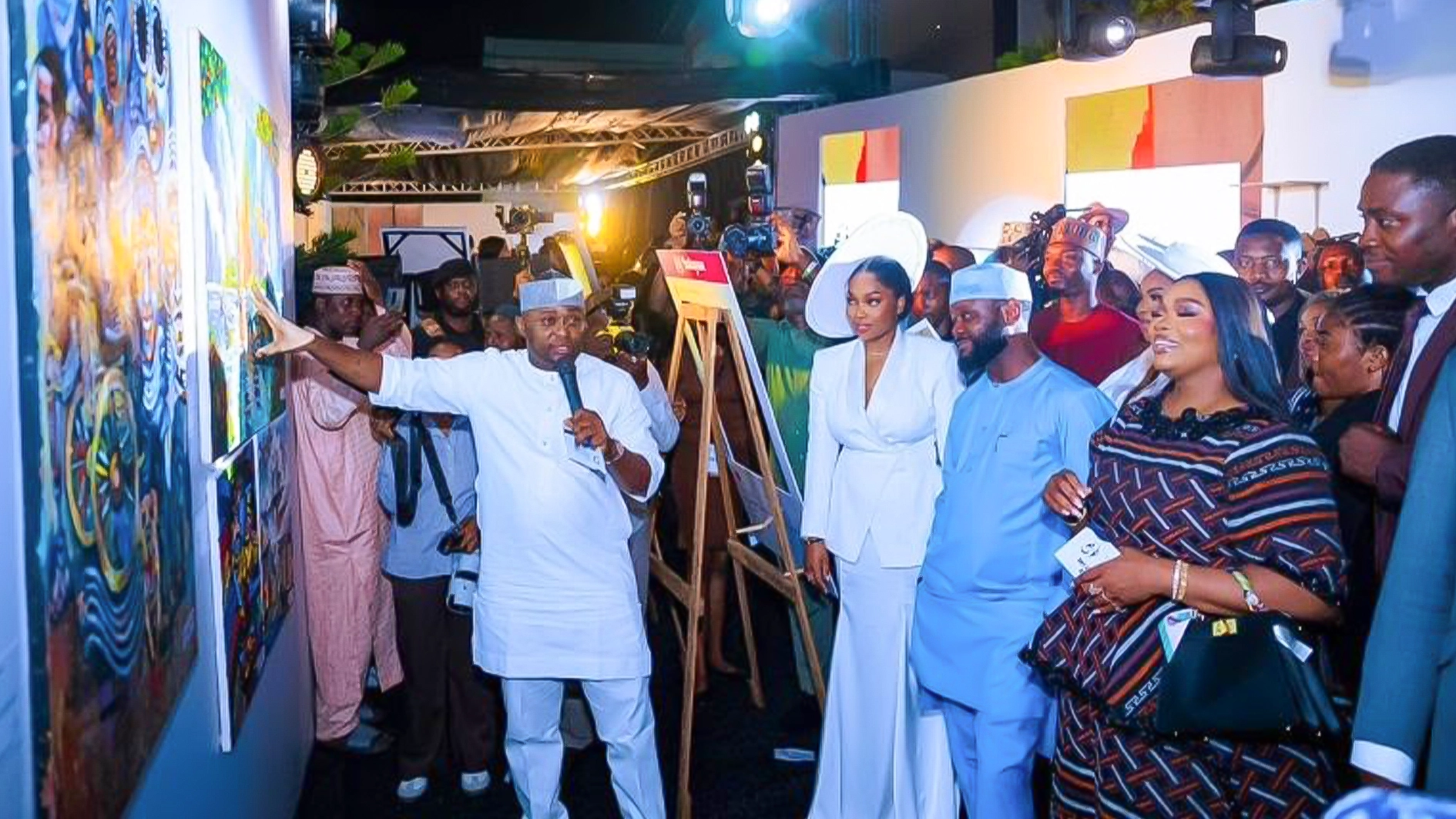
The paintings were on the walls. The bids were on the table. And when the auction closed, the proceeds didn’t go to an endowment or an awareness campaign — they went directly into the hands of entrepreneurs with disabilities, as seed funding for small businesses across agriculture, tailoring, technology repair, and food production.
That is the model The Ability Life Initiative is building. And it is a more sophisticated idea than it might first appear.
TALI — founded by Dr. Prada Uzodimma and Ms. Oprah Uzodimma-Ohaeri — hosted its Art for Ability exhibition and auction in Abuja, bringing together a room that reflected genuine institutional weight: policymakers, private sector leaders, cultural figures, and government representation including Hannatu Musa Musawa, Minister of Art, Culture, Tourism and Creative Economy, Femi Gbajabiamila, Seyi Tinubu, and celebrated cultural icon Nike Davies-Okundaye. The attendance was not incidental — it was a signal that disability inclusion is being repositioned, at least in this conversation, as an economic priority rather than a social welfare footnote.
The event’s structure made that repositioning concrete. Artworks created by and in support of persons with disabilities were exhibited and auctioned not primarily as cultural objects but as instruments of capital generation. Each sale translated directly into enterprise funding. The creative economy, in this model, becomes a pipeline — talent generates visibility, visibility generates bids, bids generate capital, and capital generates businesses. It is a value chain built around inclusion rather than charity.
That distinction — between charity and economic participation — was the recurring thread running through stakeholder engagement at the event. The message from multiple speakers was consistent and deliberate: awareness has reached its ceiling. The disability inclusion conversation in Nigeria has produced enough conferences, enough symbolic gestures, and enough well-intentioned declarations. What it has not yet produced, at scale, is structured access to capital and sustainable enterprise support for the 27 million plus Nigerians living with some form of disability.
TALI is attempting to build that structure — one auction at a time.
The Ministry of Art, Culture, Tourism and Creative Economy used the platform to reaffirm its commitment to leveraging the creative industry as a vehicle for inclusion and job creation, noting that Art for Ability demonstrates how policy intent and creative enterprise can intersect to produce measurable outcomes rather than just aligned rhetoric. The initiative also sits within the frame of the Federal Government’s Renewed Hope Agenda, which includes inclusion-focused interventions targeting underserved populations.
Beyond the funding mechanism, the event created structured dialogue around the specific barriers that keep persons with disabilities outside the formal economy — limited access to capital, inadequate financial literacy infrastructure, and an enterprise support system not designed with their participation in mind. Stakeholders engaged on what scalable, enduring inclusion looks like when it is built on access and participation rather than goodwill and awareness.
The proposition TALI is advancing is straightforward but consequential: disability inclusion is not a moral obligation to be discharged through donation. It is an economic strategy — one that expands the productive base of the economy by bringing a systematically excluded segment into active participation.
An art auction is an unusual vehicle for that argument. But as a proof of concept for turning cultural capital into enterprise funding for underserved entrepreneurs, it is a more elegant solution than most policy papers have managed to produce.
