

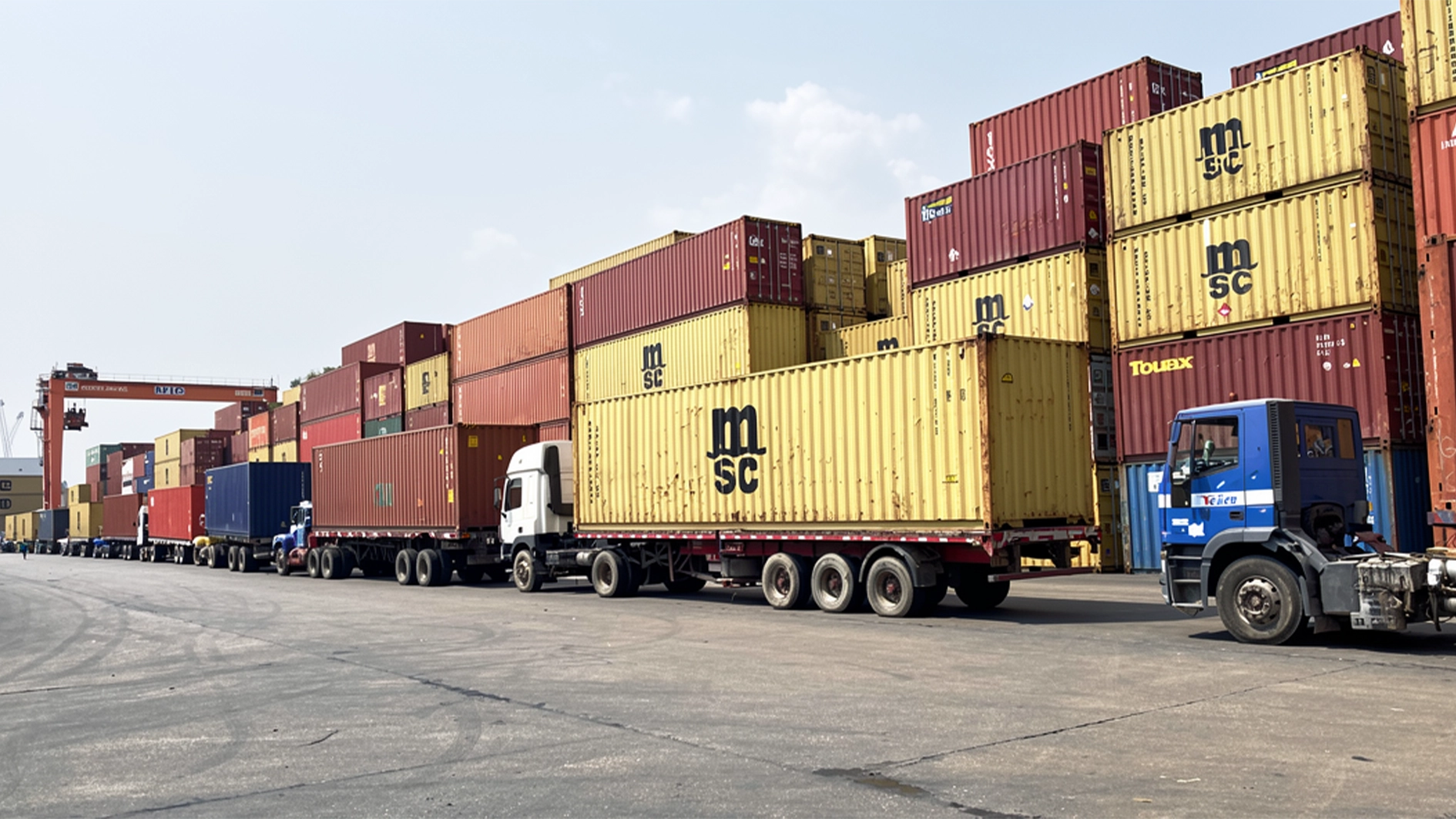
KEBBI — In a decisive move to mend regional trade ties and unlock billions in frozen revenue, President Bola Tinubu has ordered the reopening of the Tsamiya–Sagbana border crossing between Nigeria and the Republic of Benin.
The directive serves as a vital pressure valve, immediately facilitating the passage of approximately 2,000 trucks that have sat stranded at the border for months. Beyond the immediate logistical relief, the move signals the end of a stalemate that had placed an estimated $1.3 billion in trans-Saharan trade at risk.
The “Transit Status” Comeback
For years, Nigeria’s neighbors—specifically landlocked nations like Niger Republic—turned away from Nigerian ports, discouraged by the twin hurdles of Apapa port congestion and deteriorating road networks. Many opted for alternative routes through other West African nations.
However, the tide is turning. Experts, including Dr. Ikenna Nwosu of the Lagos Chamber of Commerce and Industry (LCCI), note that Nigeria is finally reclaiming its “transit status.” The geographical reality remains unchanged: Nigerian ports are the most efficient gateways for goods destined for the Sahel. With the borders reopening, the “entry point” advantage is back in play.
A Multi-Billion Naira Revenue Stream
The reopening isn’t just about moving trucks; it’s about the massive ecosystem of fees that follows them. According to the Centre for the Promotion of Private Enterprise (CPPE), the Federal Government is positioned to see a significant spike in:
-
Transit & Shipping Fees: Charges paid by neighboring nations to move cargo through Nigerian territory.
-
Terminal Handling: Increased activity for port operators.
-
Professional Services: A surge in business for Nigerian clearing agents and freight forwarders who manage the complex documentation for transit goods.
“Transit cargo to Niger Republic is easier from Nigerian ports than from other countries’ ports,” says Dr. Muda Yusuf, CEO of CPPE. “This will increase the volume of activities in our ports because we handle the transit cargo.”
Strengthening the Sahel Corridor
The closure of the northern corridor had created a bottleneck along the trans-Saharan road, a critical artery connecting six African countries. By restoring this flow, the government is not only boosting its own non-oil revenue but also repositioning Nigeria as the primary regional logistics hub for West Africa.
As the 2,000 stranded trucks begin to roll, the focus shifts to the long-term infrastructure of the border. Customs Controller General Dr. Bashir Adeniyi emphasized that the goal is to support “legitimate trade,” ensuring that as the gates open, the security and regulatory frameworks are robust enough to handle the increased throughput.
