

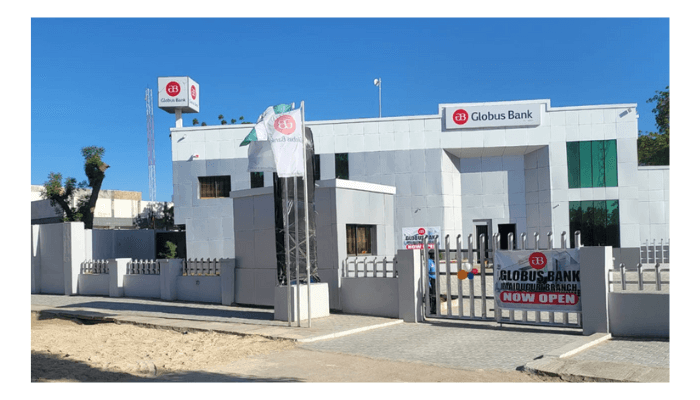
At a time when the Central Bank of Nigeria (CBN) is struggling with rising Non-Performing Loans (NPLs) above the 5% benchmark, a partnership between fintech giant Nomba and Globus Bank has produced a stunning anomaly. The duo revealed that their ₦21.3 billion SME credit portfolio has maintained an NPL ratio below 1%, offering a potential blueprint for solving Nigeria’s ₦13 trillion unmet credit demand.
Underwriting the “Invisible” Merchant The secret to the 1% success rate lies in moving away from traditional “paper-heavy” banking. Instead of asking for audited financials or land titles—which most Nigerian SMEs lack—the model uses Real-Time Transaction Data:
-
Live Financial Profiles: Credit decisions are based on merchant cash flows, sales volumes, and settlement patterns captured via Nomba’s POS and payment infrastructure.
-
Observed Revenue vs. Projections: Loan sizing is tied to what a business actually earns today, rather than what it hopes to earn tomorrow.
The “Operating System” as Collateral Nomba and Globus have introduced a “Digitized Collateral Framework” that replaces physical assets with platform utility:
-
Embedded Repayment: Loan repayments are integrated into the daily business activity on the platform.
-
The “Kill Switch” Mechanic: Instead of post-default recovery (which is notoriously difficult in Nigeria), merchants retain access to their business tools and settlements only as long as they meet their obligations. This creates “genuine skin in the game” for the borrower.
The “Right” Question for Nigerian Credit Yinka Adewale, CEO of Nomba, challenged the industry to shift its focus from “how much was disbursed” to “how much was paid back.”
“The Nigerian credit conversation has been captured by the wrong question. Our answer is a non-performing loan ratio below 1% on ₦21.3 billion. That happened because we built underwriting infrastructure that actually works,” Adewale stated.
Scaling to ₦500 Billion With the proof of concept established, the partners are aiming high:
-
Target: Building a ₦500 billion credit book based on this data-led model.
-
Sector Focus: Expansion into high-impact sectors including Logistics, Healthcare, and Manufacturing.
-
Institutional Reach: Elias Igbinakenzua, MD of Globus Bank, noted that the facility’s quality is defined by “verified transaction data, not documents,” signaling a new era for disciplined, infrastructure-led lending.
The Bottom Line For decades, the “lack of formal records” has been the wall between SMEs and capital. By turning the payment terminal into a credit bureau, Nomba and Globus Bank aren’t just lending money; they are proving that Nigeria’s informal sector is highly bankable—provided you have the right digital eyes to see it.
