

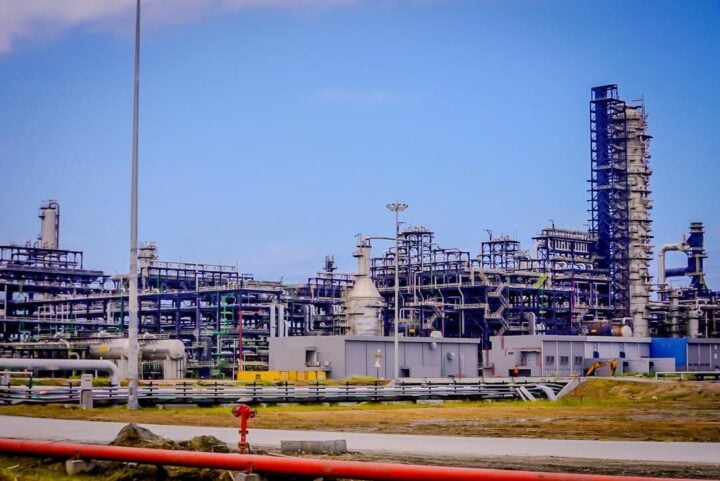
In a bittersweet milestone for Nigeria’s energy sector, the Dangote Petroleum Refinery has reached its full production capacity of 650,000 barrels per day (bpd). While the achievement marks a historic end to Nigeria’s reliance on imported fuel, it has coincided with a brutal global oil shock that is pushing small businesses to the brink of collapse.
Geopolitical Headwinds: The $100 Barrel Despite refining locally, Nigeria remains lashed to the mast of international pricing. A combination of market uncertainty and the closure of the Strait of Hormuz—a critical chokepoint for 20% of global oil—has sent crude prices soaring above $100 per barrel.
-
Price Surge: Domestic fuel prices have spiked by 65% in recent weeks.
-
Refinery Pricing: On April 8, 2026, Dangote Refinery adjusted its gantry price to ₦1,200 per litre, a slight reduction from a peak of ₦1,275 earlier in the month, as it attempts to track volatile global benchmarks.
SMEs: The “Nightmare” of Production Costs For local entrepreneurs, the “Energy Independence” dream feels more like a nightmare. The surge in fuel and diesel costs has decimated profit margins across the board:
-
Water Production: Operations managers report that the cost of producing 3,500 bags of water has jumped from roughly $11.01 to as high as $36.69, forcing price hikes that many citizens can no longer afford.
-
Manufacturing & Sawmills: Business owners like Jato Richard highlight the irony of “living on a sea of oil” while paying wartime prices due to external conflicts.
The Government’s “Renewed Hope” Response To cushion the blow, the Federal Government has promised a suite of market reforms aimed specifically at SME welfare. These include:
-
Domestic Crude Allocation: Enforcing the “Naira-for-Crude” framework to decouple local refining costs from dollar volatility.
-
Logistics Subsidies: Efforts to reduce “hidden costs” in the downstream sector, such as port charges and multiple levies that inflate the final pump price.
-
Clean Energy Transition: Pushing for the adoption of Compressed Natural Gas (CNG) as a cheaper, more stable alternative to petrol and diesel for small-scale industrial use.
The Bottom Line Nigeria has achieved its goal of local refining, but the timing could not be more challenging. The 2026 “Onion Bridge” and trade disputes with neighbors are being compounded by this energy crisis. For the Nigerian entrepreneur, the battle is no longer just about getting fuel, but about affording the fuel that is now being produced right in their backyard.
