

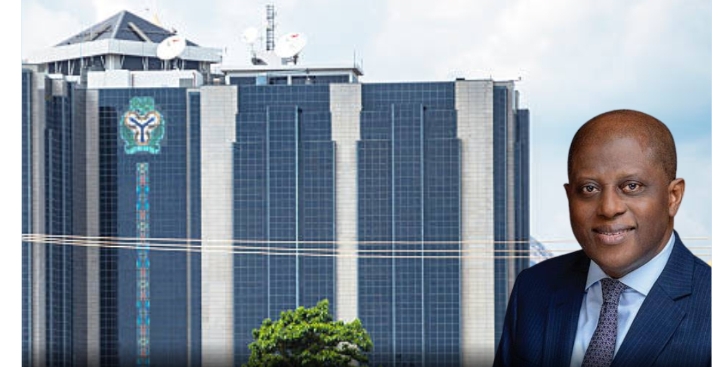
The marathon is over. The Central Bank of Nigeria (CBN) has officially confirmed the successful completion of its 24-month recapitalisation exercise, with 33 banks crossing the finish line. The program, which raised a staggering ₦4.65 trillion, has fundamentally fortified the nation’s financial fortress, pushing capital adequacy ratios well above global Basel benchmarks.
The Power of Local Capital Perhaps the most significant takeaway from the exercise was the “Homegrown” factor. 72.55% of the total capital raised was sourced from domestic investors, signaling a massive vote of confidence in the Nigerian banking sector despite broader macroeconomic reforms.
The Shift: From “Big Balance Sheets” to “Big Impact” Now that the vaults are full, experts are demanding a shift in focus. Dr. Jerry Igwilo, CEO of Wynk Limited, argues that the next phase must prioritize the customer. He criticized the “very poor” state of current complaint management systems and called for a consolidated, real-time digital framework that allows the CBN to monitor customer grievances as they happen.
“We need a system where banks are not evaluated solely on their capital base, but on how they treat their customers and how they impact their lives,” Igwilo stated.
Where the Money Will Go With ₦4.65 trillion in new liquidity, analysts like Olubunmi Ayokunle of Agusto & Co. expect a aggressive “deployment phase” in the coming weeks:
-
Continental Expansion: Banks with international licenses are expected to announce new acquisitions and branches across Africa.
-
SME Focus: With SMEs contributing 50% of GDP but currently receiving only 1% of total bank credit, they are the primary target for the new loan books.
-
Tech Overhaul: Significant portions of the capital will be sunk into upgrading digital platforms to handle more complex deposit products.
The Intermediation Gap Despite the successful capital raise, Dr. Muda Yusuf of the CPPE highlighted a lingering structural weakness: Nigeria’s private sector credit sits at just 17% of GDP, trailing the sub-Saharan average of 25%. Furthermore, 75% of bank loans remain short-term. The challenge for the newly recapitalized “Class of 2026” is to turn this idle capital into long-term, productive loans that can actually propel Nigeria toward its $1 trillion GDP goal.
The Bottom Line The CBN has built the foundation. The ₦4.65 trillion represents a ₦560 billion increase over February 2026 projections, proving that the appetite for Nigerian banking remains voracious. Now, the ball is in the banks’ court to prove they can be as good at serving customers as they are at raising cash.
