

Introducing MINE 1000: The Largest Profiling of Made In Nigeria Entrepreneurs (MINE)
Nigeria’s entrepreneurial spirit is one of its greatest untapped national assets.
Across cities, campuses, and communities, millions of small business owners are quietly building, innovating, and creating value—often without recognition, documentation, or visibility.
MINE 1000 (Made In Nigeria Entrepreneurs 1000) is a bold national initiative by naijapreneur.com to change that.
It is the largest annual profiling of Small Business Owners in Nigeria, capturing 1,000 real entrepreneurial stories from across the country—documenting their journeys, struggles, breakthroughs, and impact. This project is designed to become a permanent digital archive of Nigerian entrepreneurship, accessible to the public, investors, government, researchers, policymakers, and future generations.
These are not just success stories.
They are real stories—raw, inspiring, and deeply reflective of what it truly means to build a business in Nigeria.
Meet Eloho Zoe Tanho-Attah, Founder of aeea Design Company
In a world obsessed with loud success, viral moments, and overnight wins, there exists a different kind of entrepreneur—one who builds quietly, patiently, and relentlessly over time.
They are not driven by applause, but by purpose.
Not by trends, but by conviction.
Not by speed, but by depth.
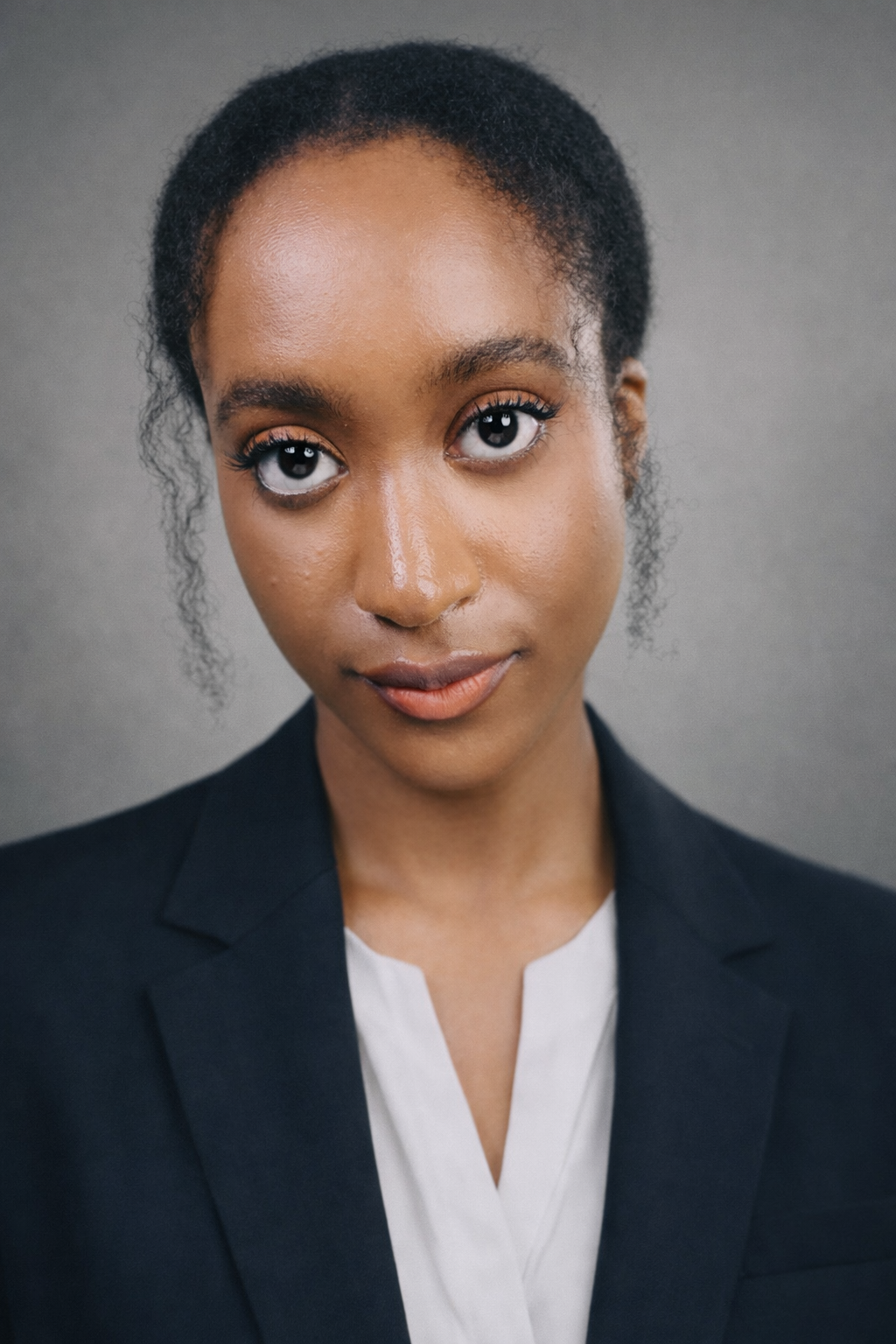
Eloho Zoe Tanho-Attah is one of such builders.
Her journey didn’t begin with funding rounds, elite networks, or industry recognition. It began with a simple but powerful belief: that human potential—especially in Nigeria—is vastly underdeveloped, and that the right tools, systems, and environments can unlock it.
With just ₦50,000, a bedroom workspace, and a Blackberry phone, she started what would eventually become aeea Design Company—a venture that has evolved far beyond fashion into a bold attempt to engineer performance itself.
But this is not just a story of business growth.
It is a story of resilience in obscurity, conviction in the face of doubt, and the long, often invisible journey of building something that truly matters.
Because for Eloho, success was never just about profit.
It was about impact.
It was about transformation.
And ultimately, it was about redefining what Nigerians believe is possible—for themselves.
SECTION A — THE FOUNDER’S ORIGIN STORY
Every giant once stood on wobbly legs.
What is your full name and what do you prefer to be called?
Eloho Zoe Tanho-Attah. She goes by Eloho.
Where did you grow up?
Eloho grew up in the Delta Steel Company (DSC) Housing Estate in Ovwian, Aladja, Delta State — a well-planned community with schools and shopping plazas. A lovely place to grow up, as she puts it.
What did your parents do for a living, and how did that shape your view of work and money?
Her father was a manager at DSC and her mother a French Lecturer at the College of Education, Warri. “There was a culture of accounting and resource allocation that formed the basis of my understanding of the relationship between value creation and financial abundance,” she says.
Before entrepreneurship, what did the younger version of you dream of becoming?
“I’ve always wanted to do my own thing. I didn’t know it was called ‘entrepreneurship’. I knew I had a lot of value to give and new insights to share — and that’s what I looked forward to doing.”
Describe the moment you realized you wanted to run your own business.
It was gradual. In boarding school, students were allowed to design their own house wear using school materials. Eloho had the design ideas but couldn’t find tailors to execute them — so she learned tailoring herself. That process introduced her to the textile industry, its collapse, and its cultural significance. She decided she wanted to fix it. The fashion brand was born from that resolve.
Who is the one person you would credit as an inspiration for your entrepreneurial journey?
“I honestly wouldn’t credit anyone because I didn’t know of entrepreneurship. I grew up around traditional working class adults and entrepreneurs weren’t popular unlike entertainers. I just wanted to change things and I started taking steps to do so.”
SECTION B — THE BUSINESS BIRTH
From idea to first sale.
What is your official business name?
aeea Design Company (previously known as SCHIHP TECHNOLOGIES LTD — BN 7094427).
In one sentence, what does your business do?
“We design high-impact essentials for the peak performer.”
What year did you start, and how old were you?
Eloho started her work in 2011 at age 22, immediately after completing her NYSC service year.
Describe your startup capital situation.
She started with ₦50,000 from personal savings. “I started with my own money and then had support from a handful of friends. I managed well so ‘nos’ weren’t a factor.” Day one operations: her bedroom.
Tell us about your very first customer.
“My first customers were friends. My first designs were posted on my Blackberry and sold out immediately. It made me feel like I was doing something right.”
What was your biggest mistake in the first year?
“Not capitalising on the initial momentum as well as I could have. It taught me to separate myself from the business so as to pivot quickly where necessary.”
If your business were a child, describe its difficult birth or toddler years.
“Birth was great but as we started to walk, we began to wobble as we faced issues with design materials — but then we hit a massive growth spurt once we pivoted and landed a retail store buyer. I designed a wedding line as ‘supplemental nutrients’ to fund our demand, but ultimately chose to outgrow that phase to protect our true DNA: practical, social-impact design.”
SECTION C — THE STRUGGLE CHRONICLES
What didn’t kill the business…
Describe a moment when you almost quit.
“I almost quit at least once every week. But there was a time I almost quit for good. I didn’t think people appreciated the work I was doing and if the people don’t appreciate it, what’s the point? So I took time off to reflect, to remember my why. I saw that my metrics were off and when I readjusted my bearings, I could see the good that came from the work I do — and I got back on the saddle.”
What was your lowest financial point?
“A few years ago. We had spent a considerable amount of time improving our designs and that came with an increase in the prices of our products. Unfortunately, the market was not favorable so we were getting orders but they went unfulfilled.”
Have you ever been betrayed in business?
“I had an employee who stole our designs and used them to start her own fashion label — cut for cut, style for style. I let it go. Looking back, maybe I shouldn’t have.”
What sacrifices have you made personally for this business?
Time with family, sleep, and financial sacrifices.
How has entrepreneurship affected your mental and emotional health?
“It’s mostly an issue when I consider what I could have gained or where I could have been if I had gone the more straightforward route. That can sometimes be disheartening. However, knowing that my work is about more than me helps to keep things in focus.”
What criticism or doubt did you face from friends or family?
“I have a first class degree in Business Administration and was recruited straight out of University by one of the top international companies in the country, so most people were disappointed that I didn’t take that route. I think they’ve made their peace with it.”
Have you ever had to lay someone off?
“I’ve had to terminate contracts mostly for reasons of incompetence or a change in structure and not financial. There’s some discomfort but that’s why professionalism helps, especially with just cause.”
“Knowing that my work is about more than me helps to keep things in focus.”
SECTION D — THE BREAKTHROUGH MOMENTS
The tide turns.
What was the single biggest opportunity that changed your business trajectory?
“I got an investor who gave me some of the cash I needed to properly build the architecture for my business. It gave me the opportunity to deploy products in the way that I had envisioned but had not been able to actualize.”
Describe your first million (₦1M) moment.
“It took about 4 years. There was no celebration I think because it had taken so long. I just wanted to keep working.”
Who believed in you when it mattered most?
Her husband. “We had been away for some years and I had taken the time to redesign and restructure things with work and when I was ready to reopen, I knew I needed to change location. He didn’t hesitate.”
What is the one decision that turned out to be brilliantly right?
“Shutting down our bespoke design services. It was our money maker at the time but I knew it wasn’t what we set out to do. Because we weren’t tethered to it, we were able to expand into a full range of products designed to provide individuals with the daily essentials needed to be their best.”
Tell us about a mentor or advisor who made a difference.
“Tanho Attah, Founder of KADE KEYO BUSINESS DEVELOPER, advised me to stop depending on the business for my financial needs. By separating the two, I gave my work the breathing room it needed to grow and scale and I was in a much better frame of mind to perform.”
When did you first realize, ‘I might actually pull this off’?
“I’ve always been confident in my ability to pull it off. What I wasn’t sure of was my ability to hang on long enough. I knew it’d take a while but I didn’t know how long. For me, the question was, ‘How much longer?’ Now, I’ve been at it so long it’s like second nature. It’s simply, ‘What are we doing today to ensure our mandate is delivered?’ As long as we answer the question right every day, the vision will be realised.”
SECTION E — THE BUSINESS TODAY
Where things stand.
 Current team size?
1 full-time staff. 2 Advisory Board members.
Current locations?
Started in Delta State. Full operations now in Lagos State.
Annual revenue range?
Less than ₦5M.
What is your most popular product or service?
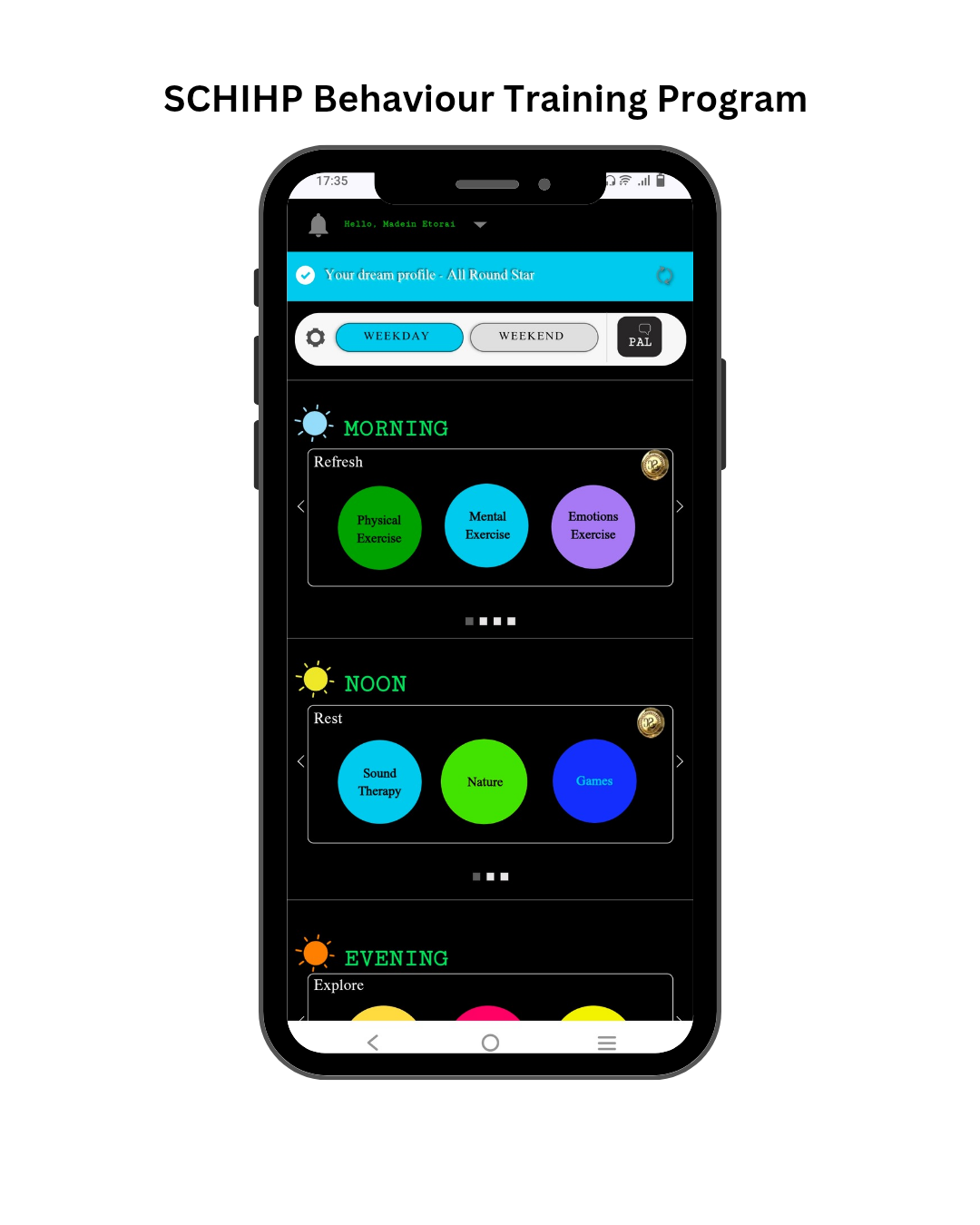
SCHIHP — a behaviour training program designed to use real incentives to encourage habits that are linked to success. “Customers love it because they get to learn, engage their minds, acquire relevant skills and win prizes all in a simple, user-friendly interface. Feedback shows that they feel seen and are grateful for the program.”
Who is your ideal customer, and how do you reach them?
“Our ideal customer is a high-potential individual who expects more from themselves and chooses the right essentials to perform at their peak (typically between 22 and 45 years).” Reached through online advertising.
What sets you apart from competitors?
“Most design collectives focus on aesthetics. What we do better is combine world-class aesthetics with a social agenda. This creates superior essentials that deliver greater value to the user.”
What is the biggest operational challenge right now?
“As a solopreneur, having to jump between wildly different cognitive tasks every hour sometimes causes slower execution and expansion.”
How has your role as founder changed?
“At the beginning, it was about finding the most effective way to translate my vision. Now, our foundations are set and it’s about efficient operations, revenue/profit and loss and hitting targets. In other words, the boring stuff. I still love it though.”
SECTION F — LESSONS FROM THE TRENCHES
If I knew then what I know now.
What do you know now about running a business in Nigeria that you wish you knew on Day 1?
“The environment is not kind to innovation. It supports time-tested ideas that are simple, traditional or better still — foreign, by foreigners.”
What is the biggest myth about entrepreneurship you want to debunk?
“That being your own boss is better than employment. It’s not. These are two different things akin to two different types of people. Plugging into an already set system and adding value there is a win. Not everyone can get that the same way not everyone can start a new thing.”
What specific skill has proven most valuable to your success?
“Research and Data analysis. Studying my consumer and market behaviour is very instrumental in designing effective products that people need.”
What system, tool, or habit has made the biggest difference to your productivity?
“AI has been a great advantage. It helps do the job of a few more people and therefore moves us forward without incurring heavy costs.”
How do you handle the ‘government factor’ in Nigeria?
“I have an expert in Business and the Business environment in Nigeria on my advisory board. That helps keep me informed on what is needed per time.”
What advice would you give to someone who wants to start the same kind of business?
“A social impact business makes profit only when it’s impactful. Focus on your why always. The reason you decided to create for social good, not profit, is what’ll get you through the rough patches. And join the KADE KEYO Business Community. Their support for entrepreneurs is unmatched.”
What question do you wish aspiring entrepreneurs would ask you?
How long will my dream take to come true? “My answer: Longer than you can imagine.”
“A social impact business makes profit only when it’s impactful. Focus on your why always.”
SECTION G — IMPACT & LEGACY
Beyond the balance sheet.
Beyond making money, what problem does your business solve?
“A lot of our human potential has been stifled as a direct and indirect result of colonialism, gender inequality and their counterparts, causing our society to suffer from underdevelopment and over-dependence on foreign bodies. aeea’s products are designed as corrective tools to nurture, support and optimize individual potential for peak performance.”
How many Nigerian families depend on your business?
One.
Do you manufacture or produce anything in Nigeria?
“Our fashion brands are handmade in Nigeria. Our artworks are also printed here.”
Have you been able to mentor or support other entrepreneurs?
“Briefly, from time to time. Mainly by teaching certain skills, sharing books and offering encouragement.”
If your business disappeared tomorrow, who would miss it most?
“Apart from me? Our customers, especially those who have participated in the SCHIHP Program (acquiring digital skills, learning through games and winning prizes) or have shopped from our top-of-the-range-yet-affordable fashion brands.”
What does ‘Made In Nigeria’ mean to you personally?
“This is personal because I turned down opportunities to school outside the country because I didn’t want my success to be tied to any foreign system. I wanted to proudly say I was born and bred here and this is what I did — a symbol to others that it’s possible. That’s what it means to me.”
What kind of legacy do you want to leave through this business?
“Our vision is to be the performance engine for individuals. If someone uses that engine to break their own limits, we’ve done our job. aeea will be remembered for turning high potential into high performance — giving people the daily essentials they need to break through their own walls. Our legacy is a generation that is more effective, more capable, and better equipped to drive progress.”
SECTION H — THE FUTURE
What’s next?
Where do you see your business in 5 years?
“In five years, aeea will have created the world’s first integrated performance ecosystem for individuals. We’d have moved beyond single products to provide a seamless operating system — spanning fashion, tech, and education — that turns high-potential talent into a global force of high-performers.”
What is the biggest goal you haven’t achieved yet?
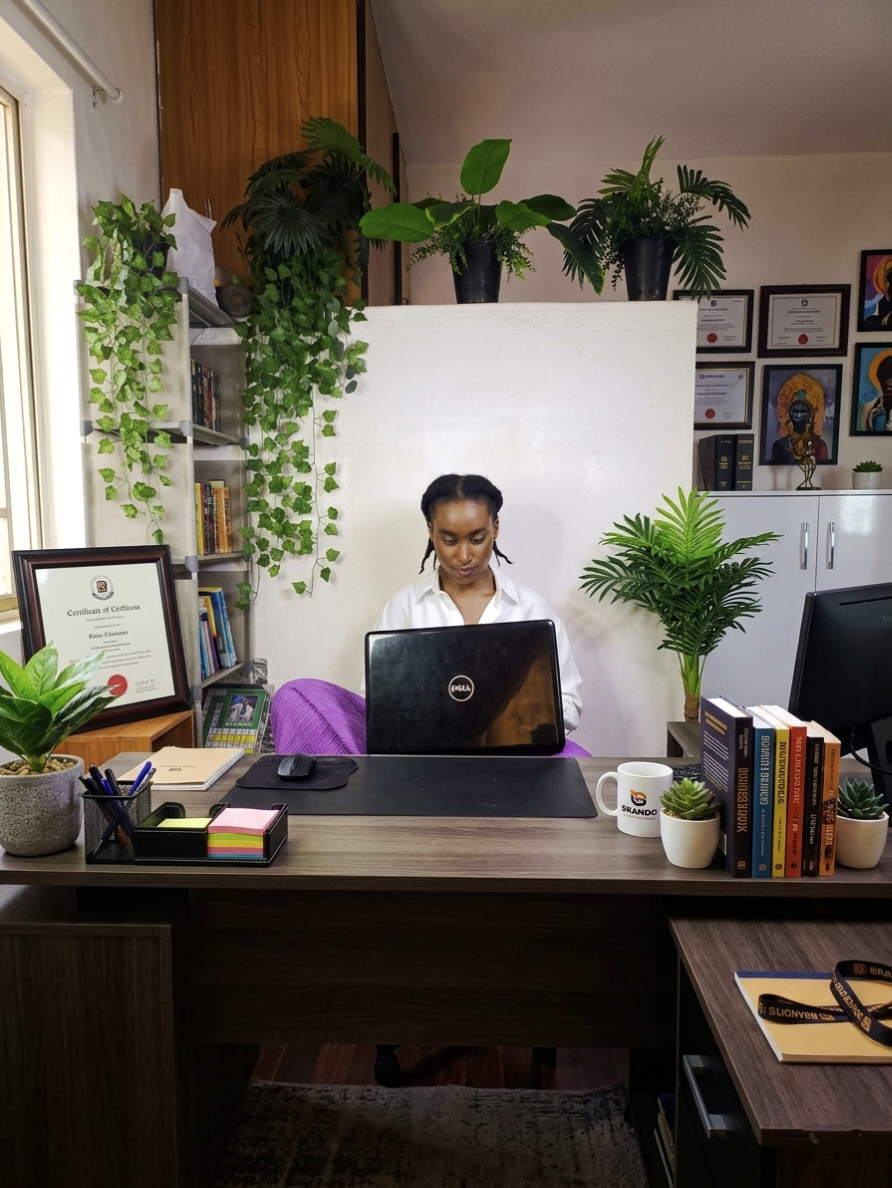
Setting up a well-equipped office and design studio.
If you had access to unlimited capital tomorrow, what’s the first thing you would do?
“Increase capacity by hiring capable staff to drive growth and scale.”
What markets outside Nigeria are you eyeing for expansion?
“First, our neighbours, like Niger, then farther out to Eastern Africa before going outside the continent. I wouldn’t complain if it happened the other way around either.”
What new product or service are you excited about developing?
“Next up in our design pipeline is Think-In, a digital thought prompt application that encourages cognitive engagement and critical thinking.”
What kind of support do you need most right now?
“Definitely more hands on deck. It’ll go a long way.”
SECTION I — THE HUMAN BEHIND THE BRAND
Personal & Reflective.
What do you do when you’re not working?
“I love to shop. Nothing beats retail therapy. I watch movies, read novels and of course hang out with my best friend and husband.”
What book, podcast, or movie has influenced your business thinking most?
“I’m not sure about its influence but I do love the Dragon’s Den TV series.”
What’s your favourite Nigerian food?
“I’m not a fan of foods, anywhere, so no favourites for me.”
Complete this sentence: ‘Most people don’t know that I…’
“…I’m great at Ludo.”
If you weren’t running this business, what would you be doing?
Running a fashion brand.
What’s the best piece of advice you’ve ever received?
“To be an artist is to find the beauty in anything. Every resource counts.”
What song gets you through a tough day?
“All Shall Be Well” by Tenth Avenue North.
If you could have dinner with any Nigerian, alive or dead, who would it be and why?
“Jaja of Opobo. I’d like to know why he didn’t win. What was he thinking at the time? What led him to his decisions?”
