

When a European delivery giant quietly landed on Nigerian soil four years ago, few imagined it would soon be calling the country its crown jewel. Yet here we are.
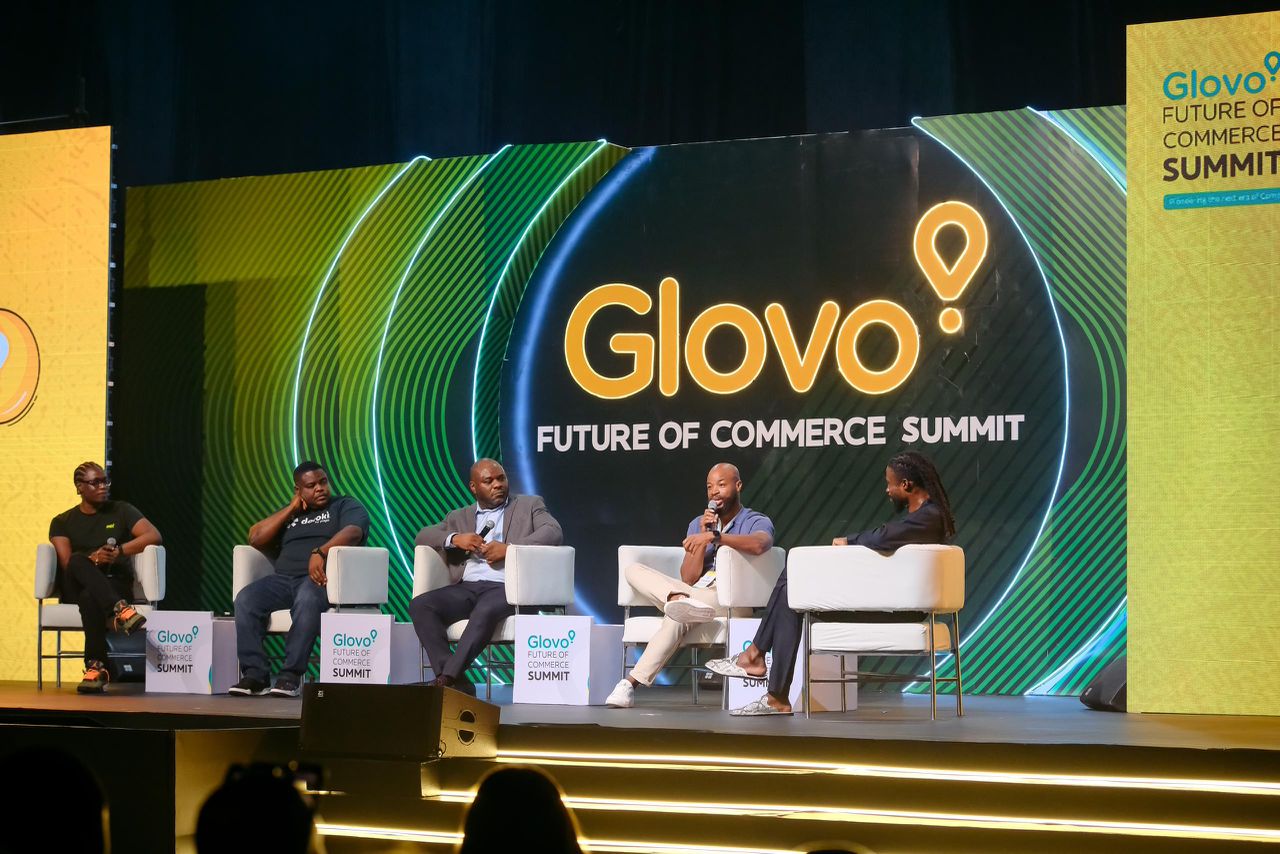
Spain-born on-demand platform Glovo has officially named Nigeria its fastest-growing market globally — a declaration made not in a boardroom overseas, but on Lagos ground at its flagship Future of Commerce 2026 summit. The announcement landed with weight: over ₦37 billion pumped into the Nigerian economy, 38 million deliveries completed in a single year, and merchant revenue that nearly doubled. For a market that some foreign investors once approached with hesitation, those numbers read like a vindication.
But this isn’t just a Glovo story. It’s a Nigeria story.
The country’s online delivery market quietly crossed the $1 billion mark in 2025 — and analysts project it could balloon to $2.7 billion within the next decade. Fuelling that climb is a cocktail that’s hard to replicate elsewhere: 200 million-plus people, a population that’s more than half urban, and an internet penetration rate pushing past 45%. In the language of global commerce, Nigeria isn’t just a market — it’s a momentum play.
“Nigeria has two things: population and momentum,” said Dima Rasnovsky, Glovo’s Regional General Manager for Africa, with the kind of energy usually reserved for investor pitch decks. “It’s like a wave here — and if we’re part of the wave, it’s exciting.”
The competition seems to agree. Local heavyweights like Chowdeck and HeyFood aren’t sitting still — Chowdeck recently partnered with grocery startup GoLemon to power same-day grocery delivery, signalling that the race to become a full-service marketplace is already underway. Glovo’s response? Go wider and go deeper. The company has announced plans to push beyond its current 11 Nigerian cities into underserved regions, while simultaneously expanding from food into groceries and retail.
Technology is doing a lot of the heavy lifting internally too. Product and tech improvements alone drove 35% of merchant sales growth over the past year — proof that in this industry, the invisible engine matters as much as the logo on the delivery bag. A new road safety tool, built in partnership with the Federal Road Safety Corps, has already been adopted by 60% of Glovo’s riders since its March 2026 launch — a detail that says as much about operational discipline as it does about PR.
Zooming out, Nigeria now accounts for a significant slice of an African operation that has absorbed over €250 million in investment since 2018 — a continent that now represents a quarter of Glovo’s entire global business.
The message from Lagos is clear: Africa isn’t a future market anymore. And within Africa, Nigeria isn’t waiting its turn.
It’s already leading.
