

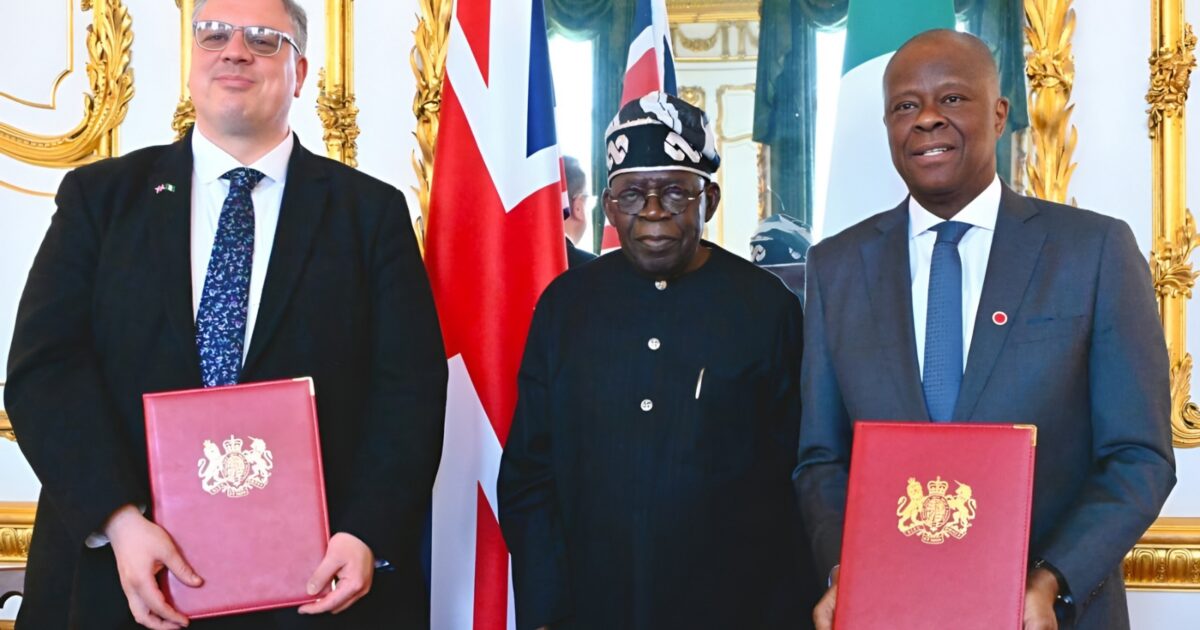
In a historic realignment of economic ties, Nigeria has officially surpassed all other African nations to become the United Kingdom’s largest export market on the continent. Bilateral trade between the two powers has surged to a record £8.1 billion ($10.7 billion), marking an 11.4% increase and signaling a definitive shift from high-level diplomacy to multi-billion dollar commercial execution.
The announcement coincided with the conclusion of the first major UK trade mission to Nigeria since the landmark March 2026 State Visit by President Bola Tinubu to London. The mission, comprising 43 delegates from 30 British firms, focused on turning the “political alignment” of the Enhanced Trade and Investment Partnership (ETIP) into tangible infrastructure and technology deals.
The $1 Billion Anchor: Modernizing Nigeria’s Gateway
The centerpiece of this renewed partnership is a $1 billion (£746 million) port modernization deal backed by UK Export Finance (UKEF). Arranged by Citibank and executed by construction giants Hitech Nigeria and ITB Nigeria, the project targets the chronic inefficiencies at Lagos’s primary maritime hubs:
-
Strategic Assets: Comprehensive redevelopment of the Lagos Port Complex (Apapa) and Tin Can Island Port.
-
British Steel’s Milestone: The deal includes a £70 million contract for British Steel to supply 120,000 tonnes of steel billets—the company’s largest-ever export order backed by UKEF.
-
Economic Impact: By digitizing cargo clearance and strengthening quay walls, the project aims to slash “dwell times” for vessels and reduce the multibillion-dollar annual cost of maritime congestion.
Trade Composition: Energy, Services, and Innovation
The £8.1 billion trade volume is built on a sophisticated exchange of energy and intellectual capital:
-
Energy Exchange: The UK remains a key market for Nigerian crude (valued at £1 billion), while Nigeria is a primary destination for UK refined oil products (£1.6 billion).
-
Service Dominance: Services now account for over 61% of UK exports to Nigeria, totaling £3.5 billion, driven by financial services, education, and technology.
-
Fintech Expansion: The UK-based fintech leader Wise has received conditional approval to enter the Nigerian remittance market, worth an estimated £40 million.
A New Era of Institutional Trust
British High Commissioner Dr. Richard Montgomery characterized the mission as a “clear signal of intent,” moving beyond the signing of MOUs to the delivery of steel, software, and credit. This sentiment was echoed by Aisha Rimi, CEO of the Nigeria Investment Promotion Commission (NIPC), who noted that the mission proves Nigeria is increasingly viewed as a stable, high-yield destination for long-term British capital.
The mission also highlighted the expansion of the Developing Countries Trading Scheme (DCTS), which aims to diversify Nigeria’s non-oil exports to the UK—specifically in agro-processing and creative industries—by reducing tariffs and simplifying certification costs.
As the UK looks toward the WTO Ministerial Conference (MC14) and Nigeria pursues its $1 trillion economic goal, this record trade volume represents the new “engine room” of the UK-Africa corridor. Success now hinges on the execution of these major infrastructure projects and the continued integration of Nigerian fintech and banking into the London financial ecosystem.
