

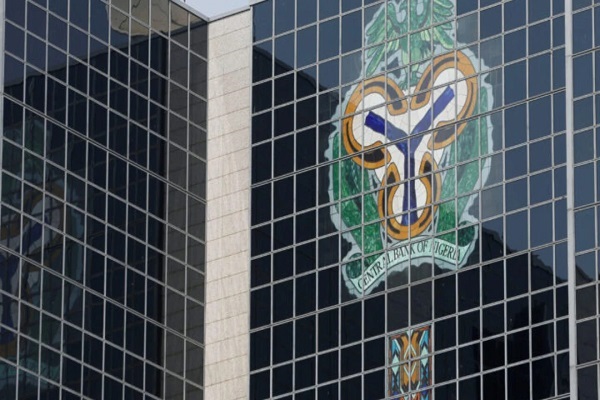
The Central Bank of Nigeria (CBN) has disclosed a sharp expansion in private-sector credit delivery to small businesses, with new commercial loans to Small and Medium Enterprises (SMEs) climbing to $\mathbb{N}$199 billion in April 2026.
Speaking directly at the post-Monetary Policy Committee (MPC) media briefing in Abuja, the Governor of the CBN, Mr. Olayemi Cardoso, outlined that the $\mathbb{N}$46 billion month-on-month surge from the $\mathbb{N}$153 billion recorded in March reflects structural changes. These changes indicate that Deposit Money Banks (DMBs) are actively diversifying their credit exposures away from large oil, gas, and power conglomerates toward high-yielding short-term retail assets.
1. Hardening Security via the Cross-Sectoral NCC Pact
To address the traditional bottlenecks that discourage commercial banks from lending to micro-businesses—chiefly identity theft, transaction disputes, and tracking gaps—the apex bank has transitioned from general policy statements to technical interventions.
The apex bank recently signed a strategic Memorandum of Understanding (MoU) with the Nigerian Communications Commission (NCC). This regulatory partnership activates the Telecoms Identity Risk Management System (TIRMS) Portal, a real-time data-sharing engine.
Through TIRMS, banks can instantly confirm if a credit applicant’s mobile number has been recently swapped, recycled, or flagged for suspicious activity. By using this cross-sector lookup, the CBN and NCC are lowering digital payment fraud risks and providing lenders with the security data needed to confidently fund small businesses.
2. Weaponizing the GSI Toolkit and Upgrading DFI Ceilings
To protect lenders from systemic bad debts, the apex bank is maximizing the deployment of its Global Standing Instruction (GSI) toolkit. The policy gives creditor institutions the legal authority to automatically trigger peer-to-peer asset recoveries, grabbing balances from any account linked to a defaulting debtor across the entire banking industry. This mechanism dramatically reduces bad loan write-offs and encourages risk managers to approve credit lines for the real sector.
Concurrently, the CBN has restructured the operations of domestic Development Finance Institutions (DFIs) by lifting their single obligor gold limits. For years, these state-backed institutions were constrained by rigid regulatory credit caps, leaving them unable to meet the larger capital requirements of expanding medium enterprises. By lifting these individual borrowing ceilings and extending currency hedging tools to international DFIs, the apex bank is opening a clear path for foreign direct investments (FDI) to flow directly into local manufacturing and agro-processing hubs.
3. Rebalancing the Credit Base
The apex bank’s data reveals that current retail credit distributions remain heavily weighted toward operational needs rather than long-term capital investments:
| Credit Segment Cluster (April 2026) | Share of New SME Credit Facilities (%) |
| General Category (Short-Term Retail / Working Capital) | 94.73% |
| General Commerce (Trading & Inventory Transit) | 2.46% |
| Specialized Production Vectors | 2.81% |
Governor Cardoso concluded by clarifying that driving sustainable economic growth cannot be an exclusive mandate of the central bank. Instead, it requires deep policy alignment with fiscal ministries, including the Ministry of Industry, Trade and Investment, alongside targeted funding matches from the Bank of Industry (BoI) to lower production costs for local manufacturers.
