

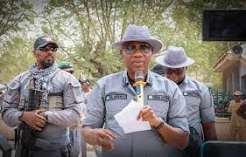
The regulatory environment for Nigeria’s divested energy assets is moving toward increased operational alignment. Comptroller-General of Customs (CGC) Adewale Adeniyi has pledged the Nigeria Customs Service’s (NCS) full support to Renaissance Africa Energy Limited, following its recent acquisition of Shell Petroleum Development Company’s (SPDC) onshore oil and gas assets.
With Renaissance assuming full field operations, customs leadership emphasized that the agency’s primary mandate is to facilitate legitimate trade and support domestic companies managing critical national energy infrastructure. This alignment is backed by ongoing reforms under the Presidential Enabling Business Environment Council (PEBEC) to clear administrative bottlenecks.
The Authorised Economic Operator (AEO) Fast-Track
To significantly reduce transit times for critical engineering imports and heavy equipment at entry ports, the NCS has urged the energy firm to complete its onboarding into the Authorised Economic Operator (AEO) programme.
The AEO framework operates as a trust-based partnership. By maintaining strict compliance and zero tolerance for duty evasion, companies gain access to fast-tracked customs approvals, which minimizes costly operational delays across their supply chains.
De-Risking Post-Transition Energy Supply Chains
Under the leadership of its Vice President of Production, Meshack Maichibi, Renaissance is investing heavily across all segments of the oil and gas value chain to secure long-term energy production targets.
For large-scale energy operators, uncoordinated custom delays on replacement parts or specialized drilling equipment can stall entire production fields, leading to significant financial losses. The transition to digitized customs approvals, clear tariff procedures, and unified command structures provides the regulatory stability needed to run efficient onshore assets. Ultimately, this smooth partnership between border regulators and energy firms is essential for boosting local production, increasing national revenues, and securing Nigeria’s long-term energy needs.
