

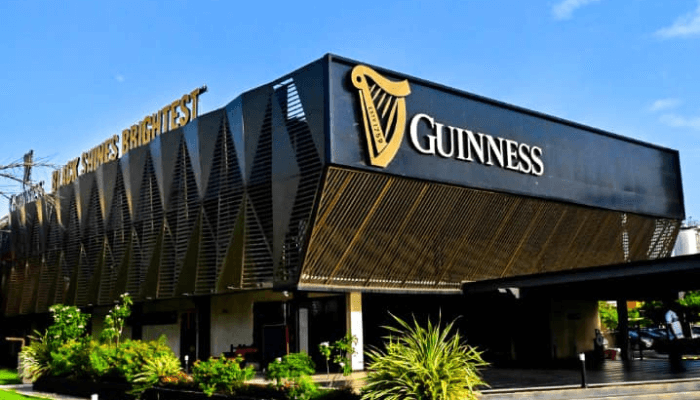
After weathering several years of financial turbulence, Guinness Nigeria Plc has successfully executed a massive operational reset, returning to the “black” with a remarkable ₦41.2 billion profit after tax for the 18-month period ending December 2025. This recovery marks a dramatic shift from previous years of heavy losses and has culminated in the company’s first dividend declaration in four years—an interim payment of ₦2 per share for Q1 2026.
According to the CEO, Girish Sharma, the comeback was no accident but the result of a “100-day blueprint” anchored on four strategic pillars:
-
Cultural Empowerment: Moving toward a decentralized structure where staff feel more ownership.
-
Operational Excellence via Localisation: Streamlining supply chains and decision-making to fit the Nigerian context.
-
Consumer Obsession: Overhauling the product portfolio to match shifting tastes, such as the launch of Orijin Beer in PET bottles to provide affordability amid inflation.
-
Financial Discipline: Rigorous management of the balance sheet and debt.
The Numbers Behind the Surge The brewer’s revenue skyrocketed by 144% to ₦730.8 billion, driven by aggressive volume growth across its beverage categories. However, the most significant “win” was on the balance sheet. After suffering a staggering ₦92 billion foreign exchange loss in 2024, Guinness Nigeria reported zero FX losses in 2025. This was achieved through a combination of debt restructuring and superior currency risk management, which saw finance costs drop below ₦40 billion.
Strategic Agility in a Tight Economy Guinness Nigeria is leaning heavily into “value-driven innovation.” Recognizing that cost-of-living pressures are altering spending patterns, management is focusing on:
-
Ready-to-Drink (RTD) products and mainstream spirits.
-
Faster local decision-making to outpace competitors.
-
Deepening distribution to reach more corners of the Nigerian market.
The market has responded with enthusiasm. Shareholder equity has rebounded to ₦43.3 billion from near-negative levels, and the company’s stock price has surged as investors regain confidence in the brewer’s ability to deliver consistent double-digit growth despite ongoing macroeconomic headwinds like currency volatility.
