

The warning came wrapped in a history lesson. And the history lesson came with a name most Nigerians know too well: Ajaokuta.
The steel complex that absorbed billions of naira across decades, employed armies of consultants, and produced almost nothing commercially viable has become Nigeria’s most expensive monument to what happens when government decides to operate a business rather than create the conditions for one to thrive. Hon. Dele Kelvin Oye stood before the 2026 Vanguard Economic Discourse and said, plainly, that Nigeria’s $74 billion livestock sector must not become the next chapter of that story.
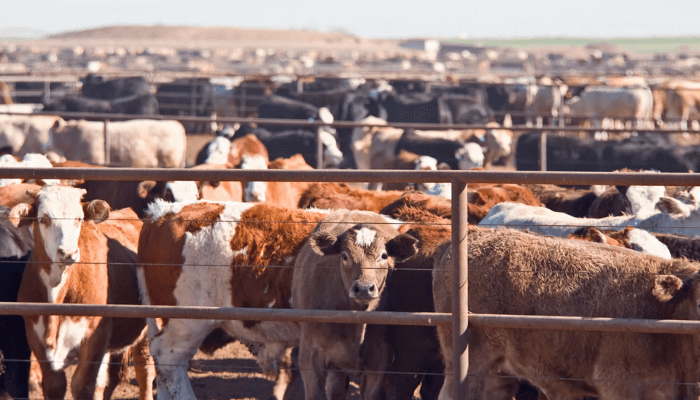
Oye — immediate past National President of the Nigerian Association of Chambers of Commerce, Industry, Mines and Agriculture, and current Chairman of the Nigeria-Türkiye Business Council — delivered a paper titled “The Government as Facilitator, Not Operator: A New Paradigm for Nigeria’s Livestock Industry” at a discourse themed around food security and Nigeria’s agricultural rebound. His central argument was structural: the Nigerian government has a long and well-documented record of destroying economic value when it attempts to create it through direct operation of industries. The livestock sector, at $74 billion, is too consequential to be handed the same fate.
But before making that case, Oye took the room back to May 2023 — the moment he described as Nigeria’s near-miss with total fiscal collapse — to establish the baseline from which any honest conversation about the country’s economic options must begin.
The numbers from that period were not merely concerning. They were, as Oye put it, existential. Debt servicing was consuming between 65% and 124% of government revenue depending on the measurement period — a range that in its worst readings means the government was spending more on servicing old debt than it was collecting in income. Nigeria’s foreign debt service alone reached $3.5 billion in 2023, placing the country third on the World Bank’s IDA debtor rankings. The World Bank had projected as early as December 2022 that debt servicing would consume 123.4% of Federal Government revenue the following year.
“We were not merely borrowing to grow,” Oye said. “We were borrowing to service existing borrowings.”
Layered onto that fiscal crisis was an inflation rate of approximately 22% when the Tinubu administration took office, a fuel subsidy draining ₦4 trillion from the treasury annually — projected to rise to ₦5.4 trillion by 2024 had it not been removed — and a foreign exchange regime so distorted it had become an engine for arbitrage and capital flight. The official naira rate sat around ₦460 to the dollar while the parallel market quoted ₦760, a premium of over 60% that effectively made the official rate a fiction.
That was the economic environment Nigeria was navigating when conversations about agricultural transformation, food security, and livestock sector development began in earnest. Oye’s point in laying this out was not nostalgia — it was context. Any policy framework for the livestock sector that ignores the fiscal constraints and structural distortions of the recent past is a framework built on sand.
His prescription for the sector flows directly from that analysis. A government that was borrowing to pay its debts in 2023 has no business attempting to operate a $74 billion industry in 2026. What it can and must do is build the regulatory environment, infrastructure, and incentive architecture that allows private capital — domestic and foreign — to do the work government has consistently proven it cannot.
The livestock sector’s scale makes this both more urgent and more consequential than it might appear. At $74 billion, it is not a peripheral agricultural category. It is a sector large enough to materially move Nigeria’s food security metrics, employment figures, and export earnings — if developed correctly. Developed incorrectly, through government-operated programmes that repeat the patterns of Ajaokuta and its predecessors, it becomes another sinkhole for public resources in an economy that can no longer afford sinkholes.
Nigeria’s rent-seeking economy, Oye argued, is structurally rigged against the majority of its citizens. The livestock sector represents an opportunity to break that pattern — but only if the government has the discipline to step back from operating it and focus instead on making it possible for others to build it.
Ajaokuta was built on the assumption that government could run an industry. Decades later, the lesson is still waiting to be learned.
