

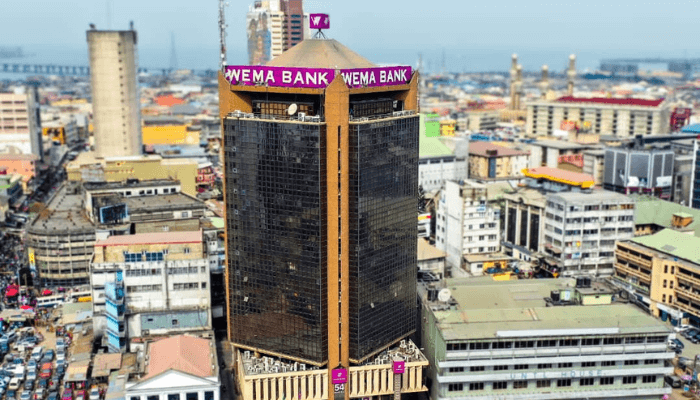
Wema Bank Plc has cemented its status as a heavyweight in the Nigerian financial landscape by overshooting the Central Bank of Nigeria’s (CBN) new capital requirements well ahead of schedule. By reporting a total qualifying capital of ₦264.7 billion, the bank has surged past the ₦200 billion threshold mandated for national institutions, securing its license and operational future until at least the next regulatory cycle.
The bank achieved this milestone in April 2026—six months before the official deadline—signaling a robust recovery and a strategic pivot that has caught the attention of the broader African market.
Strengthening the National “Shock Absorber”
This capital injection is a direct response to the fiscal reforms initiated in 2024 to combat inflation and currency devaluation. Wema’s successful fundraising efforts, which included a ₦150 billion Rights Issue, highlight a significant vote of confidence from the investing public.
The implications for the Nigerian economy include:
-
Systemic Stability: A larger capital buffer allows the bank to absorb potential losses from market volatility without risking depositor funds.
-
Credit Expansion: With nearly ₦65 billion in excess of the regulatory floor, Wema is positioned to act as a primary engine for credit creation.
-
Resilience: The bank is now better equipped to manage non-performing loans (NPLs) and navigate the complexities of the foreign exchange market.
From Regional Roots to Digital Dominance
Under the leadership of CEO Moruf Oseni, Wema Bank has completed its transformation from a regional entity into a tech-driven national powerhouse. The bank’s strategy hinges on its pioneer digital platform, ALAT, which bridges the gap between traditional banking security and fintech agility.
Key strategic focus areas now include:
-
SME Empowerment: Utilizing the beefed-up balance sheet to fund small and medium enterprises, which drive the majority of Nigeria’s non-oil GDP.
-
Financial Inclusion: Leveraging digital infrastructure to lower transaction costs and reach the unbanked population.
-
Infrastructure & Energy: Transitioning from “survival mode” to aggressive market expansion, with a focus on large-scale national projects and sustainable energy.
Eliminating “Regulatory Overhang”
By finalizing its recapitalization early, Wema has removed the uncertainty that often stalls strategic planning during regulatory shifts. This proactive stance allows the board to focus entirely on market share acquisition and the rollout of sophisticated corporate banking tools.
As Nigeria pursues a $1 trillion economy, the maturation of indigenous banks like Wema suggests a financial system that is no longer just enduring economic headwinds, but is actively built to support a modern, industrial-scale nation.
