

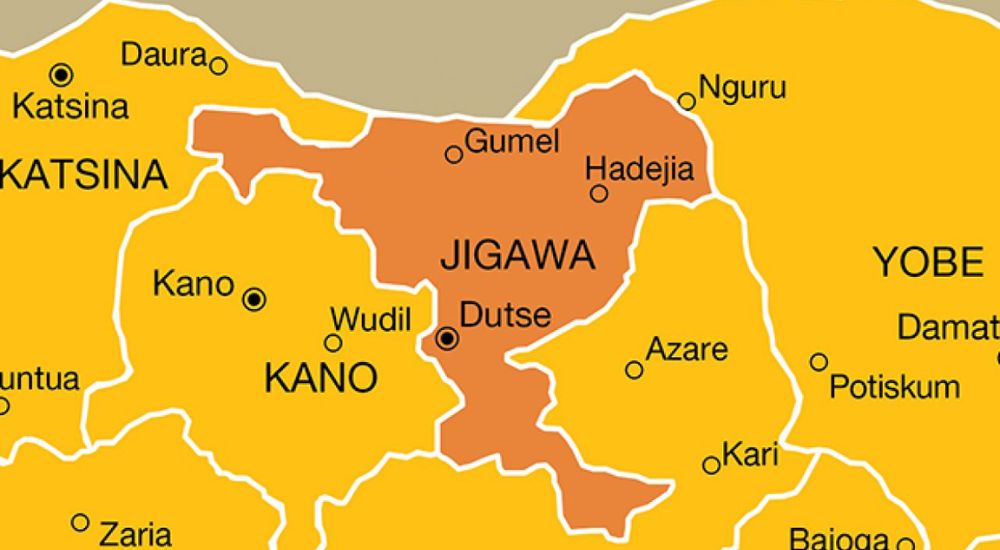
DUTSE — While the national conversation often fixates on federal fiscal policy, a quiet economic experiment is unfolding in Jigawa State. By moving beyond traditional “empowerment” grants and toward structured, low-interest credit facilities, the state is attempting to build a sustainable SME ecosystem from the ground up.
The “BoI” Lever: Moving from Grants to Growth
The core of this strategy isn’t a handout; it’s a liquidity injection. By depositing billions into the Bank of Industry (BoI) specifically for local entrepreneurs, the Jigawa State government has lowered the barrier to entry for capital.
-
The Low-Interest Advantage: In an era of high national inflation and soaring interest rates, these state-backed loans provide a rare “financial oxygen” for small-scale industrialists who are usually priced out of commercial banking.
-
Sectoral Diversification: The impact is moving beyond subsistence farming. We are seeing a shift into agro-allied processing, recycling, and technical crafts—sectors that move a state from a “consumer economy” to a “producer economy.”
Strategic Procurement as an Incentive
Interestingly, the “Jigawa Model” uses state ministries (Education and Water Resources) not just as regulators, but as primary customers.
By aligning SME production with the needs of state infrastructure—such as plumbing, electrification, and school furniture—the government is effectively guaranteeing a market for the businesses it is funding. This creates a closed-loop economy where state funds circulate multiple times within the local borders.
The Macro Impact: The 84% Factor
The logic behind this focus is grounded in a hard reality: SMEs represent 96% of all Nigerian businesses and employ 84% of the workforce.
-
The GDP Play: With SMEs contributing nearly half of the national GDP, Jigawa is betting that strengthening these “backbone” entities is a faster route to poverty eradication than waiting for massive industrial FDI (Foreign Direct Investment).
-
Employment Multipliers: The transition from “micro” to “small” scale allows these businesses to move from family-run operations to job-creating entities, directly impacting the state’s unemployment data.
The Road Ahead: From Intervention to Institution
The challenge for the “Namadi Agenda” will be sustainability. For this to work long-term, these SMEs must eventually graduate from state-supported low-interest loans to becoming bankable entities in the open market. Currently, Jigawa is acting as the ultimate “Angel Investor,” but the goal is to create an industrial class that can eventually stand on its own.
