

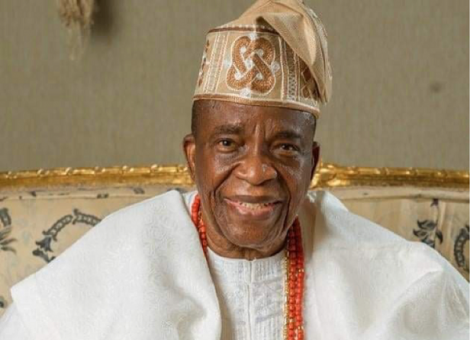
The story of Dr. Samuel Adedoyin is one of the most compelling narratives in African entrepreneurship. From humble beginnings as a trader in Ghana to founding the Doyin Group of Companies, Adedoyin’s journey is a masterclass in resilience, backward integration, and the power of indigenous enterprise. As a wholly Nigerian-owned conglomerate, his life’s work stands as a testament to the capacity of local talent to build global-standard industries.
The Entrepreneurial Ascent: From Ghana to Dosunmu Street
Adedoyin’s path was forged through necessity and sharp market instincts. After financial constraints ended his formal education at Standard Four, he embarked on a series of ventures that defined his business acumen:
-
The Ghana Years: He cut his teeth as a petty trader selling padlocks and hinges.
-
The Ball-Point Break: Returning to Nigeria, he capitalized on a surge in demand for imported ball-point pens and holiday bags, generating the initial capital (£9,600) used to secure his first permanent business location in Lagos.
-
Institutional Foundation: In 1968, he established the Doyin Group, transitioning from trading to large-scale manufacturing.
A Conglomerate of Substance: The Doyin Group Portfolio
Under Adedoyin’s leadership, the Doyin Group has become a diversified force across the Nigerian economy, notably operating without a single expatriate staff member—a deliberate move to showcase Nigerian excellence in engineering, science, and management.
| Sector | Key Operations & Products |
| Manufacturing | Food seasoning, noodles, soaps, detergents, paints, and pharmaceuticals. |
| Agribusiness | Large-scale cultivation of ginger, cashew, sesame, and palm fruits in Kwara State. |
| Hospitality | International-standard hotels and apartments (Peniel and BENI) in Abuja and Lagos. |
| Energy & Real Estate | Significant interests in oil, gas, and property development through Starco Limited. |
Backward Integration: The Agbamu Model
One of Adedoyin’s most significant contributions to Nigeria’s industrial policy is his commitment to backward integration. By establishing massive plantations in his hometown of Agbamu, Kwara State, he secured a raw material pipeline for his factories:
-
Greenhouse Innovation: Utilizing modern greenhouse technology to enable all-year-round farming.
-
Raw Material Security: Producing local starch and palm oil to reduce reliance on imports.
-
Community Empowerment: The farm division serves as a primary employer, drastically improving the standard of living in rural Kwara.
Philanthropy and Educational Impact
Prince Adedoyin’s legacy extends far beyond the factory floor. His philanthropic efforts are deeply rooted in human capital development:
-
Education Leadership: Appointed the Pioneer Chancellor of Trinity University, Lagos, in 2024.
-
Institutional Support: Donated a state-of-the-art ICT facility to Lagos State University (LASU) and built a College of Nursing Sciences in Agbamu.
-
Social Welfare: Established a foundation for handicapped and less privileged children at the University of Ilorin.
Conclusion: A National Icon
As an Officer of the Order of the Federal Republic (OFR), Dr. Samuel Adedoyin represents the “Old Guard” of Nigerian industry—leaders who built empires during eras of immense structural change. His insistence on 100% indigenous management and his focus on local raw materials provide a durable blueprint for the next generation of African industrialists aiming for self-reliance and national impact.
