

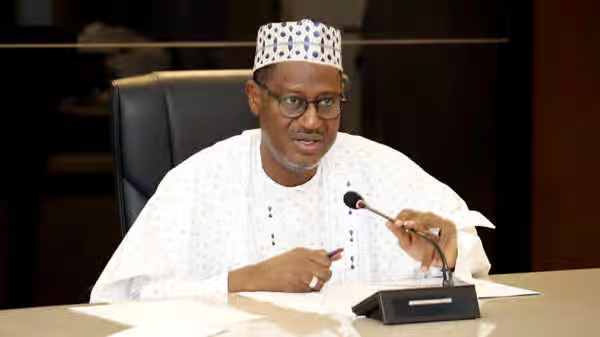
Nigeria’s property registration system has long been plagued by excessive bureaucracy, high costs, and lengthy processes—factors that recently led to a poor showing in the World Bank’s global business rankings. According to the Minister of Housing and Urban Development, Arc. Ahmed Musa Dangiwa, these barriers not only deter investors but also create avoidable difficulties for ordinary citizens.
In response, Dangiwa has urged state governments to allocate one to three percent of their annual budgets specifically to land administration and systematic titling, emphasizing that transparent and effective land governance is the nation’s most powerful tool for driving a trillion-dollar economy.
During the 30th Conference of Directors of Lands, Dangiwa cited international models where land ministries operate efficiently with just one percent of public funding. He argued that even a sustainable allocation as low as 0.5 to one percent could maintain digital records, continuous documentation, and up-to-date land registries—provided the funds are directed toward impactful services like titling, digitization, and dispute resolution, rather than administrative overhead.
He stressed that when states prioritize outcomes over bureaucracy, they unlock new streams of revenue, grant citizens secure property rights, and transform land from dormant capital into an economic powerhouse. The minister positioned the Land4Growth Programme as Nigeria’s best chance to reach the elusive trillion-dollar milestone, making land an asset that can be leveraged for credit, trusted by investors, and relied upon for government revenue.
Dangiwa also highlighted persistent challenges: outdated manual systems, fragmented paper records, corruption vulnerabilities, insecurity for at-risk groups, and insufficient revenue collection. However, under President Bola Tinubu’s Renewed Hope Agenda, he affirmed that land administration is now recognized as a linchpin of economic reform, with concrete steps underway—including the nationwide rollout of the Nigeria Land Titling, Registration and Documentation Programme (Land4Growth) and new partnerships with the World Bank—to unlock an estimated $300 billion in untapped land value.
This new direction, Dangiwa concluded, signals a purposeful movement towards a future where efficient land governance powers Nigeria’s economic transformation.
