

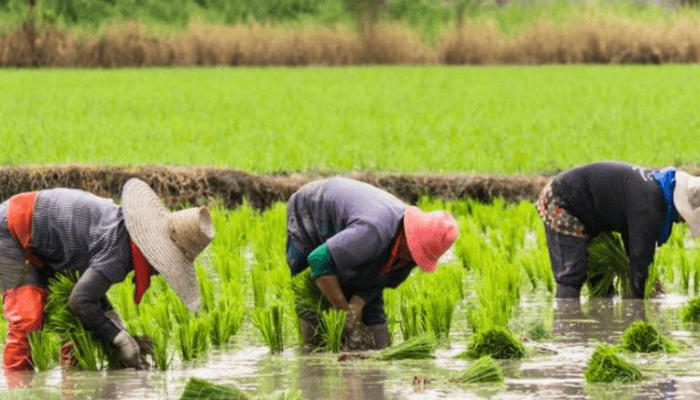
Nigeria is at a critical policy crossroads regarding its most consumed staple. According to a recent report by the National Agribusiness Policy Mechanism (NAPM), the federal government has been advised to close all existing rice import channels. This recommendation seeks to protect local farmers but carries the immediate risk of reversing the recent drop in market prices.
As of February 2026, the “rice surplus” currently enjoyed by the country is being described as a “fragile abundance” because it is fueled by imports rather than domestic growth.
1. The Cost of the Surplus (2025 Data)
In 2025, Nigeria achieved a theoretical surplus of 1.1 million metric tonnes, but the numbers hide a troubling fiscal reality:
-
Total Supply: 8.66 million metric tonnes.
-
Domestic Production: 6.07 million metric tonnes.
-
Imports: 2.4 million metric tonnes (mostly from Thailand and India).
-
The Price Tag: Nigeria spent over ₦1 trillion on rice imports in 2025 alone, causing a massive drain on foreign exchange reserves.
2. Why Prices Might Spike Again
In mid-2025, the price of a 50kg bag of rice fell significantly from ₦76,000 to ₦55,000 after the government opened import waivers to combat food inflation.
-
The “Trap”: While consumers benefited from lower prices, local farmers suffered. High costs for fertilizer, fuel, and irrigation remained unchanged while the market price for their harvest crashed.
-
Farmer Exodus: Surveys indicate that 10.6% of rice farmers plan to switch to other crops (like vegetables or wheat) next season because they are currently operating at a loss.
-
Production Drop: Local rice production fell by nearly 8% during the 2025 wet season.
3. Structural Bottleneers in Local Production
The NAPM report highlights that Nigeria cannot simply “ban its way” to self-sufficiency without addressing deep-rooted systemic issues:
-
Extension Service Gap: There is currently only one extension officer for every 6,000 farmers, leaving many without access to modern seeds or techniques.
-
Lack of Price Support: Unlike other major rice-producing nations, Nigeria has no “Guaranteed Minimum Price” (GMP) system to protect farmers when market prices drop below production costs.
-
Smuggling: The Nigerian Customs Service continues to struggle with illegal rice imports, which undercut local millers and drain government revenue.
Nigeria’s Rice Landscape: 2025/2026 Comparison
| Category | 2025 Figures | 2026 Outlook (Projected) |
| 50kg Bag Price | ₦55,000 (Dec) | Likely to Rise |
| Import Spend | ₦1 Trillion | Targeted Reduction |
| Local Output | 6.07 Million Tonnes | Risk of Decline (-8%) |
| Policy Focus | Inflation Control (Imports) | Sustainability (Local Support) |
4. The “Tough Choice” for the Presidency
President Tinubu’s administration now faces two conflicting priorities:
-
Protecting Consumers: Keeping import windows open to ensure rice remains affordable and inflation stays low (currently at 11%).
-
Protecting the Future: Closing imports to save foreign exchange, encouraging local milling, and preventing the total collapse of the domestic rice farming sector.
“Closing import windows could undo recent price drops, but heavy imports hide the reality of our weak local production.” — NAPM Report Summary.
