

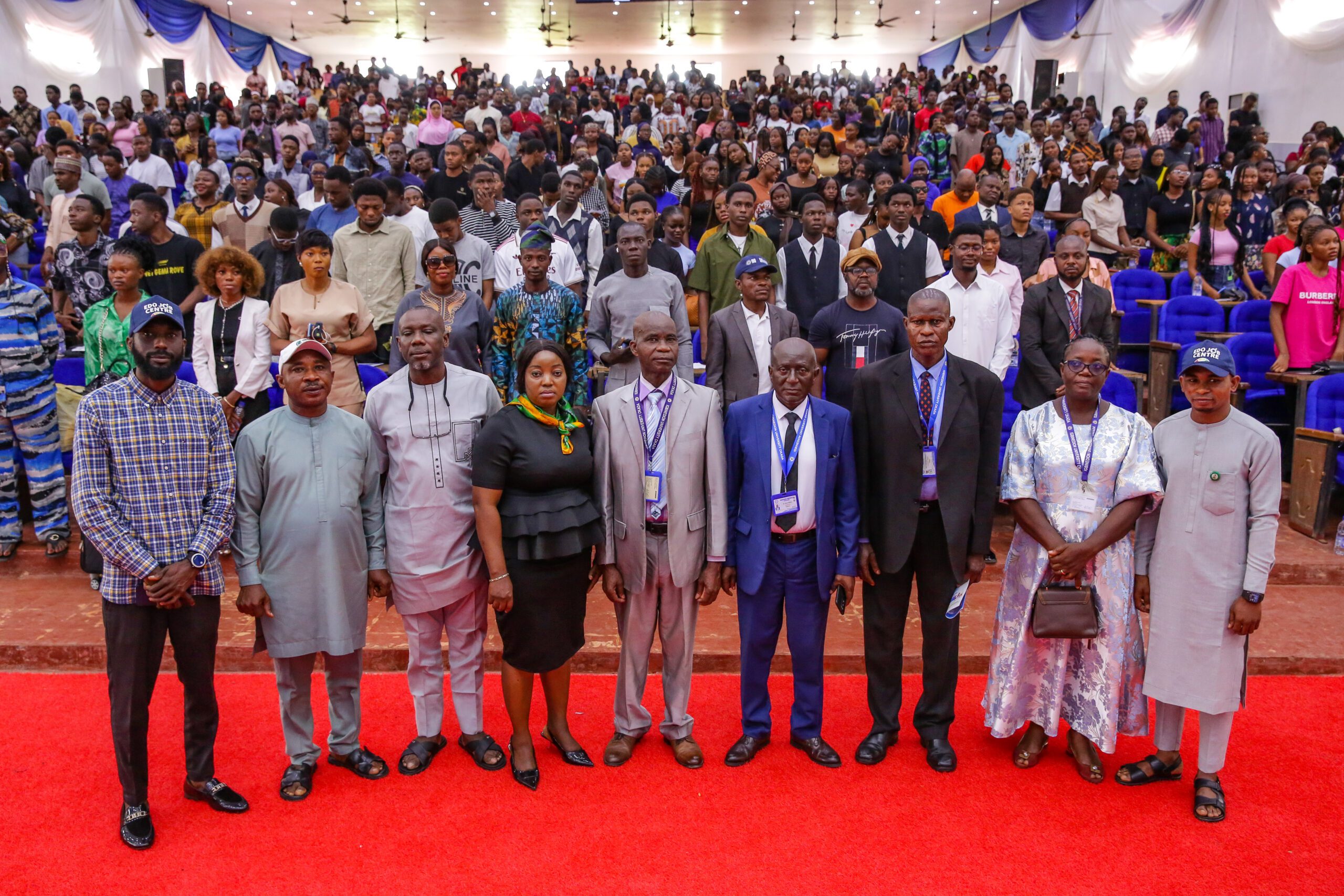
Education in Nigeria is undergoing a radical “factory reset.” At the 13th Student Product Exhibition of Igbinedion University, Okada (IUO), Vice-Chancellor Prof. Ikechukwu Ezemonye delivered a blunt ultimatum to the nation’s academic sector: transition from traditional lectures to job-creating enterprises, or risk economic irrelevance.
The event, held at the David Osunde Centre for Entrepreneurship, served as a live demonstration of how ivory towers are being dismantled to build industrial hubs.
Degrees as Economic Charters
For Prof. Ezemonye, the era of the “employable graduate” is over. The new goal is the “employing graduate.” He argued that the classroom must evolve into a launchpad where innovation isn’t just studied, but manufactured.
“Our degrees must be the charter for economic transformation,” Ezemonye asserted. “Reshaping Nigeria’s economic landscape is a shared responsibility, and it starts with shifting the student’s identity from a seeker of work to a creator of value.”
The Bugaje Blueprint: Functional Education
Keynote speaker Prof. Idris Bugaje, a leading voice in technical education, reinforced this vision by defining education through its utility. According to Bugaje, a degree is only as functional as the practical skills it delivers.
His strategy for unlocking Nigeria’s youth potential hinges on three pillars:
-
Innovation Funding: Moving beyond theory into funded research and development.
-
Comprehensive Skills Training: Blending academic rigor with technical mastery.
-
Inclusive Policy: Creating a government-investor ecosystem where student ventures can thrive rather than just survive.
From Prototype to Profit
The exhibition wasn’t merely a display of academic effort; it was a marketplace of ideas. Dr. Mary Josiah, Director of the Centre for Entrepreneurship and Skills Acquisition (CESA), noted that students from 13 different schools within the university had been trained to spot market gaps and fill them.
The showcase featured everything from innovative consumer products to sustainable business concepts, proving that the university’s mandate has moved beyond the library and into the laboratory of enterprise.
The Bottom Line: Igbinedion University is signaling a shift in the Nigerian educational DNA. By treating the classroom as a business incubator, they are betting that the cure for national unemployment lies not in the labor market, but in the lecture hall.
