

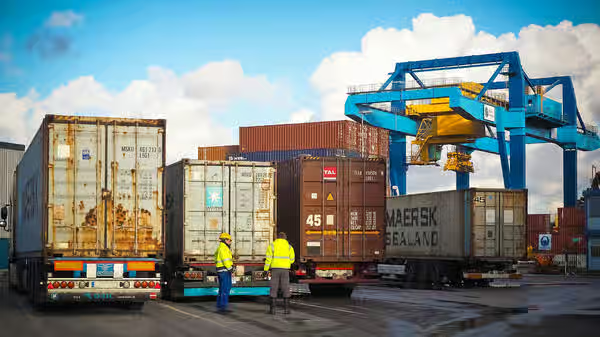
Nigeria’s sluggish economic growth is directly linked to its struggling supply chain industry, where high distribution costs and fragmented logistics systems act as severe headwinds. This was the key consensus at the BusinessDay Mobility & Logistics Conference 2025, where experts called for a radical shift towards integrated multimodal transport and modern last-mile delivery solutions.
Obiora Madu, Director General of the Africa Centre for Supply Chain (ACSC), highlighted the devastating inefficiencies that plague the sector, which manifest as frequent stock-outs, delayed emergency responses, and rising food prices exacerbated by post-harvest losses.
The Price of Inefficiency
Madu’s keynote paper, ‘Reimagining Logistics as a Growth Engine,’ pointed to the sector’s most glaring financial vulnerability: cost inflation.
Nigerian logistics operations account for 20 percent to 30 percent of the total cost of an item, a figure far exceeding the international standard of 8 percent to 11 percent.
This massive cost differential drives up consumer prices, undermines the competitiveness of Nigerian products, and slows economic growth.
The Key Weaknesses Crippling the Chain
The ACSC detailed several structural and infrastructural weaknesses undermining efficiency:
-
Weak Multimodal Integration: Poor road-rail links and fragmented systems limit connectivity and efficient transfer between transport modes.
-
Rural Isolation: Only about 60% of communities have basic road access, severely hindering rural connectivity and distribution.
-
Infrastructure Gaps: Congested seaports, poorly utilized dry ports, and unreliable electricity further undermine reliability.
-
Policy Friction: The lack of clear policy and regulatory framework stifles the deployment of modern solutions, such as drone operations and EV-based deliveries, due to uncertainty and regulatory risk.
The Path to a Unified Strategy
To build an efficient, integrated national supply chain, the experts stressed the need for a focused strategy supported by:
-
Policy Alignment: Defining a clear multimodal transport strategy with supportive regulations (e.g., sanctioning last-mile solutions like bike deliveries).
-
Digital Connectivity: Strengthening the technological backbone necessary for data-sharing and real-time monitoring.
-
Collaborative Action: Moving from siloed supply chain departments to integrated operations, underpinned by stronger public-private partnerships.
Madu specifically recommended scenario mapping for disaster response and encouraging data-sharing between logistics providers and government to build the resilient infrastructure that Nigeria needs to move forward.
