

Nigeria’s agricultural backbone—which fuels 40% of the national GDP and supports 60% of its people—is currently under siege. A landmark study of 480 smallholder farmers has revealed that the country’s “Big 7” staple crops are reacting to the climate crisis in drastically different, and often devastating, ways.
With dry spells increasing by 28% compared to the 1990s and flooding becoming a seasonal certainty, the traditional “rain-fed” farming model is no longer a viable strategy for survival.
The Vulnerability Matrix: Who Survives and Who Drowns?
The research utilized a “Crop Vulnerability Scale” to rank how Nigeria’s primary food sources handle extreme shocks. The results show that a “one-size-fits-all” agricultural policy will lead to widespread food insecurity.
-
Maize & Cassava (High Alert): These are the most fragile. Drought is a death sentence for both, while maize is particularly susceptible to “drowning” and root rot during floods.
-
Rice (The Flood Victim): Highly sensitive to waterlogging. Excessive flooding doesn’t just damage the crop; it can wipe out entire seasonal yields in a matter of days.
-
Millet & Yam (The Resilient but Risky): These can withstand moderate flooding better than others, but they remain highly vulnerable to the prolonged droughts currently plaguing the North.
-
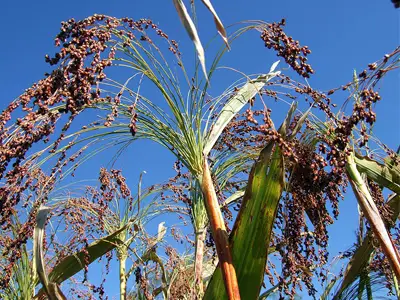
Sorghum (The Specialist): Generally drought-tolerant, but it has a breaking point. While it handles short-term flooding better than most, it eventually succumbs to “long-arc” droughts.
The Knowledge Gap: A Barrier to Adaptation
Despite the high stakes, there is a massive disconnect between government intelligence and the farm gate. While over 80% of farmers are in contact with agricultural extension officers, only 42.3% have received actual information on climate change.
This lack of data forces farmers into “reactive” mode rather than “proactive” planning. Currently, 72.6% of farmers have had to find non-farm jobs just to survive the economic shocks of crop failure.
The 2026 Adaptation Roadmap
To prevent staple crops from becoming unaffordable luxuries, researchers and policymakers are calling for a four-pronged defense strategy:
-
Bio-Engineering: Rapid deployment of drought-resistant maize and millet varieties.
-
Hydrological Reform: Moving beyond rain-fed dependency toward small-scale drip irrigation and cleared drainage channels to stop waterlogging.
-
Climate-Smart Education: Re-tooling the extension service network to provide real-time weather data and “staggered planting” techniques.
-
Collective Resilience: Strengthening cooperatives to allow smallholders to share the high costs of fertilizers and climate-resilient equipment.
The Bottom Line
Nigeria’s food security is a race against the thermometer. As erratic “pseudo-rains” trick farmers into planting early—only for dry spells to kill the seeds—the need for data-driven, crop-specific adaptation has never been more urgent. If the “Big 7” fail, the economy follows.
