

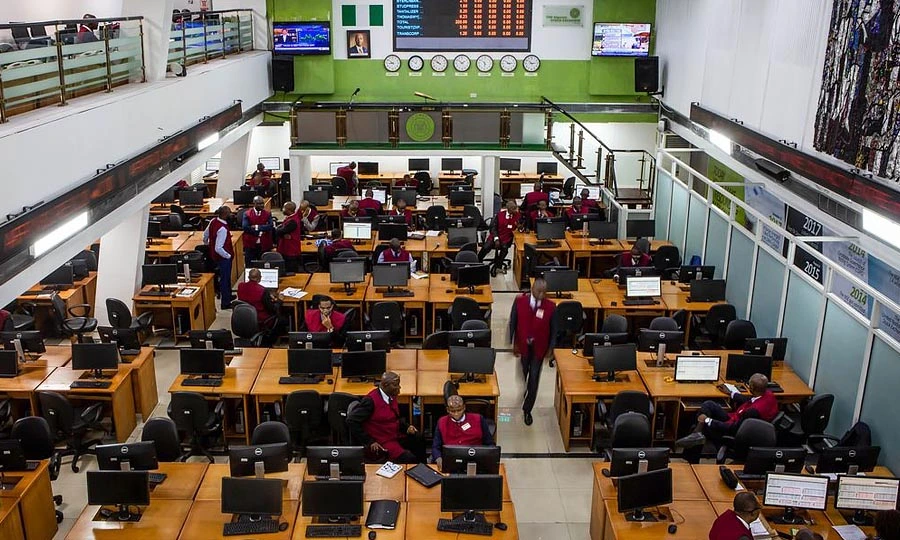
CAIRO – The global financial compass is shifting toward sustainability, and emerging markets are no longer just following the map—they are drawing it. Speaking at the International Finance Corporation (IFC) conference in Egypt, Temi Popoola, Group Chief Executive Officer of Nigerian Exchange Group (NGX), delivered a clarion call for a unified, transparent, and innovative approach to climate-aligned capital.
Addressing a high-level panel on “Capital Mobilization for Sustainability, Transition, and Resilience,” Popoola outlined a future where emerging economies transform structural hurdles into competitive advantages.
Bridging the “Infrastructure Gap” in Data
While the appetite for sustainable assets is surging globally, Popoola acknowledged the specific headwinds facing developing markets. From the costs of funding and market liquidity to the “infrastructure” of ESG (Environmental, Social, and Governance) reporting, the path is complex.
However, he argued that stock exchanges are the natural engines for this transition. By providing the literal and metaphorical “platforms” for impact-focused instruments, exchanges can bridge the gap between cautious investors and ambitious green projects.
Nigeria’s “Impact” Blueprint
Popoola pointed to the NGX Impact Board, a specialized listing segment launched in 2024, as a prime example of targeted innovation. This dedicated space for green, social, and sustainability-linked bonds provides the visibility and rigor that international investors demand.
Furthermore, the NGX Net-Zero Programme—a collaborative effort with DEG Impulse—is already seeing tangible results. The initiative doesn’t just encourage “green talk”; it helps listed companies build science-based transition plans. Its first phase alone is projected to slash or prevent approximately 20,000 tonnes of emissions, proving that market-led environmentalism can yield measurable climate math.
A Legacy of “Firsts”
Nigeria’s credibility in this space isn’t new; it is built on a decade of precedent. Popoola traced the current momentum back to 2017, when Nigeria issued Africa’s first certified sovereign green bond.
Since that milestone, the market has seen:
-
Diverse Issuance: Growth across sovereign, sub-national, and corporate levels.
-
Consistent Oversubscription: A clear signal that domestic and international demand consistently outstrips supply.
-
The Sukuk Success: The recent Series VII Sovereign Sukuk, which saw subscriptions soar far beyond the offer size, highlighting a deep-seated hunger for long-term, infrastructure-linked instruments.
The Power of the “Quad-Partite” Partnership
Perhaps the most vital takeaway from Popoola’s address was the necessity of “synergy.” He cited Nigeria’s initial green bond success not as a solo feat, but as a masterpiece of public-private coordination.
The project required the synchronized gears of the Ministry of Finance, the Ministry of Environment, the Debt Management Office, and the Exchange itself. For Popoola, this level of policy consistency and “constructive alignment” is the secret sauce for any emerging market looking to attract long-term, resilient investment.
“Emerging markets have a significant opportunity to contribute to the future of sustainable capital flows,” Popoola concluded. In the heat of Cairo, the message was clear: the capital is there; the framework is the key.
